
|
Getting your Trinity Audio player ready...
|
Article 1: The weight of the avant-garde There is a question that is repeated almost mechanically, like a self-evident fact that is no longer up for discussion: Haiti is behind.
Article 1: The Weight of the Vanguard
There is a question that is repeated almost mechanically, as an obvious point that is no longer debated: Haiti is behind. Economic delay, institutional delay, technological delay. The diagnosis seems shared, accepted, almost definitive. But what if this obviousness were a perspective mistake? For a country to be “behind,” one must first know: behind compared to what? and according to which timeline?
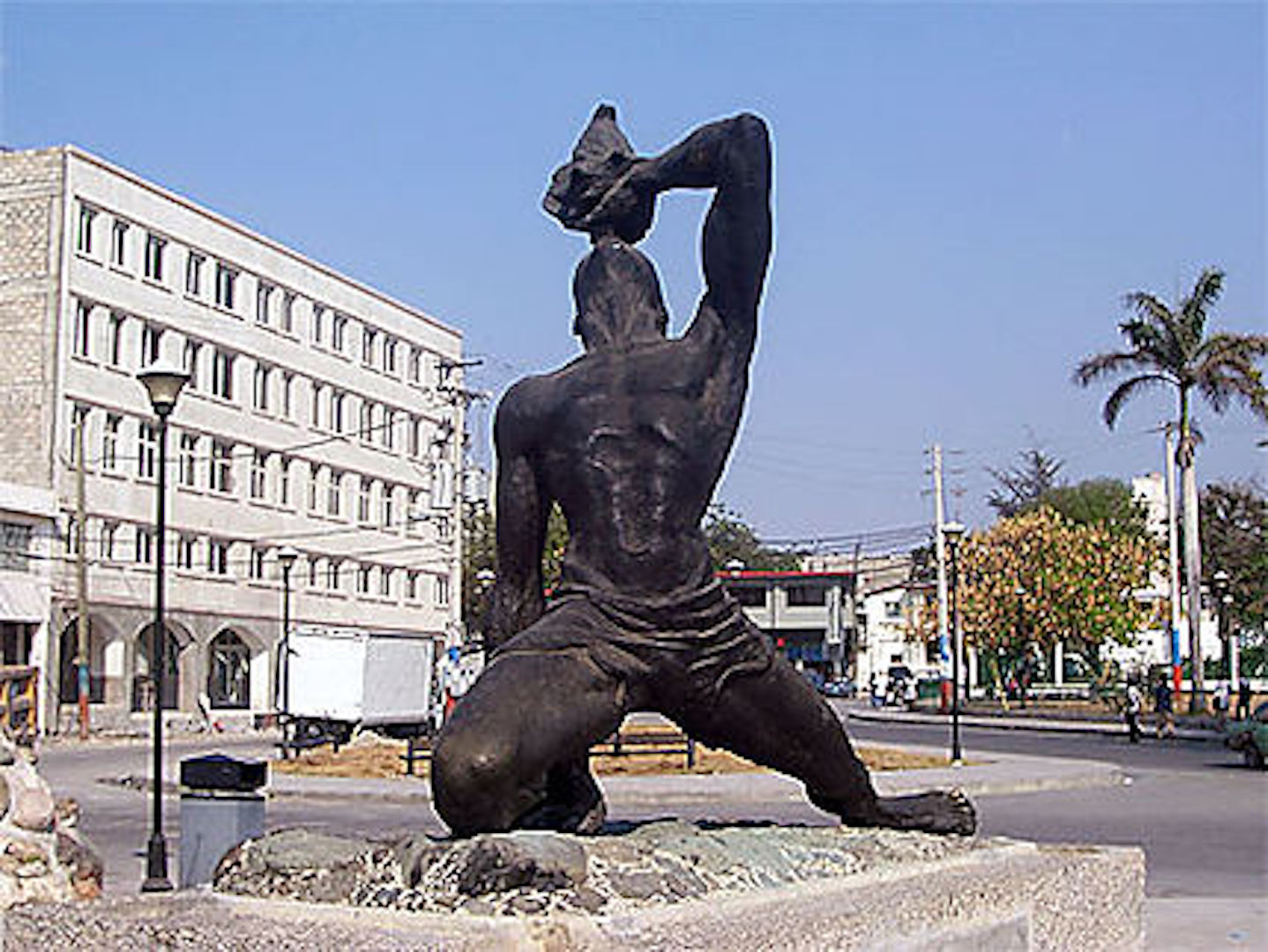
In 1804, when Haiti’s Independence was proclaimed, the new state did not merely come into existence. It redefined, in practice, what it means to be free. Several historians, including Laurent Dubois and C.L.R. James, have shown that in a world where slavery still structures economies and empires, Haiti made a radical gesture: it permanently abolished the slave system and affirmed the universality of human freedom.At that time, neither the great European powers nor the young American states were ready to go so far. Even the ideals of the French Revolution, which carried a universal promise, stop at the borders of colonial reality.
Haiti, however, crossed that border. This gesture is not only political. It is philosophical. It is civilizational. It places the country, not behind, but ahead normatively of its time. And it is precisely there that the paradox arises. For this advancement comes at a cost.
Paul Farmer clearly demonstrated it in his book “The Uses of Haiti.” Diplomatically isolated, perceived as a threat by the slave powers, Haiti is gradually marginalized from the international system. The young state becomes a special case, a dangerous precedent that must be contained. Trade becomes scarce, alliances close, and recognition is slow.Then comes the episode with the heaviest consequences: the independence debt imposed by France in 1825. In exchange for official recognition, Haiti is forced to pay a colossal indemnity to the former colonists. This debt, which will weigh on public finances for decades, diverts essential resources that could have been invested in infrastructure, education, or industrialization.
In other words, the country that was ahead in terms of principles is forced to slow down materially. This gap between ideological advancement and economic lag is not the result of chance. It is the product of an international system which, at the time, did not reward moral boldness but protected established interests.From then on, another reading becomes possible. What if what we today call ‘delay’ was in reality the consequence of a major historical rupture?
What if Haiti had not missed a train… but had simply taken a path that the rest of the world was not ready to follow?
This hypothesis forces us to profoundly reconsider our way of evaluating the country. It does not deny the current difficulties. It does not minimize the crises. But it refuses to reduce Haiti to a linear trajectory of decline or failure. It rather invites us to see in its history a persistent tension between what it has been able to invent… and what the world was ready to accept.For a country can be impoverished without being behind. It can be marginalized without being at fault. It can even be isolated… precisely because it has been ahead. It is this weight of the vanguard that Haiti still carries today.
And it is from this founding contradiction that one must examine, in the upcoming articles, economic indicators, models of modernity, ecological choices, and political blockages. For before concluding that a country is “behind,” one must first ask whether it has, at some point in its history, changed the rules of the game…