
|
Getting your Trinity Audio player ready...
|
Between demographic explosion and economic stagnation, Haiti finds itself at a decisive crossroads. Economist Kesner Pharel sounds the alarm.
In less than half a century, Haiti has experienced a radical demographic transformation. In the 1970s, the country had about 5 million inhabitants. According to a recent document from the Haitian Institute of Statistics and Informatics (IHSI), the population today is close to 12 million inhabitants. It has therefore more than doubled in the space of two generations.
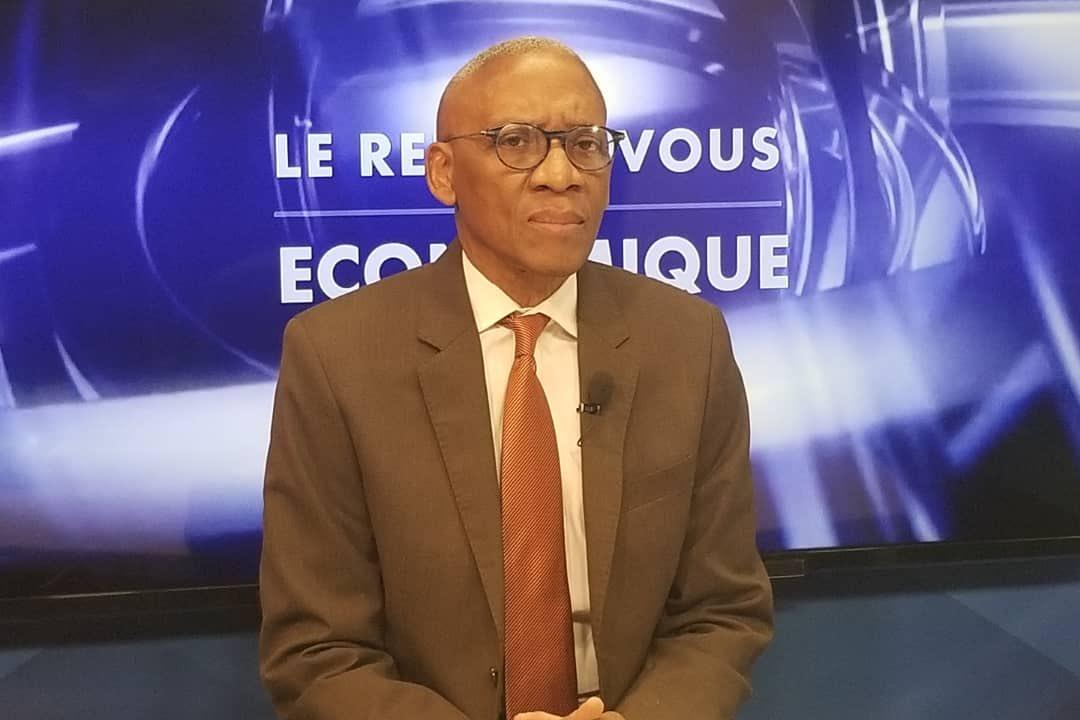
This numerical observation raises a fundamental question, posed by economist Kesner Pharel, CEO of Group Croissance, during his appearance on Magik9 on Wednesday, May 20, 2026. ‘Are we producing enough to meet this demand in terms of population increase?’ wonders the economist, especially since economic growth has not kept pace with that of the population.Kesner Pharel’s diagnosis is unequivocal. Over the last fifty years, the demographic rate has never really declined, remaining around 2%, before dropping slightly below 1.5% according to the latest available data. On the other hand, when internal and external shocks that the Haitian economy has endured over the same period are taken into account, economic growth shows an average negative outcome.The gap is therefore abyssal. On one side, a population that is continually growing with increasing needs in terms of education, health, employment, and housing. On the other, an economically structurally fragile, incapable of absorbing this demographic pressure.
A concentration in two departments
The other troubling dimension of this demographic reality is geographical. Haiti suffers from an extreme concentration of its population in two departments: West and Artibonite. “The West department alone accounts for about 35% of the national population, or more than 4 million inhabitants. Artibonite is close to 2 million. Together, these two departments account for more than half of the country’s total population,” laments Kesner Pharel.”Of the twenty most populous municipalities in the country, fourteen are located in these two departments. Of the top ten, eight come from there. Municipalities such as Léogâne, with over 200,000 inhabitants, Petite-Rivière-de-l’Artibonite with nearly 187,000, or Gros-Morne with over 70,000 inhabitants, demonstrate this density often ignored by policymakers,” warns the economist.
When inaction creates the bomb
For Kesner Pharel, it is precisely this indifference of political, economic, and social elites to demographic realities that has led to the current situation. “The lack of planning has resulted in uncontrolled urban sprawl, deficient infrastructures, precarious neighborhoods, and slums that have created a fertile ground for social and security instability,” Kesner Pharel explained to Roberson Alphonse. “When leaders do not take into account demographic changes and economic shocks, it inevitably leads to urban sprawl without adequate infrastructure,” he warned. The demographic dividend: still possible? Yet, all is not lost. Demography is not fate. Well-managed, this large youth population constitutes a demographic dividend, that is, a productive force capable of energizing the economy, stimulating innovation, and fueling growth.Countries like Bangladesh or Rwanda have been able to turn their demographic transition into a lever for development.
But for Haiti, this requires courageous political choices: investing massively in education and vocational training, decentralizing economic development towards underexploited regions, and creating the conditions for productive employment for a youth who are currently idle.
Demography is either a bomb or an asset. The choice belongs to the decision-makers.