
|
Getting your Trinity Audio player ready...
|
In the landscape of contemporary Haitian literature, where voices intertwine to express the complexity of our shadows and lights, there sometimes emerges a pen whose precocity seems to defy time.
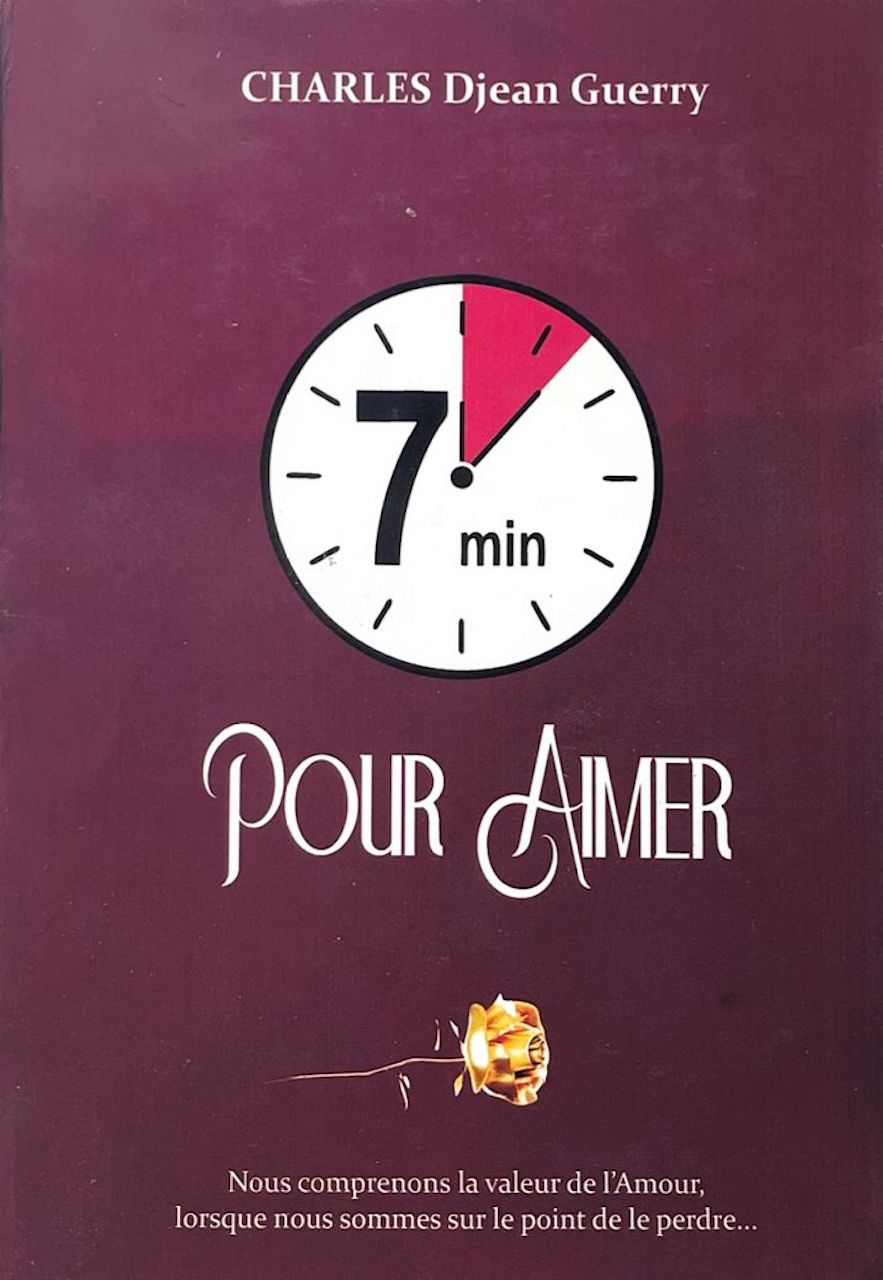
In the landscape of contemporary Haitian literature, where voices intertwine to express the complexity of our shadows and lights, there sometimes emerges a pen whose precocity seems to defy time. Charles Djean Guerry belongs to that breed of writers who, barely having entered literature, already possess that very particular phrasing, that way of sculpting silence to extract universal truths. His novel, 7 Minutes to Love, does not merely tell a story; it holds the reader’s breath, imposing a rhythm where every word is a beat, every punctuation a held breath, in a narrative construction of striking maturity.It is with a mastery that the young author manages to transfigure reality, to suspend the course of time to leave us, breathless, facing the evidence of a writing that only asks to be experienced. With rare elegance, his pen plunges us into the soul of his work even before turning the first page; Charles Djean Guerry’s novel is an apparition, in the same vein as Paul Claudel’s “The Annunciation to Mary.” This is not a question of mere reading, but of total immersion, an incursion into the depths of the human psyche where language, through its precise structure and a phrasing of bewildering maturity, seems to pulse to the very rhythm of the emotions it describes. From the very opening, the author seizes us: he imposes a rhythm, that of vital urgency, and carries us, like stowaways on Élina’s ambulance, into this suspended space-time where each second becomes an eternity laden with meaning.With a precocity in style, an ability to sculpt silence to extract universal truths that many take a lifetime to formulate; Charles Djean Guerry does not merely tell stories, he unfolds a poetics of the moment where the setting, whether it is the driving rain on the windows or the gray light caressing a face, becomes the organic extension of his characters’ inner torments. These phrases, with their haunting musicality, already echo the most beautiful pages of contemporary literature. The narrative maintains a perfect balance between restraint and passion, between lexical sparseness and the evocative richness of the imagery. It is prose that breathes, hesitates, burns, and, with every paragraph, confirms to us that we are in the presence of a singular voice, a voice that has already found its own timbre, its depth, and its necessity.