
|
Getting your Trinity Audio player ready...
|
As artificial intelligence changes the way people work, communicate, and access information, this technology is repeating old gender stereotypes, which increase online abuse and keep women out of the decisions that will shape the digital future, the UN warns.
As artificial intelligence is transforming the way people work, communicate, and access information, this technology is reproducing old gender stereotypes, which amplify online violence and exclude women from the decisions that will shape the digital future, warns the UN.
This warning from UN Women comes as generative AI becomes part of the daily lives of billions of people, from writing emails to creating content, and even preparing communication campaigns or professional presentations.But behind this massive adoption, the UN agency points out a growing risk: algorithms trained on data shaped by decades of unequal representations can carry forward the biases of the past into tomorrow’s technologies.In the UK, 88% of advertising and media agencies are already using artificial intelligence in one way or another, highlighting the scale of this transformation.
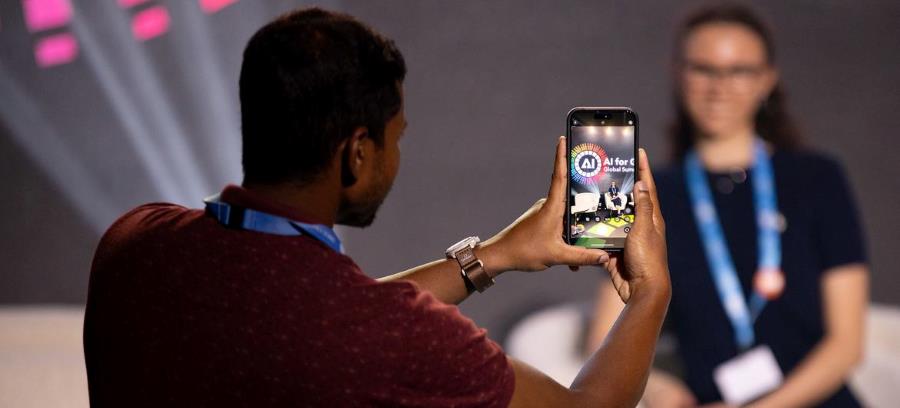
With the UN Global Dialogue on AI Governance and the ‘AI for Good’ global summit coming up in Geneva at the beginning of July, UN Women is calling on governments, tech companies, and developers to incorporate gender equality right from the design, deployment, and governance of AI systems.Artificial intelligence technology is developing rapidly.
Deeply ingrained biases
The available data shows that the phenomenon is far from marginal. A study of 133 AI systems found that 44% had sexist biases, while more than a quarter combined biases related to both gender and race.
Large language models still frequently associate women with the domestic sphere, family, or caregiving, while men are more often tied to leadership, business, and professional success. In some cases, these systems have produced responses portraying women as sexual objects or subordinate to men.According to UN Women, when AI models were asked to complete sentences starting with a reference to a person’s gender, about one in five responses contained sexist or misogynistic elements. Some responses even went so far as to describe women as property or objects.
For the UN agency, these results aren’t just simple technical mistakes. They reflect structural trends linked to the data used to train these systems.
“AI models inherit biases from decades of texts written by humans, about humans, in a world where women were associated with the home and family, while men were associated with business and careers,” explained Jayathma Wickramanayake, Head of Digital Technologies at UN Women, to UN Info.According to her, the problem isn’t due to a programming flaw that could be fixed with a simple update, but rather a lack of political choices and governance.
Out of 138 countries studied, only 24 have included the gender issue in their national AI strategies, and only 18 have concrete measures in place that consider equality between women and men.Violence amplified by AI
For many women and girls, the consequences go far beyond the issue of stereotypes. Artificial intelligence also makes it easier to create and spread new forms of online violence.
According to UN Women, nearly one in four women among human rights defenders, activists, and journalists surveyed said they had experienced digital violence facilitated by AI. Twelve percent reported that personal images had been shared without their consent, while 6% said they had been targeted by “deepfakes” or manipulated content.
With the rise of AI-generated content, UN Women believes that harassment, manipulation, and attacks on image could become harder to identify and fight.A digital future still too male
The UN agency is also concerned about the low representation of women in the sectors developing these technologies.
According to the International Labour Organization (ILO), women make up only 30% of the global workforce in the AI sector. This underrepresentation could, according to UN Women, limit the diversity of perspectives built into the systems that will shape future societies.
Without greater participation from women and underrepresented groups, existing biases could be reinforced and become a lasting feature of emerging technologies.The economic impact could also be pretty significant. Outside the tech sector, women are almost twice as likely as men to have jobs that are highly at risk of being automated.
UN Women warns that without targeted policies, AI could make existing gaps worse and leave even more people out of the benefits of digital transformation.
Making inclusion a driver of innovation
For the UN agency, tackling AI bias isn’t just a human rights issue—it’s an economic choice too.
A study by the ‘Unstereotype Alliance,’ a UN Women initiative to get rid of stereotypes in advertising, shows that campaigns free from sexist portrayals perform better commercially, with more consumer engagement and stronger brand loyalty.As AI takes on a bigger role in content creation and marketing, UN Women believes that companies that incorporate inclusion into their processes will gain a lasting advantage.
In June 2026, the agency launched a practical guide aimed at marketing professionals to help them identify biases before launching campaigns using generative AI.
UN Women emphasizes one point, though: artificial intelligence is not doomed to reproduce inequalities. When developed responsibly, it can actually help detect stereotypes, broaden representation, and improve access to services for often-overlooked populations.But that will depend on the choices made today.
In Geneva, the agency’s message will be clear: if women and girls don’t take part in building the future of AI, the inequalities of the past are likely to be embedded in the technologies of tomorrow.