
|
Getting your Trinity Audio player ready...
|
The numbers speak for themselves: collaborating with the private sector can make a real difference in transforming rural areas.
The numbers speak for themselves: collaborating with the private sector can make a real difference in transforming rural areas. In IFAD projects with strong private sector involvement, there is an average income increase of 64%, four times higher than in projects without such participation.
The public-private-producer partnership model (4P) is an essential mechanism to strengthen this collaboration. Unlike traditional public-private partnerships, 4Ps explicitly include small producers as full partners – not merely as suppliers or beneficiaries – thus serving as catalysts for community-driven sustainable economic growth.IFAD puts this model into practice through the ELPS initiative, an initiative to strengthen links between the private sector and small producers. Launched in 2023 by the Ministry of Agriculture, Forestry and Fisheries of Japan, the ELPS initiative connects companies from the North with small producers from the Global South within the framework of joint public‑private investments.As the main implementing body of the ELPS, IFAD acts as an intermediary in this evolving partnership model where everyone has something to gain, relying for this on its vast network of rural communities and producer organizations. Ultimately, the initiative mobilizes the combined power of public and private investments to increase rural incomes, create jobs, and stimulate sustainable economic growth.The IFAD-Japan Partnership
Japan is one of the founding members of IFAD and one of its historical partners. Since 1977, the country has contributed more than USD 662 million to IFAD replenishments – including USD 42.7 million for IFAD13 in 2025 – thus significantly participating in the nearly USD 23 billion invested by IFAD and its partners in ongoing projects.
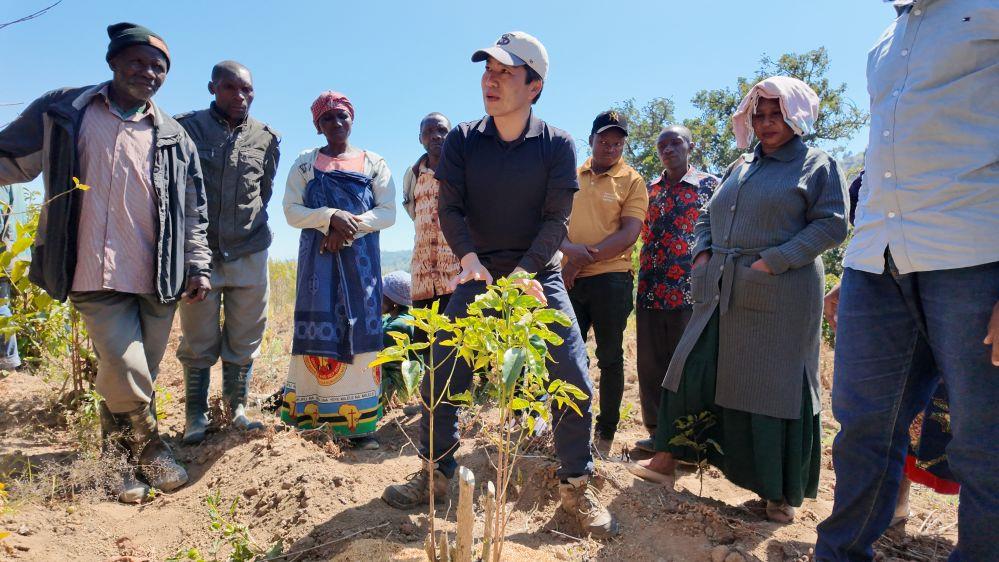
Its contributions now allow for attracting more private investments, as well as the capital, innovation, technology, and market access that come with them. In January 2026, Japan had allocated USD 3.6 million to the implementation of the ELPS initiative. Of the USD 1.3 million already committed, the initiative has mobilized USD 360,000 in private co-investments from large Japanese companies.Thanks to the coffee manufacturer UCC Japan and the trading giant Marubeni, ELPS strengthens producer organizations in Tanzania and promotes sustainable coffee practices. The goal is to double productivity by the end of 2027 while improving supply consistency.
Two other ELPS pilot interventions are about to be implemented. In Bangladesh, a partnership with the Euglena Group aims to improve sesame handling and storage after harvest, thereby diversifying Japan’s imports, with an increase in income for small producers of 10 to 20%. In Rwanda, a collaboration with OSTI Group supports 500 farmers in adopting organic farming practices and in better management of macadamia trees.