
|
Getting your Trinity Audio player ready...
|
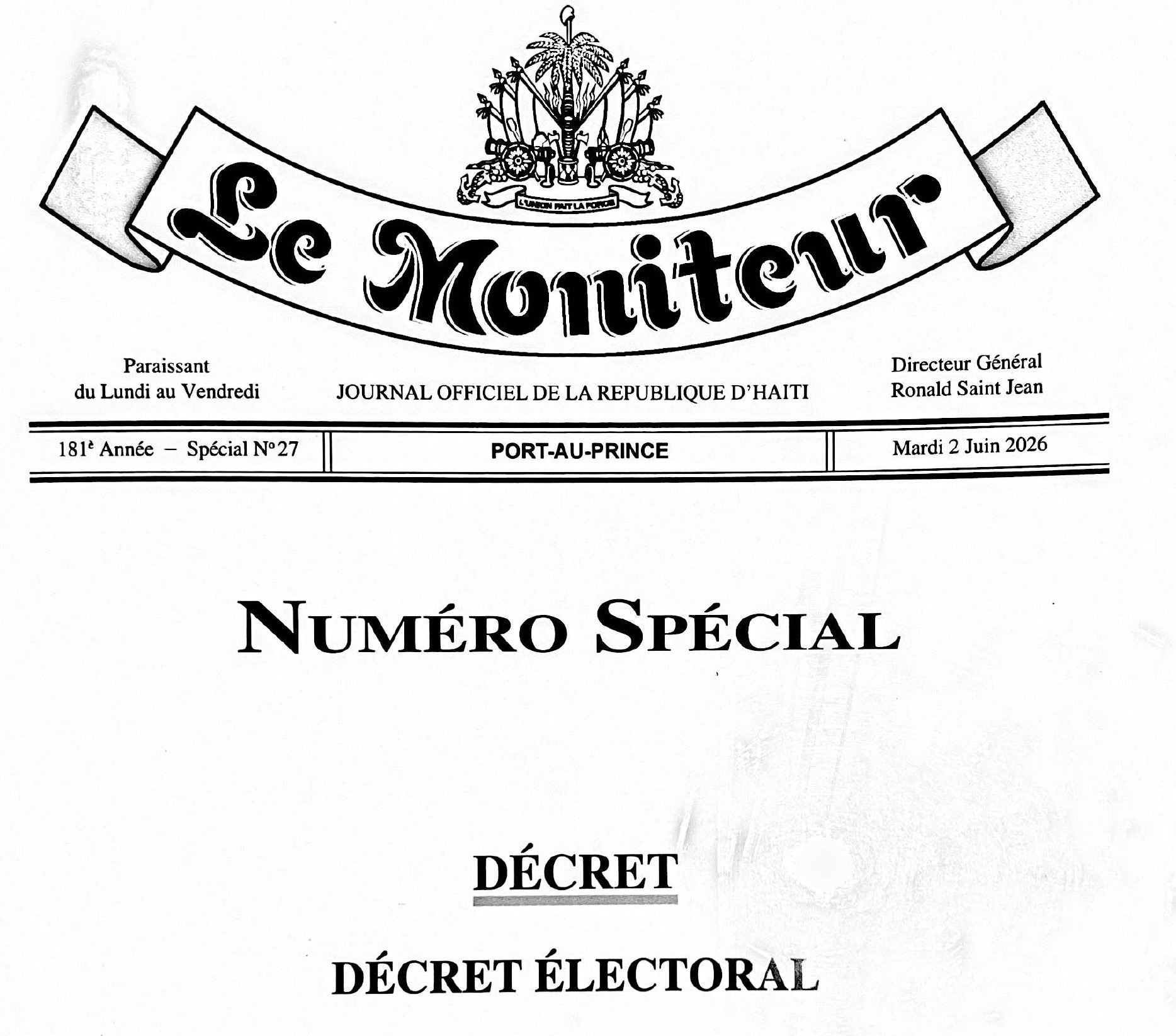
Although the electoral decree clearly states that to be candidates in the upcoming elections you must not be subject to sanctions from the United Nations Security Council, the document issued by the executive also bars people sanctioned by the U.S. Treasury Department and foreign countries from running.
Among the many documents required to submit an application, the electoral decree requires the applicant in its article 153, paragraph 20, to provide “a certificate from the Bank of the Republic of Haiti (BRH) certifying that the candidate is neither an insolvent debtor, nor bankrupt, nor banned from using checks, nor involved in repeated payment incidents.”
According to several economists contacted by Le Nouvelliste, the Bank of the Republic of Haiti knows it shouldn’t take risks by making transactions in its system with someone sanctioned by the United States Treasury Department. “The bank is supposed to know its client. It’s an important principle in the financial world,” according to one of our sources.”From the moment someone is sanctioned by powerful countries, the bank, via a banker’s draft, gives them the money they had in the system. At that point, this person is no longer a bank client and is banned from having a bank account. Yet, to have a checkbook, you need to have a bank account…”, according to the explanations of one of the economists contacted by the newspaper.
One of our sources added nuance, pointing out that someone who is sanctioned by a foreign country in a matter unrelated to finance shouldn’t be banned from having a checkbook. “But in small countries like Haiti, out of fear of having problems with the sanctioning countries, which are usually powerful, financial institutions, to protect themselves, automatically exclude sanctioned people from their system,” she explains.
On the other hand, regarding the provision of Article 153, paragraph 20, which mentions someone’s bankruptcy as a reason for their candidacy to be inadmissible, our source points out that bankruptcy is not synonymous with financial misconduct… The other requirements of Article 153… To be eligible, the application file for candidacy to elective positions, according to Article 153, includes, among other things, the following documents: “a notarized copy certified true to the original of the property title proving that the presidential candidate owns at least one building in the country; a notarized copy certified true to the original of the property title proving that the candidate for legislative elections owns a building, or a certified true copy of a document showing that they practice a profession or industry in the relevant Department or constituency;”a notarized copy certified as true to the original of the Built Property Tax (CFPB) receipt, if he/she is the owner…
Then, the candidate must also provide “a criminal record certificate dated less than six (6) months issued by the registry of the Court of First Instance of the candidate’s residence attesting that the candidate has never been sentenced to a punitive or disgraceful penalty; a sworn statement signed in front of a notary certifying that he/she has never been convicted or imprisoned both in Haiti and abroad for economic offenses, sexual violence, illegal trafficking of firearms, drugs, kidnapping, and unlawful detention of persons, or any other criminal or delinquent offenses…”Article 153 also requires “the certificate of discharge from management, if the candidate has been an accountant or manager of public funds; proof of residence or domicile confirmed at no cost by the local magistrate, signed and issued with the minutes attached; a clean police record issued by the Central Directorate of the Judicial Police (DCPJ); a notarized copy certified as true to the original of the asset declarations, if the candidate was required to submit them…” The candidate must also provide “certificates from the General Directorate of Taxes (DGI) proving regular payment each year of the final tax declaration for the past five years.”Tax return certificates filed outside the due fiscal year are not acceptable; a certificate from the National Old-Age Insurance Office (ONA) and the Industrial Development Fund (FDI) confirming that the applicant is not an insolvent debtor; the receipt from the DGI confirming the payment of the registration fee set by this Decree…