
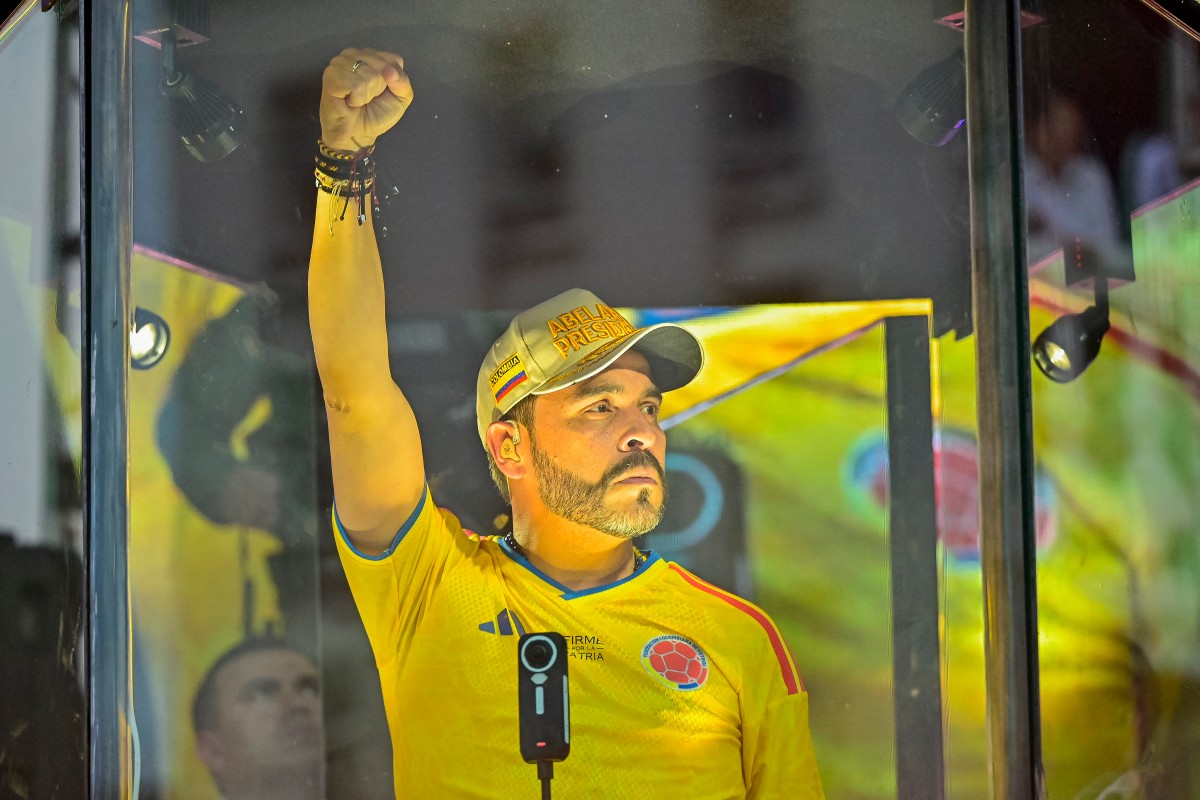
The anti-establishment lawyer backed by the United States, Abelardo de la Espriella, narrowly won the second round of the presidential election in Colombia on Sunday, swinging the country far to the right, on the promise of cracking down on armed groups tied to drug trafficking.
With more than 99% of polling stations having sent in their results, the businessman new to politics is getting 49.65% of the votes, according to preliminary results, compared to 48.71% for his leftist rival Ivan Cepeda, who can’t catch up.
About 41 million voters were called to go to the polls for this crucial election amid the resurgence of violence from armed groups.In the north of Bogotá, horns blared as the results were announced.
The 47-year-old millionaire ran as an ‘outsider’ and a patriot.
The man who calls himself ‘The Tiger’ rose rapidly with a fiery speech against guerrillas and the left, which is in power for the first time in Colombia’s history with outgoing president Gustavo Petro.
Opposing him, 63-year-old Senator Ivan Cepeda was boosted by the popularity of his ally Gustavo Petro, especially among the working classes grateful for poverty reduction and higher wages in one of the world’s most unequal countries.
A philosopher and human rights advocate, Mr. Cepeda, who trailed his hard-right rival in the first round, surprised everyone by managing to keep close to his opponent in the second round.The presidential election is taking place in a tense context. Colombia is experiencing an unprecedented surge in violence since the 2016 signing of the peace agreement with the FARC guerrillas, with community leaders being threatened or even killed, bomb attacks against civilians, and a presidential candidate being assassinated.
Nervousness and hopes
Abelardo de la Espriella represents the rejection of Gustavo Petro’s figure—who the Constitution prevents from running for a second term—and a tough stance against organized crime in a country that is the world’s top cocaine producer.The millionaire keeps saying he wants to “defend Colombia by reason or by force,” which is the opposite of Gustavo Petro’s policy of negotiating peace with armed groups.
His victory “paves a path to prosperity and security for the country,” said Samuel Gomez, a 39-year-old college director in Barranquilla.
Ivan Cepeda, the son of a communist politician killed by police with the help of paramilitaries, is, on the other hand, a strong advocate for the victims of Colombia’s six-decade-long armed conflict.
He was one of the architects of Petro’s “total peace” strategy, which produced meager results. The progressive had promised to deepen social reforms.One of his supporters, Santiago Galindo, said after the results that he felt “very nervous” about what the right-wing president-elect might do. “I am very worried about the safety of the most disadvantaged classes; he is going to use them in a war that (…) could only be avoided through dialogue,” said this bank employee in Bogota, with teary eyes, to AFP.
“Shock Solutions”
An admirer of Salvadoran president Nayib Bukele, Argentine Javier Milei, and American Donald Trump, the hard-right representative promised to build mega-prisons where inmates would be fed “bread and water,” to bomb drug traffickers’ camps with the support of the United States and Israel, and to cut the state apparatus by 40%.Criticized for his misogynistic and homophobic statements and for defending paramilitaries and drug traffickers, Abelardo de la Espriella also supports gun ownership and the rise of hydraulic fracturing.
Relations with Washington, a historic ally of Bogotá, were another highlight of the campaign.
Colombia becomes the latest Latin American country to swing to the right after Argentina, Chile, and Ecuador.