
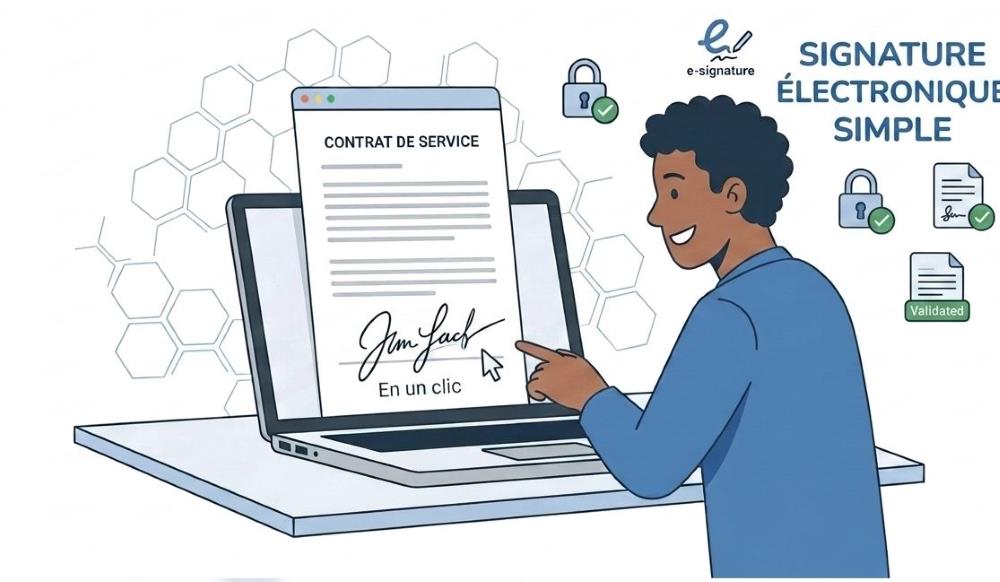
In a press release dated May 15, 2026, received by Le Nouvelliste, the National Telecommunications Council (CONATEL) informs the public, public institutions, businesses, and digital stakeholders that the Electronic Signature is legally recognized in Haiti in accordance with the law of February 14, 2017, on the Electronic Signature, as amended by the Decree of August 20, 2025, as well as the Order of September 18, 2025, establishing the conditions for its implementation.
In a press release dated May 15, 2026, received by Le Nouvelliste, the National Telecommunications Council (CONATEL) informs the public, public institutions, businesses, and digital actors that the Electronic Signature is legally recognized in Haiti in accordance with the law of February 14, 2017 on the Electronic Signature, as amended by the Decree of August 20, 2025, as well as the Order of September 18, 2025, setting the modalities of its application.
According to the note, Haitian legislation recognizes several levels of electronic signature, including the Simple Electronic Signature (SES), the Advanced Electronic Signature (AES), and the Qualified Electronic Signature (QES). The Simple Electronic Signature is already legally used in Haiti in many everyday digital services, notably through:temporary validation codes (OTP) sent by SMS or by email;
certain authentication procedures on digital platforms;
the validation of electronic forms;
online transaction confirmations;
electronic exchanges allowing the identification of the author of an action or consent.
Thus, in accordance with the law, the simple electronic signature has legal value and can be accepted as a means of proof within the limits defined by the applicable legal framework.