
The insecurity that has prevailed for ages in the Metropolitan Area, along with its side effects like political instability, the decapitalization of small businesses, economic crisis, massive population exodus, among others, has significantly affected families in all their aspects.
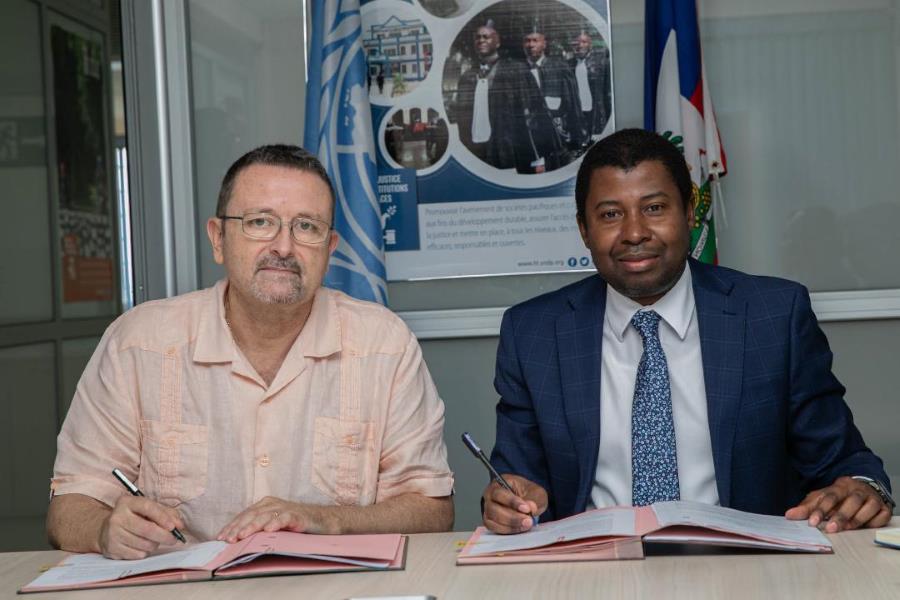
The insecurity that has prevailed for years in the Metropolitan Area, along with its consequences like political instability, the loss of capital for small businesses, economic crisis, and mass population exodus, among others, has significantly affected families in all their aspects. In response to this situation and the tragic effects such issues can have on the mental and physical well-being of families, the State University of Haiti (UEH) and the United Nations Development Programme (UNDP) have decided to support internally displaced people through a psychosocial assistance program.The State University of Haiti (UEH) and the United Nations Development Programme (UNDP) signed a letter of agreement on Friday, July 31, 2026, as part of the REKONEKTE project, an initiative aimed at improving access to mental health and psychosocial support services for internally displaced people in the metropolitan area of Port-au-Prince, according to a statement dated August 3 from the UEH Communication Unit.
This partnership (UEH/UNDP), funded by the Republic of Korea, has allowed UEH to leverage its academic expertise to help provide psychosocial support to populations affected by violence and forced displacement. The university’s part of this initiative will be carried out by a team coordinated by Professor Ronald Jean-Jacques, with support from psychologists, social workers, and field supervisors, the statement explains.Speaking at the ceremony, the rector of UEH, Professor Dieuseul Prédélus, reminded everyone of the seriousness of the security crisis hitting Haiti and its impact on mental health and the social fabric of communities.
He pointed out that violence, mass displacement, and the breakdown of support networks have deeply affected thousands of families, especially women, children, and young people.
Mr. Prédélus, during his speech, also highlighted the commitment of the State University of Haiti to community services, recalling the actions already taken in partnership with the Haitian Association of Psychology, where a listening and psychosocial support system with psychologists and social workers trained within the Faculties of Ethnology and Human Sciences of UEH has been set up to serve people in distress within the Haitian population.For the Rector of UEH, this collaboration with UNDP reflects the University’s mission to put research, training, and scientific expertise at the service of major national challenges. Furthermore, he expressed the hope that this partnership will be the starting point for long-term cooperation on other key issues, including urban violence, violence against women and girls, environmental concerns, and the promotion of a culture of peace.
Through this commendable initiative, UEH and UNDP aim to contribute to a sustainable response to the crisis, by placing psychosocial support, strengthening national capacities, and supporting vulnerable communities at the heart of recovery efforts, concludes the UEH statement.