
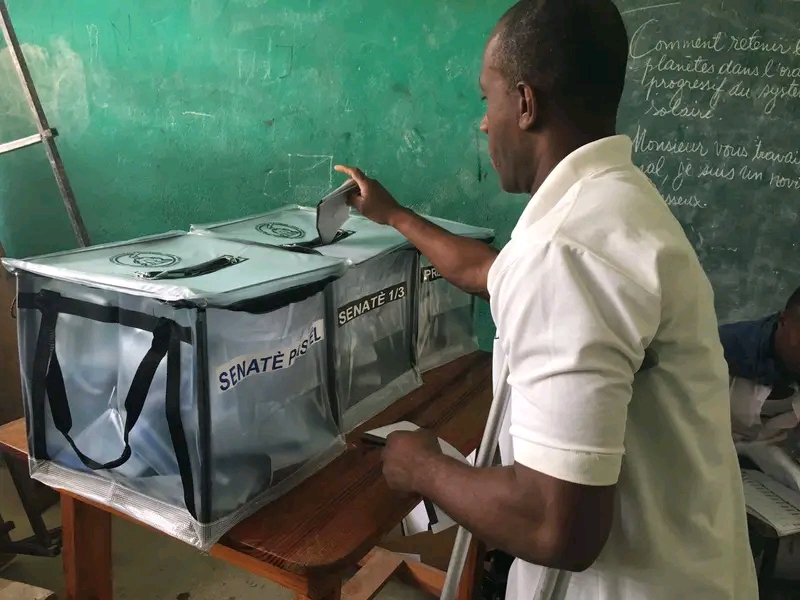
More or less, the electoral process is slowly moving along in the fourteen municipalities of the North-East department.
Wading through difficulties, the electoral process is steadily making its way in the fourteen municipalities of the North-East department. From July 20, the date when voter registration operations began in the department, until last weekend, about 45,000 citizens of the North-East have registered on the electoral list, according to a source at the Departmental Electoral Office (BED). This progress comes as registration operations continue in the Registration and Voting Centers (CIV) across the department. As of September 21, the Provisional Electoral Council (CEP) reported 104 operational CIVs in the North-East.In the municipalities, the process is also starting to take on a new dimension with the submission of application files. People running for various elected positions, especially in local government, are beginning to take steps with the communal Electoral Bureaus (BEC). The electoral decree states that candidates must show up with all the required documents to declare their candidacy to the relevant BED or BEC, depending on the position they’re aiming for.
Files considered heavy by some candidates
But behind this apparent progress, difficulties are starting to be felt by some candidates, especially those aiming for mayor and CASEC positions. Several of them criticize the amount of documents required by the electoral framework, believing that putting together the files could become an obstacle to their registration as candidates. “For citizens with limited means, gathering all these documents within the deadlines can be quite challenging,” says one of those affected, who fears that this situation might discourage some people from running in local elections.The electoral decree indeed sets out a series of conditions and documents that must accompany candidacy declarations. For local authorities, candidates must meet requirements related to identification, registration on the electoral roll, tax status, and, where applicable, asset declaration. The text also provides for several other documents in the general application file, including an information form, photographs, a CV, and a medical certificate. A change published in July also added a sworn statement signed in front of a notary, covering, among other things, the absence of certain convictions or detentions.The issue of the documents needed to get a police certificate adds to this list. In August, the Central Directorate of Judicial Police (DCPJ) had specified that people wanting to run for CASEC, ASEC, municipal councilor, mayor, and legislative or presidential positions must provide, among other things, a receipt from the DGI, a copy of their national ID card, a birth certificate or an extract from the National Archives, as well as passport photos.
The calendar is moving forward despite the concerns
Despite these worries, operations are continuing in the North-East. Submitting applications is now one of the main steps in the process in the municipalities, alongside the ongoing voter registration. For candidates for local authorities, documents can be submitted to the locally competent BEC, in accordance with the provisions set by the CEP. The decree also specifies that a file missing a required document may be declared inadmissible by the competent electoral office.As the operations move forward, the next few days should allow us to gauge the candidates’ ability to complete their files and the electoral administration’s ability to support them through the different steps. In the Northeast, where around 45,000 voters have already been registered since the operations started, the process is entering a phase where citizen registration and candidate validation will gradually overlap, with the background concerns of material and administrative constraints raised by some local actors.

