
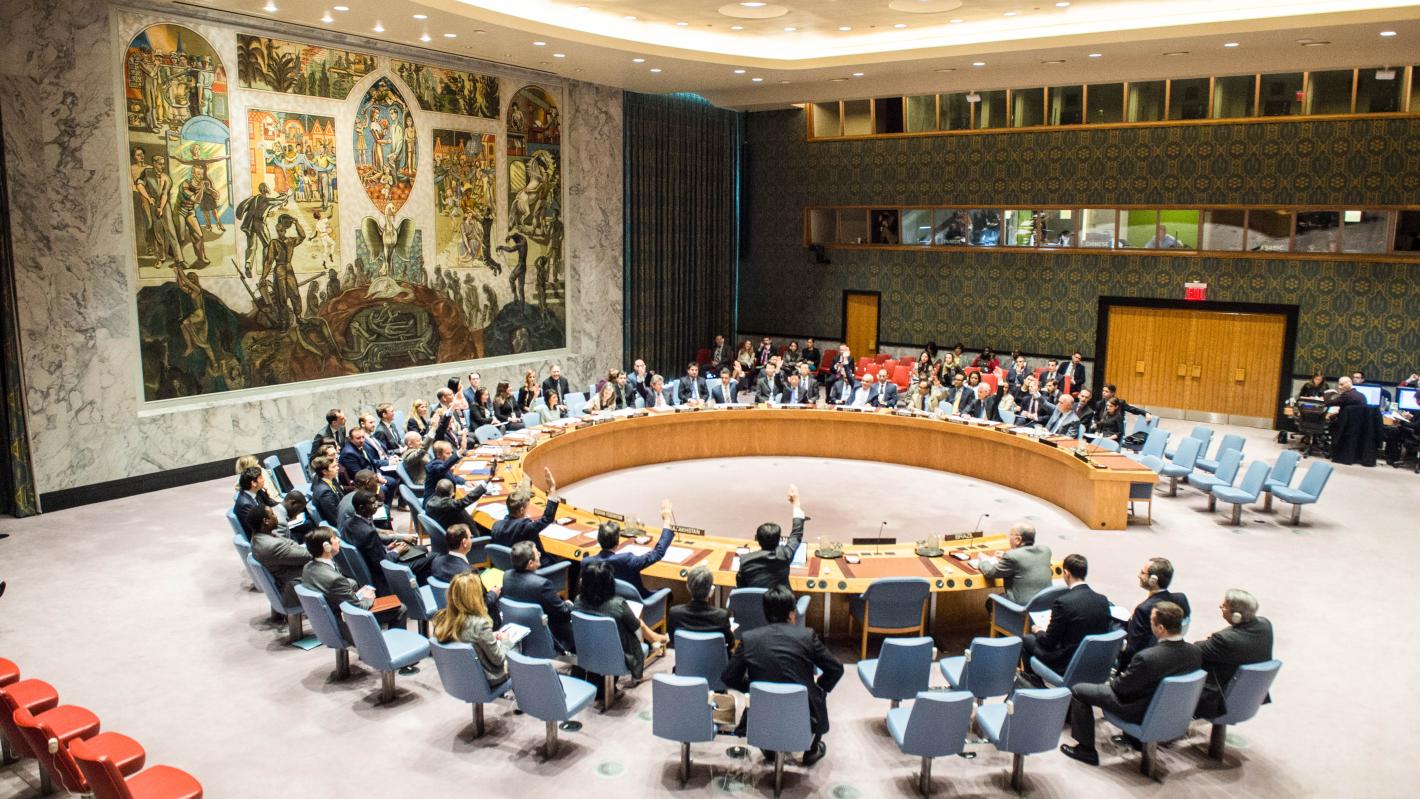
The UN Security Council is expected to vote on a draft resolution extending the mandate of the Gang Suppression Force (GSF) for another six months, until March 31, 2027, on Tuesday, September 29, 2026, according to an article in the Security Council report this Monday.
The UN Security Council is expected to vote on a draft resolution extending the mandate of the Gang Suppression Force (GSF) for an additional six months, until March 31, 2027, on Tuesday, September 29, 2026, according to an article in the Security Council report this Monday.
The draft resolution also asks the Secretary-General to continue providing logistical and operational support through the UN Support Office in Haiti (UNSOH).
The text was drafted by Panama and the United States, according to the article, which notes that the GSF — a multinational non-UN mission set up by the Council to fight armed gangs in Haiti — was first authorized on September 30, 2025, by resolution 2793 for an initial period of 12 months.The resolution also asked the Secretary-General to create UNSOH. It had received 12 votes in favor and three abstentions (China, Pakistan, Russia). The GSF succeeded the Multinational Security Support (MSS) mission.
After the departure of the Kenyan troops in April, who made up most of the MSS, new contingents arrived: Chad, Jamaica, Mongolia, Sri Lanka. According to the latest report of the Secretary-General on BINUH, as of July 8, the military component of the GSF had 1,083 personnel, and the civilian component had 16 members. UNSOH has been fully operational since April 1.Negotiations on the draft resolution
The co-authors of this draft resolution circulated a first draft on September 4, with comments open until the 9th. A first negotiation meeting took place on September 10, followed by a revised text on the 14th, and then a second informal meeting on the 16th. A second revised text was kept under wraps until September 23. China broke the silence, followed by comments from other members. No changes were made, and the text was marked in blue on September 26, this article reported.
Panama and the United States chose a short text, referred to as a ‘technical rollover,’ meaning a simple technical extension of the mandate without any substantial change. They proposed six months, considering that the GSF will not reach full operational capacity until the end of the year.Mandate Duration and Request for a Strategic Review: Points of Contention
China and Russia proposed a three-month extension and the addition of an independent strategic review on progress toward lasting stability in Haiti. This review was meant to cover both Haitian efforts and the effectiveness of international support, including the GSF.
These proposals were not adopted, which led China—backed by Russia—to break the silence, according to the Security Council Report article.
The majority of members supported a six-month extension, believing that a shorter mandate would not allow the GSF to become fully operational. They also thought that a strategic review before reaching full capacity would be premature.The text in blue therefore keeps the six months and does not include a request for a strategic review.
Legal status, privileges and immunities: a sensitive debate
Greece proposed adding a reference asking Member States to recognize the legal personality, privileges, and immunities of the SRF, in line with an agreement signed on July 27 between Haiti and the SRF, according to this article.
The revised text “notes” this agreement and “encourages” States to take steps to recognize the SRF’s legal status and grant the privileges needed for it to carry out its functions independently.
Several members stressed the need to avoid overly prescriptive language so as not to set a precedent for non-UN missions.Transparency, discipline and respect for international law
Denmark, supported by France, Latvia and the United Kingdom, proposed adding a reference to the need for the FSF to operate with the highest standards of transparency, conduct and discipline, and in strict compliance with international law, including human rights.
The text in blue includes this reference, with the mention “as applicable.”
Arms trafficking: a Sino‑American tension
China proposed several references to illicit arms flows and the Council’s embargo. The final text is limited to reminding that Haitian authorities have the primary responsibility to tackle the causes of instability, including illegal arms flows.Other proposals will be discussed during the renewal of the sanctions regime in October.
Child protection: an African request partially accepted
DRC, on behalf of the three African members (DRC, Liberia, Somalia), proposed adding references to the situation of children, especially their recruitment by gangs.
The final text acknowledges that many gang members are children and emphasizes the importance of the 2024 transfer protocol between the UN and Haiti, as well as the need for reintegration and psychosocial support programs.
Some more detailed proposals were not accepted.Tracking Haitian progress: a French proposal included
At France’s suggestion, the text asks the Secretary-General to report every six months on the progress made by Haitian authorities on the criteria set out in paragraph 24 of resolution 2793, including: strengthening the capacities of Haitian forces, border control, fighting arms trafficking, and preparing for the transfer of responsibilities to the Haitian state.

