
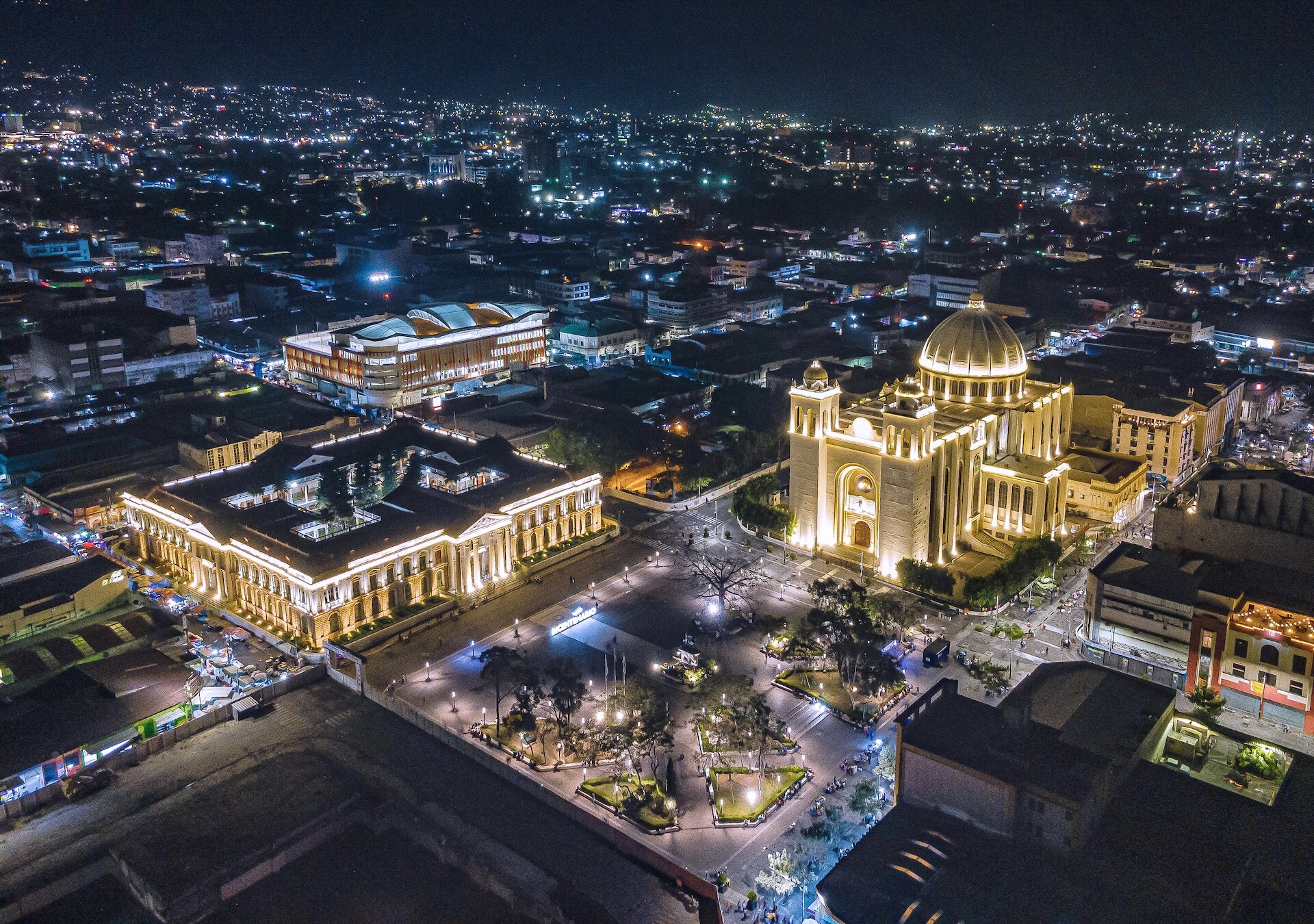
The comparison between Haiti and El Salvador over the past decade highlights two different political and economic paths.
The comparison between Haiti and El Salvador over the past decade highlights two divergent political and economic paths. While both countries had similar economic growth rates around 2.5% for Haiti’s 2016-2017 fiscal year, their paths gradually diverged starting with the 2018-2019 fiscal year. El Salvador managed to regain a solid economic growth momentum after the health and economic shock caused by the Covid-19 pandemic, while Haiti sank into a deep economic depression. This divergence is largely explained by fundamental differences in public security policy, governance, institutional stability, and the Haitian state’s ability to create an environment favorable to private investment.For Haiti, the challenge today is to break out of the vicious circle of insecurity, political instability, and economic decline. It’s not about mechanically copying President Bukele’s model, but about understanding the mechanisms that allowed that country to take an encouraging path of economic growth. After eight years of economic contraction, Haiti can’t really think about a genuine recovery without restoring the basic conditions for a real rebound in economic activity: safety for people and property, state authority, institutional stability, and investor confidence.With a population of around 6.4 million in 2026 (barely half that of Haiti) spread over an area of 21,041 square kilometers (compared to 27,750 km² for Haiti), El Salvador experienced military dictatorship from December 2, 1931, to October 15, 1979, the Hundred Hours War (July 14-18, 1969), and the Civil War from May 9, 1979, to January 16, 1992. This conflict was between the Farabundo Martí National Liberation Front (FMLN) and the government at the time, represented by its army.
2016-2018: a country facing violence and political distrust
Just ten years ago, El Salvador was among the most violent countries in the world. In 2015, the homicide rate had reached 106.8 per 100,000 inhabitants. Criminal gangs controlled a large part of economic activities, especially in the capital. Extortion, murders, forced displacements among the population, and the control of certain neighborhoods by criminal organizations were all obstacles to economic growth. The same scenario has been observed in Haiti over the past five years. Ten years later, El Salvador’s political and economic landscape has radically changed.The homicide rate dropped to 1.9 per 100,000 people in 2024, just five years after President Bukele took office on June 1, 2019. This profound change puts El Salvador among the countries least affected by homicides in Latin America. It’s one of the most remarkable shifts in recent Central American history.In the mid-2010s, El Salvador was deeply affected by the presence of two major criminal organizations, the Mara Salvatrucha (MS-13) and Barrio 18. These gangs controlled territories, demanded ransoms from merchants and transporters, and pressured local populations. Violence severely impacted economic activity. Businesses had to deal with the costs associated with insecurity. Households lived in a climate of fear, facing restrictions on their movements. For part of the population, weak institutions and the inability of successive governments to sustainably restore security fueled deep distrust of the traditional political class.This atmosphere of mistrust helped the rise of a new political figure: Nayib Bukele. A former mayor of San Salvador, the capital of El Salvador, he gradually built his image in opposition to the two main political forces that had dominated life since the end of the civil war: the Nationalist Republican Alliance (ARENA) and the Farabundo Martí National Liberation Front (FMLN).
2019: Nayib Bukele’s Rise to the Presidency and the Political Break
The February 2019 presidential election marked a decisive turning point in El Salvador’s political life. Nayib Bukele, at 37, won the election in the first round with about 53% of the vote, ending the dominance of the two traditional political parties. His rise to power was based on a message of breaking with old political practices, corruption, and the inefficiency of state institutions. He promised, in particular, to restore security, modernize public administration, and transform the country’s international image. His political communication, largely based on social media, helped boost his popularity.President Bukele is building a direct relationship with the public and presents his government as an alternative to the traditional political elites. This strategy really resonates with people who were tired of insecurity and economic hardships.
The legislative elections in February 2021 were another decisive step. Bukele’s party, ‘Nuevo Ideas,’ won an overwhelming majority in the Legislative Assembly. This victory gave him the means to deeply transform the institutions. On May 1, 2021, the new deputies removed the five magistrates of the Constitutional Chamber of the Supreme Court as well as the Attorney General. These decisions, strongly criticized by several international organizations, marked a weakening of the institutional mechanisms that check the executive. But it was especially from March 2022 that the country experienced its most significant security transformation. Following a surge of violence by armed gangs, the government declared a state of emergency. This allowed, among other things, extending pre-trial detentions and restricting certain constitutional guarantees.The authorities then launched a massive campaign of arrests against suspected members of criminal organizations. More than 90,000 people were arrested under this policy, according to data reported by Human Rights Watch in 2025. The security results are undeniable. Homicides dropped drastically, gangs lost almost all of their territorial control, and people regained the freedom of movement they had lost for years. In March 2026, the National Assembly approved a constitutional reform establishing life imprisonment for murderers, rapists, and terrorists.The decrease in violence has helped to significantly boost President Bukele’s popularity. In February 2024, he was re-elected with about 84.7% of the votes cast. His party, “Nuevas Ideas,” won 54 of the 60 seats in the Legislative Assembly. This result reflects the support of a large part of the electorate for his security policies. It also shows the weakening of the old political parties, ARENA and the FMLN, which had shaped Salvadoran political life since the end of the civil war. However, it is important to note that this re-election took place in a controversial constitutional context. The Constitution prohibited immediate presidential re-election, but an interpretation by the Constitutional Chamber, whose magistrates had been replaced in 2021, paved the way for Bukele’s new run. International observers had also noted issues regarding the conditions of the electoral competition.In July 2025, the legislature dominated by ‘Nuevas Ideas’ passed a constitutional reform allowing indefinite presidential reelection and extended the presidential term from five to six years. This institutional change marks another turning point in the evolution of the political system. ‘Human Rights Watch’ believes these changes contribute to the concentration of power and the weakening of checks and balances. For these organizations, the question of the durability of democratic institutions thus becomes one of the main concerns about the country’s future.

