
The Institute of Internal Auditors of Haiti is holding its 13th Audit Week from November 23 to 27, focusing on digital transformation, cybersecurity, and emerging risks.
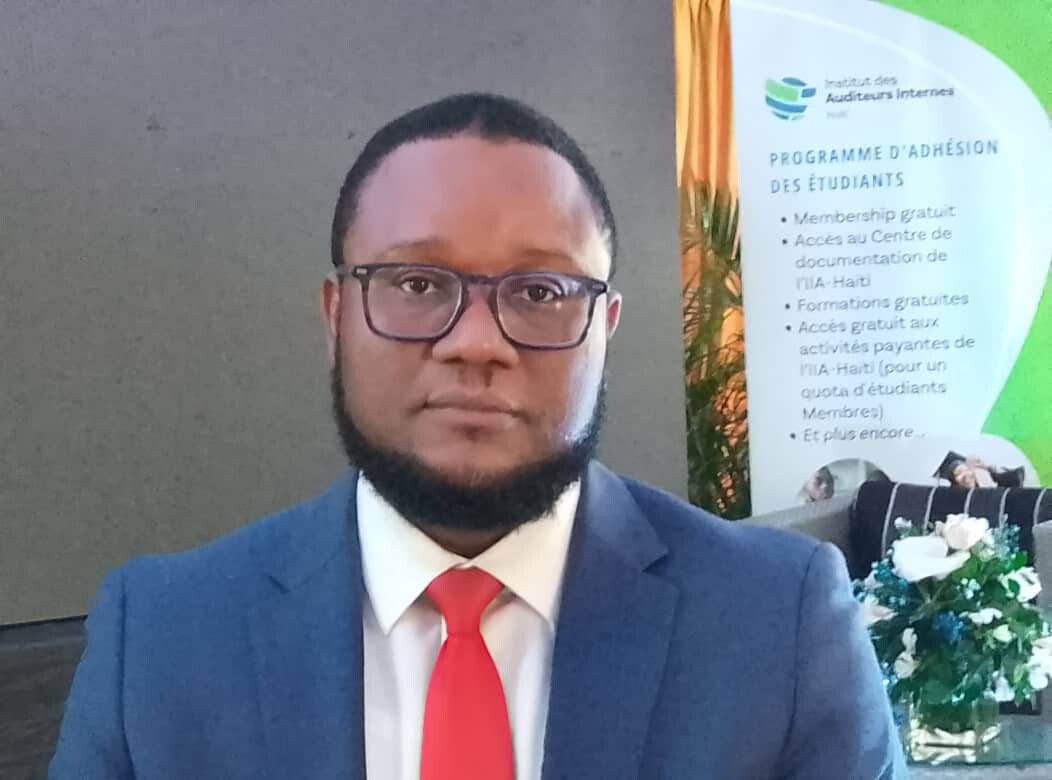
The Institute of Internal Auditors of Haiti (IIA Haiti) is organizing the 13th edition of Audit Week from November 23 to 27, 2026. Under the theme “Digital Transformation, Cybersecurity, Emerging Risks: Adapt, Innovate, or Disappear,” this event will feature five days of conferences and webinars focused on technological changes and what they mean for organizations.Invited to the Panel Magik show on November 20, 2026, Nathanaël Jean-Louis presented the main highlights of this edition, aimed at audit professionals, business leaders, and students. According to him, choosing this theme reflects the growing importance of digital transformation in economic activities. Companies now have to adapt their operations to new technologies while considering the risks they bring. “Nowadays, almost every sector of the economic life benefits from digital transformation, experiences it, or has to deal with it,” he emphasized.
The banking and financial sector, especially in the design and distribution of products and services, is directly affected. The press is also going through these changes, with the evolution of methods for producing and distributing information, as well as the relationship between media and their audience. According to Nathanaël Jean-Louis, this reality requires organizations to review their practices and control mechanisms. Internal auditing must therefore take into account the new risks associated with digitalization, particularly those related to cybersecurity.
The program will run over five days, with activities tailored to different audiences. The first day, November 23, will be dedicated to an opening conference on the main challenges of digital transformation. Access to this event will be by invitation only, while seats are available.On November 24, the leaders’ conference will bring together a more specialized audience, including audit directors, business executives, and risk and compliance officers. Discussions will focus on collaboration between these different roles within institutions to tackle new technological realities.
The following two days will be dedicated to students as part of the Next Generation Conference, on November 25 and 26 at the Montana Hotel. The first day will cover careers in control and audit within private institutions. The second day will focus on public institutions, with a special emphasis on inspection and investigation roles.The week will wrap up with two webinars. The first will focus on cybersecurity, while the second will look at the risks of fraud in contracts and public procurement in the digital age.
Access details vary depending on the activities and the audience. For the opening conference on November 23, attendance will be by invitation, based on venue capacity. For the leaders’ conference on November 24, fees are set at $150 for non-members of the Institute and $125 for members.
On the other hand, both days of the Emerging Leaders Conference are free for students. However, prior registration on the Institute’s website is required. This step helps the organizers better plan for participants. Interested individuals are therefore encouraged to register before the events.Beyond organizing this week of activities, IIA Haiti aims to promote a better culture of governance in public and private institutions. Created in May 2003, the Institute is affiliated with the Institute of Internal Auditors (IIA Global), an international organization that sets the standards for the practice of internal auditing.
The Haitian organization represents this network in the country. It has over 250 members from different public and private sectors, according to Nathanaël Jean-Louis. Its mission includes encouraging the establishment of audit structures within institutions, strengthening professionals’ skills, and keeping them updated on changes in standards and practices in their field.For the speaker, strengthening internal auditing is not just a matter of administrative or financial control. It is also a lever to reinforce institutions and contribute to the country’s economic development. “When we encourage good governance within institutions, we all know the benefits and positive impacts it can have. These are stronger, more resilient institutions, and that’s when the entire economy and the country as a whole can benefit,” he explained.
The Institute thus focuses on continuous training for auditors and promoting good governance practices to help organizations better anticipate risks and improve their operations.
Anyone interested in its activities, membership options, or Audit Week can visit the IIA Haiti website: www.iiahaitiorg.

