
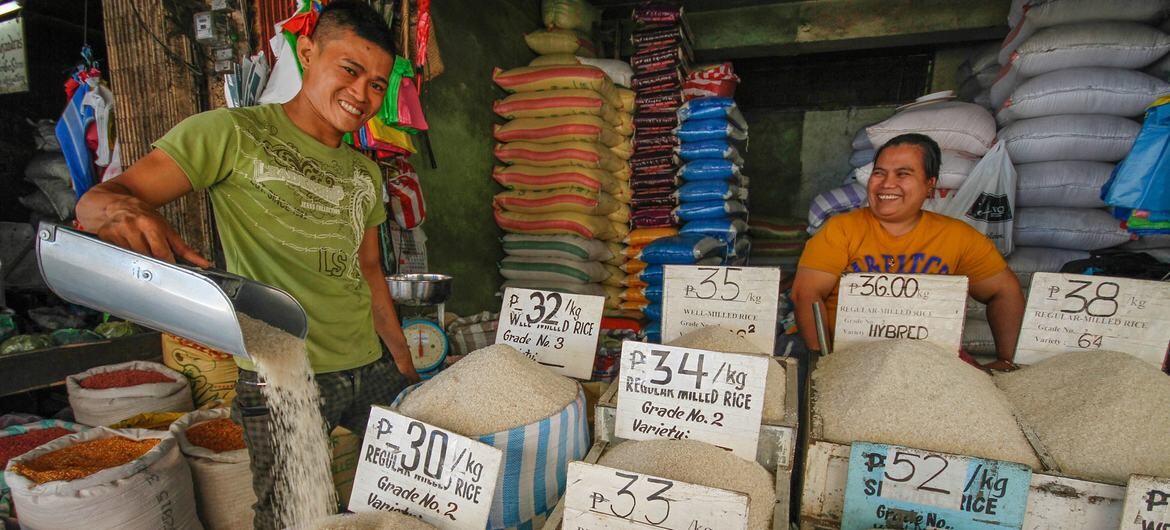
Global grain stocks are expected to keep rising through the end of the 2026-2027 season, while rice production could drop for the first time in four seasons.
Global cereal reserves are expected to keep growing until the end of the 2026-2027 season, while rice production could fall for the first time in four seasons. In its latest report, published on Thursday, the FAO warns about the drop in Black Sea grain exports and the effects of El Niño on several agricultural sectors.
Stocks are expected to rise by 1.8%, but this buildup is partly due to export difficulties in Russia and Ukraine. The United Nations Food and Agriculture Organization (FAO) highlights the contrast between generally ample supplies and increasingly disrupted international trade.Global trade in cereals is expected to decline by 3.3% in 2026-2027, mainly due to a drop in wheat trade. Shipments from all major exporting countries are expected to decrease. On the other hand, corn trade should increase in 2026-2027, and rice trade in 2027.
The war in Ukraine continues to weigh on Black Sea trade flows.
Cumulative grain shipments from Ukrainian ports in the Odessa region and Russian ports on the Sea of Azov and the Black Sea fell below 500,000 tons last September, compared to 7.8 million tons a year earlier.
These transport difficulties are leading to stockpiling in both countries, with the risk of “hurting or degrading the quality of the cereals and overloading storage capacities.”. A ship docked at the port of Hodeidah in Yemen, carrying Ukrainian wheat flour ground in Turkey.
Rice decline
On the production front, prospects remain mixed. Global wheat and corn harvests are expected to stay above their five-year averages.
On the other hand, rice production is expected to drop for the first time in four seasons, due to falling producer margins and unfavorable weather conditions linked to the El Niño phenomenon.
Other sectors are also showing divergent trends. Global oilseed production is expected to reach a record level in 2026-2027, while meat production would grow moderately, mainly thanks to poultry.Nitrogen fertilizers
In the seafood sector, the expected growth of aquaculture is unlikely to make up for the decline in capture fishing, which has been hit particularly hard by El Niño and rising fuel costs.
Beyond production prospects, pressures on input markets are another source of vulnerability for agricultural sectors. Global production of nitrogen fertilizers, especially ammonia and urea, is expected to decline this year due to disruptions in energy supply, production, and trade linked to the closure of the Strait of Hormuz.At the same time, their affordability has worsened in the four major agricultural regions studied, particularly corn in Brazil, wheat in the European Union, rice in Southeast Asia, and soy in the United States. The ratios between fertilizer prices and crop prices fell below their long-term average by mid-2026. This situation could slow down farmers’ purchases and application of fertilizer.
A two-speed food bill
These pressures on production costs are part of a broader trend in agricultural markets, which is also reflected in the global food import bill. It is expected to increase by 1.9% this year, reaching 2,267 billion dollars, compared to nearly 8% in 2025.This slowdown is mainly due to the drop in coffee and cocoa prices, which partly offsets the rise in the cost of cereals and oilseeds.
However, disparities remain noticeable. Overall costs for high-income countries are expected to increase by only 0.4% in 2026, while those for low- and middle-income economies combined are expected to rise by 4.9%, and for the least developed countries by 3.9%.

