
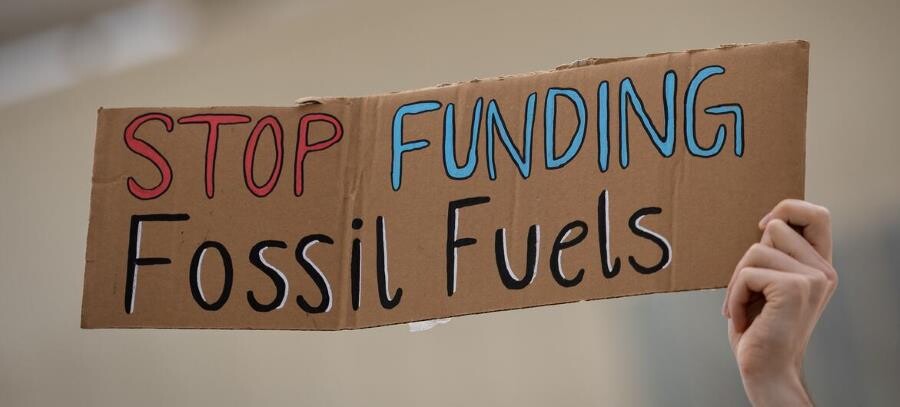
A group of countries from Europe, Africa, Latin America, and the Pacific is rejecting the COP31 draft agreement and calling for stronger commitments on phasing out fossil fuels and climate financing.
A group of countries from Europe, Africa, Latin America, and the Pacific is rejecting the COP31 draft agreement and calling for stronger commitments on phasing out fossil fuels and climate finance. Even though it’s officially the last day of the Antalya summit, divisions are growing and activists are warning about the risk of negotiations failing, while delegations are still trying to find an acceptable compromise for nearly 200 governments.
Countries that don’t usually take a united stand have decided to make their voices heard. Meeting on Friday in Antalya for a press conference, ministers and representatives from several regions of the world sent a clear message to the COP31 presidency: the draft agreement on the table does not meet expectations.At the initiative of France and Panama, representatives from Belgium, Ivory Coast, Finland, Greece, Guatemala, Spain, Sweden, and Vanuatu joined their voices to call for more ambitious climate commitments.
“We can’t tell the world that we’ve now reached the 1.5-degree Celsius [warming] threshold and then keep acting as if nothing’s happening,” said Monique Barbut, French Minister for Ecological Transition.
For many countries, she stressed, the climate crisis isn’t about a North-South divide, but a matter of survival.Panama’s Minister of the Environment, Juan Carlos Navarro, was just as firm. Earlier in the week, he had announced that his country would formally oppose any final agreement that doesn’t explicitly mention fossil fuels.
Now, UN climate conference decisions are usually made by consensus. So the formal opposition of just one country can prevent a text from being adopted, posing a threat to the outcome of the summit as the deadline approaches.
“It’s unacceptable to have a COP, or a final document, that doesn’t even mention fossil fuels; we simply won’t accept it,” Navarro warned.Six priorities to raise climate ambition
This protest echoes the calls made by the UN Secretary-General, António Guterres. Last week in Antalya, he urged leaders to speed up the transition away from fossil fuels, while protecting the workers and communities affected and making real the promised funding to developing countries.
He specifically called for tripling the funding dedicated to adaptation by 2035 and urged taxing the windfall profits of fossil fuel companies to help vulnerable countries cope with climate disasters. “Polluters must pay,” he hammered, warning against further delays.African men and women in work attire are looking at laptops, tablets, phones, and documents while wearing conference badges in a COP31 exhibition hall in Antalya.Delegates are negotiating at COP31 in Antalya, Turkey.
On Friday, the countries meeting set out six priorities they want included in the final agreement:
Clean electrification: speeding up the switch to electricity from clean and renewable sources.
Science: grounding climate decisions in data and scientific knowledge.
Fossil fuels: explicitly acknowledging the need for a clear and orderly transition away from them.
Climate finance: ensuring a fair contribution from major emitters to fund climate action.Methane: ramping up the reduction of emissions from this powerful greenhouse gas, one of the fastest levers to slow down warming.
International cooperation: strengthening synergies between the three Rio Conventions on climate, biodiversity, and desertification.
‘You pollute, you pay. It’s actually quite simple. If you are the source of the problem, you have to help solve it,’ summarized Mr. Navarro.
Monique Barbut also pointed out a contradiction in the second draft agreement: while fossil fuels are not mentioned, several paragraphs promote carbon capture technologies.
‘What does that mean? It means we are not acknowledging the real nature of the problem,’ she said.

