The United Nations has listed three Haitian criminal groups in the annexed lists of the Secretary-General’s 2025 annual report on children and armed conflicts.
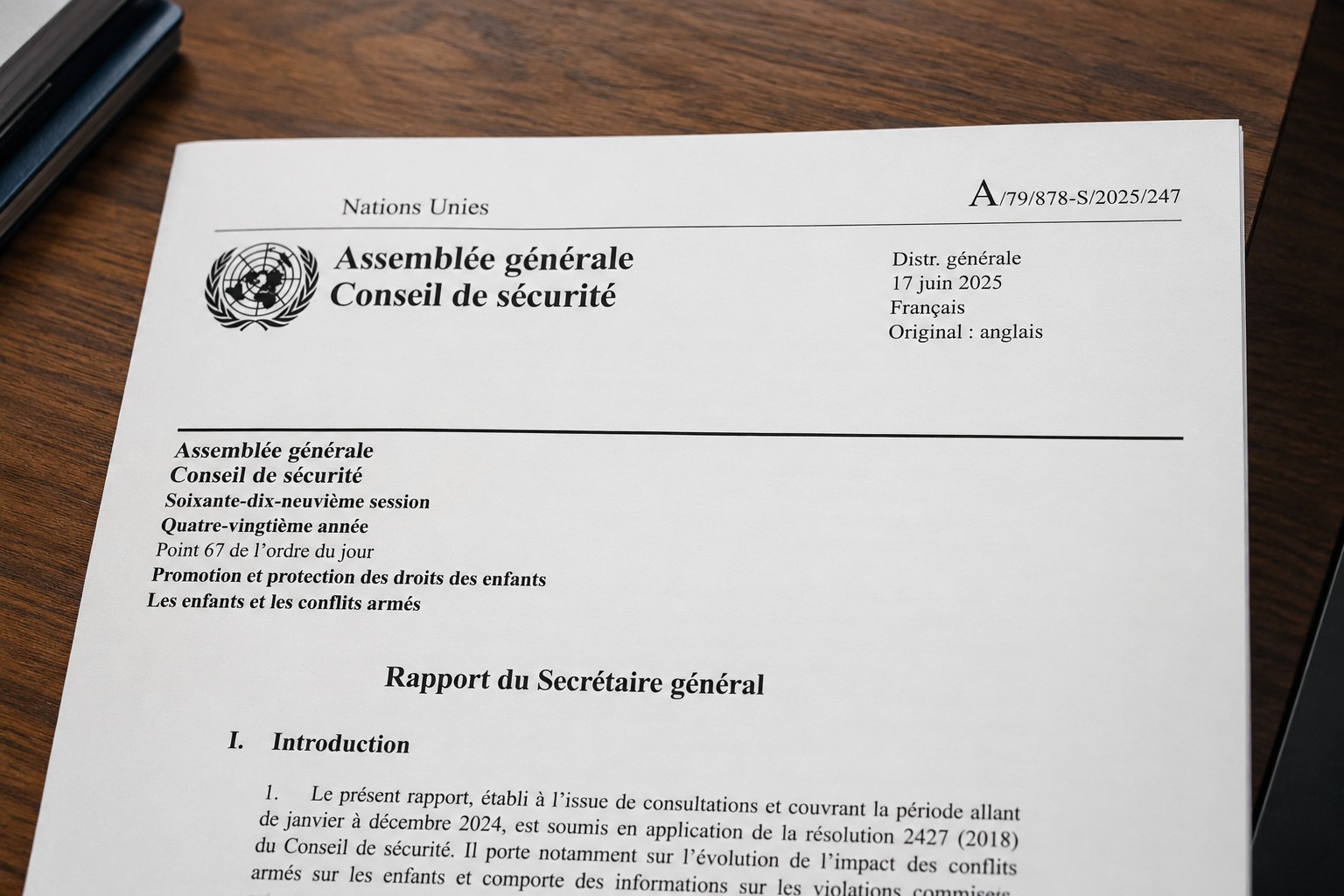
The United Nations has listed three Haitian criminal groups in the annexed lists of the Secretary-General’s 2025 annual report on children and armed conflict. These are Gran grif (Artibonite), Kraze baryè, and 400 Mawozo (West). The announcement was made this Monday, July 13, 2026, by the United Nations Integrated Office in Haiti (BINUH) and UNICEF Haiti.
These three groups join the Viv ansanm coalition, already listed in the previous reporting cycle. According to the two UN agencies, which issued a joint statement, these new listings “strengthen international efforts to ensure that perpetrators of serious violations against children are held accountable.”
According to the two organizations, the annual report presents a particularly alarming picture of the situation of children in Haiti. “In 2025, the United Nations verified 2,088 serious violations affecting 1,661 children. Among them were the recruitment and use of 892 children by armed groups, as well as murders, mutilations, sexual violence, kidnappings, attacks on schools and hospitals, and denial of humanitarian access.”
According to BINUH and UNICEF, being listed in this report is “an essential accountability mechanism set up by the Security Council.” It also provides “the opportunity to develop action plans aimed at ending and preventing violations against children, as well as supporting their release from armed gangs.”The two organizations are calling on the groups involved to immediately stop recruiting and using children. “BINUH and UNICEF therefore call on all listed armed gangs to immediately end the recruitment and use of children, as well as any other serious violations,” the statement emphasizes, adding that they “stand ready to participate in efforts aimed at their peaceful release.”
BINUH and UNICEF also welcome the initiatives of the Haitian government to strengthen national child protection mechanisms. However, they believe that “it is essential for the government to continue providing leadership in these efforts, through the National Commission for Disarmament, Dismantling, and Reintegration (DDR), to ensure that child protection remains at the heart of all DDR initiatives.”The text also emphasizes that “children associated with armed gangs should be recognized above all as victims” and quickly referred to child protection actors.
According to the statement, the report also highlights the PREJEUNES program, launched in 2025 by the Haitian authorities and the United Nations after the adoption of the Transfer Protocol in 2024. This program provides children released from armed gangs with psychosocial support, access to education, family reunification when possible, and reintegration into the community. In 2025, 573 children benefited from these specialized services, note the BINUH and UNICEF.Both institutions reaffirm their commitment to supporting the Haitian government and its partners in preventing serious violations against children, helping with their safe release and reintegration, and ensuring that every child can grow up free from violence.
As a reminder, in June 2025, the gang coalition Viv Ansanm was added to this UN ‘list of shame’ due to serious violations of children’s rights. The United Nations had accused them of forcibly recruiting child soldiers, committing murders, sexual violence, and repeated attacks on infrastructure like schools and hospitals.