
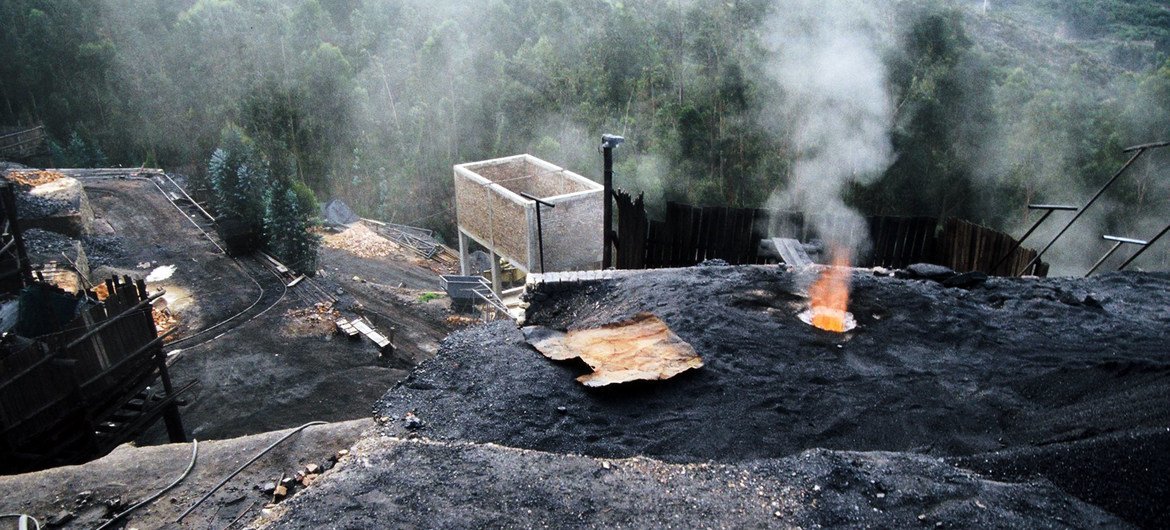
From space, satellites are now able to detect large-scale methane leaks.
From space, satellites are now able to detect large-scale methane leaks. The challenge is no longer locating them, but sorting through the avalanche of data produced in order to turn that information into concrete actions.
A new generation of satellites now observes the planet almost continuously. They detect the invisible emissions escaping from oil wells, gas pipelines, mines, or landfills. Every day, millions of satellite data points flow into analysis centers. In reality, there’s too much data to be examined manually.
Faced with this flood of information, the United Nations Environment Programme (UNEP) says it has found an unexpected ally: artificial intelligence.
In a report published on Wednesday, the UN agency explains how its methane monitoring system, called MARS (Methane Alert and Response System), now uses AI models to more quickly distinguish false alarms from massive emissions of this powerful greenhouse gas. Since it became fully operational in 2024, the system has helped alert the relevant governments and companies, contributing to more than 40 emissions reduction actions worldwide. According to UNEP, these interventions are estimated to have prevented releases amounting to about 1.2 million tons of methane.
To put it into perspective, the agency estimates that the climate benefit is equivalent to the annual emissions of nearly 24 million gasoline-powered cars.The UN Environment Programme’s methane monitoring system, called MARS, uses AI models to more quickly distinguish emissions of this powerful greenhouse gas from false alarms.
From the sky to construction sites
Methane only plays a small role in the public climate debate, which is largely dominated by carbon dioxide. Yet its impact is significant. Over the 20 years following its release, methane warms the atmosphere at least 80 times more than CO₂. And unlike CO₂, which lingers for centuries, it mostly disappears after about ten years. So reducing methane emissions quickly is one of the most effective ways to slow short-term warming.The potential is all the greater since many of these emissions simply come from preventable leaks. According to the UNEP, up to 80% of reduction measures in the oil and gas sector could be implemented at low or even negative cost, as the recovered gas could be sold.
The challenge is turning the signals sent by satellites into concrete decisions.
The MARS system tackles exactly this bottleneck. Powered by about thirty satellite instruments, it has already analyzed more than 1.3 million images covering an area equivalent to twice all the land on the planet.
Without automation, such a huge amount of information would be unmanageable.
An AI that filters, humans who decide
The report makes an effort to dispel a common misconception. Artificial intelligence does not detect leaks on its own and never decides on alerts.
Its role is to sort. The models developed by UNEP learn to distinguish real emissions from the many false signals caused by clouds, terrain, or changes in lighting. This way, they shrink a sea of data down to a short list of potentially problematic cases.
Each detection is then reviewed by specialists. The report even stresses the need for independent validation by at least two analysts before any official notification.The contribution of AI is still nothing short of spectacular. According to UNEP, it allows analysts to process twelve to fifteen times more data than before. In fact, between 80% and 85% of detections that were eventually confirmed had initially been flagged by algorithms before being validated by experts.
“Methane is just the beginning,” said Martin Krause, director of UNEP’s climate division, on the occasion of the report’s release. “The real takeaway from this work is that AI can help turn the explosion of environmental data into concrete actions. By combining scientific expertise with lightweight, energy-efficient AI tools, we can respond faster not only to methane emissions but also to a whole host of environmental challenges.”Cows are grazing near a drilling platform in Texas, USA.
Proof from Kazakhstan
The report highlights an example that illustrates how the system works.
In the Caspian Basin, in Kazakhstan, satellites detected repeated emissions from the same facility in 2023 and 2024. Over two months, algorithms identified seven distinct episodes. After notifying the UNEP, an on-site inspection traced the issue to a faulty valve. The equipment was replaced, and a few weeks later, several satellites confirmed that the emissions had stopped.This tech demo comes at a time when pressure is mounting on the countries that signed the Global Methane Pledge, the international commitment to cut global methane emissions by 30% by 2030 compared to 2020 levels. More than 150 countries have joined in.
UN Secretary-General António Guterres recently urged governments to respond to 80% of the alerts sent by MARS.
“As new satellite missions increase the amount of methane data available worldwide, the challenge is no longer finding emissions but acting on them,” summed up Martin Krause. “UNEP’s experience shows how AI can help bridge this gap, allowing for faster identification of major methane releases and helping turn data into measurable emission reductions.”In the fight against climate change, the challenge is no longer just about looking at Earth from space. It’s about making sure warnings actually lead to repairs on the ground.