
The 21st century was supposed to belong to cities.
The 21st century was supposed to belong to cities. It might end up being the century of the housing crisis instead.
The world has never had so many city dwellers. Cities have never concentrated so much wealth, jobs, and innovation. Yet, they are increasingly struggling to provide what should be their most basic promise: housing.
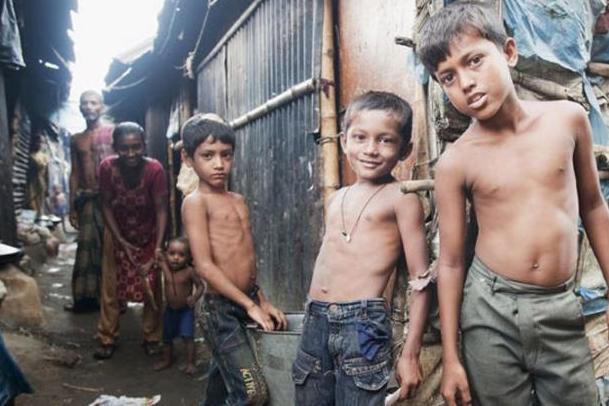
From Lagos to Los Angeles, through Mumbai and London, the crisis takes many forms but tells the same story. Here, sprawling informal neighborhoods. There, families forced to spend an ever-larger part of their income on housing. Elsewhere, makeshift camps reappearing in the heart of some of the world’s richest metropolises.According to UN-Habitat, more than three billion people are currently affected by the housing crisis. Among them, 1.1 billion – more than one in ten people – live in slums or informal housing.
This is the paradox that UN member states will look at on Thursday and Friday in New York during the midterm review of the New Urban Agenda. Adopted in 2016 in Quito, Ecuador, this roadmap aimed to make urbanization one of the main drivers of sustainable development. Ten years later, the question is no longer whether the world will be urban – it already is – but whether 21st-century cities will be able to accommodate the people who make them thrive.A densely populated slum in Mumbai, India.
The bet on happy urbanization
When states adopt the New Urban Agenda, the ambition matches the ongoing transformation. The global urban population is expected to nearly double by 2050. For the United Nations, the challenge is no longer to contain urbanization but to organize it.
The text marks a shift. Long seen as a source of imbalances, urban growth is now presented as an opportunity. Cities need to reduce inequalities, boost growth, speed up the ecological transition, and improve quality of life. They need to be more inclusive, safer, more resilient, and more affordable. In short, they need to become ‘cities for all’.Housing takes a central place in this vision. States commit to gradually promoting the right to adequate housing, to fighting against arbitrary evictions, and to addressing the needs of the homeless, low-income households, and the most vulnerable populations.
On paper, the plan is ambitious. On the ground, reality has often moved faster.Urbanization has taken hold, governance is struggling to keep up.
A decade after Quito, the results are mixed.
There has been progress. Access to public transportation has improved in many areas, and urban issues now play an increasingly important role in national climate strategies.
But the advances remain deeply uneven. While more than 60% of the global urban population now has access to public transport, in the least developed countries, that figure drops to 37%. In sub-Saharan Africa, it’s only 34%.The same gap shows up when it comes to housing. Cities keep attracting more people but don’t build enough to meet the demand. Land prices are rising faster than incomes. Real estate markets are becoming more financial. Low-income households are gradually being pushed to the outskirts or out of the formal market.In short, urbanization has won. Its governance is struggling to keep up.
Overview of the Mathare slum in Nairobi, Kenya.
The Achilles’ heel of cities
The midterm report identifies a structural weakness: the lack of resources for local communities.
They are the ones who plan neighborhoods, organize transportation, build infrastructure, respond to disasters, and welcome new residents. Yet, their responsibilities are not always matched by the financial resources, administrative skills, or political authority needed.
The New Urban Agenda already emphasized the need to strengthen municipal finances, urban governance, and the capacities of local authorities. Ten years later, this issue remains one of the main sticking points.
Everywhere, cities are being given more responsibilities. Everywhere, they struggle to get the resources needed to carry them out.
The decisive decade
The New York meeting should result in the adoption of a political declaration renewing commitments made until 2036.
But the real challenge lies elsewhere.
In 2016, the New Urban Agenda was based on a belief: urbanization could become one of the major drivers of sustainable development.
Ten years later, housing has become the test of that promise. Because a city that can no longer house its residents struggles to meet all the others.