
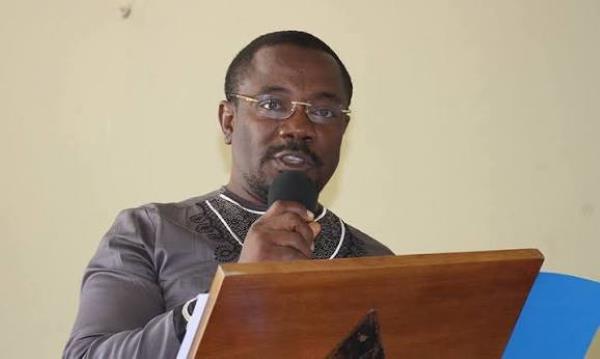
During the BID Reflection Wednesdays webinar held on July 29, 2026, around the theme ‘Haiti facing upcoming climate shocks: are we ready?’, Haitian officials and international partners called for a change of mindset: moving from a reaction approach to a prevention approach.
During the BID Reflection Wednesdays webinar, held on July 29, 2026, on the topic “Haiti facing upcoming climate shocks: are we ready?”, Haitian officials and international partners called for a paradigm shift: moving from a reactive approach to a preventive one.
The answer to the question came directly from the Minister of Agriculture, Natural Resources, and Rural Development, Marcelin Aubourg, without hesitation. “When asked whether Haiti is ready to face the next climate shock, we must answer frankly that our country is still insufficiently prepared.” But he clarified that this awareness should not lead to discouragement or resignation. “It should push us to strengthen our capacity for anticipation, prevention, coordination, and action,” he added.The AfDB representative, Corinne Cathala, immediately highlighted the extent of the country’s exposure: over 96% of the population is at risk from at least two types of natural hazards: hurricanes, floods, droughts, landslides, earthquakes. And each disaster far exceeds material damage. According to her, “a drought doesn’t just destroy crops. It deprives farmers of income, weakens food security, and raises the cost of living. A flood doesn’t just damage roads or bridges, it disrupts economic activities, limits access to schools, health centers, and basic services.” She reminds us that Hurricane Matthew in 2016 affected over two million people and destroyed up to 90% of crops in some regions.
Facing this reality, the message is clear: ‘We must gradually move from a reactive approach to a preventative one. Preventing, preparing, and anticipating natural events must become a priority,’ says the BID representative. For her, investing in resilience isn’t an extra expense: it’s an economic choice. ‘Climate resilience should be seen as an investment in people’s safety, economic stability, and the sustainability of public finances,’ she stated. Cathala also highlighted the Caribbean Catastrophe Risk Insurance Facility (CCRIF SPC), a regional parametric insurance mechanism that Haiti participates in, allowing for quick payouts after a disaster to fund the initial emergency response.The webinar moderator, Kesner Pharel, put climate risks in a broader context. “Haiti faces a mix of risks. Political risks, economic risks, and natural disasters reinforce each other. Eight consecutive years of GDP contraction create an environment where investing becomes extremely difficult.” For him, effective risk management is a prerequisite for development. According to the economist, “To invest, you need effective risk management. Today, the risks are simply too high.” He cited examples from Jamaica and Saint Vincent and the Grenadines, which were able to quickly mobilize resources thanks to appropriate financial mechanisms after natural disasters.On the side of the Ministry of Agriculture, concrete responses are being prepared for 2026-2027: managing agricultural emergencies, developing watershed areas, rehabilitating irrigated perimeters, building a network for hydroclimatic monitoring, rehabilitating farm roads, and constructing silos to reduce post-harvest losses. But the minister acknowledges that national resources won’t be enough. “Support from technical and financial partners remains essential. We hope that this funding will be more aligned with national priorities, better coordinated, and considered from a long-term perspective,” he added.During this meeting, the speakers reminded everyone that climate resilience isn’t just the state’s responsibility; local authorities, the private sector, universities, farmers’ organizations, and civil society are also expected to contribute. “The next climate shock won’t ask us if we were ready. It will put our institutions, infrastructure, and our capacity for solidarity directly to the test,” the minister concluded. It was a call to turn commitments into action before the cyclone season itself forces the issue.