
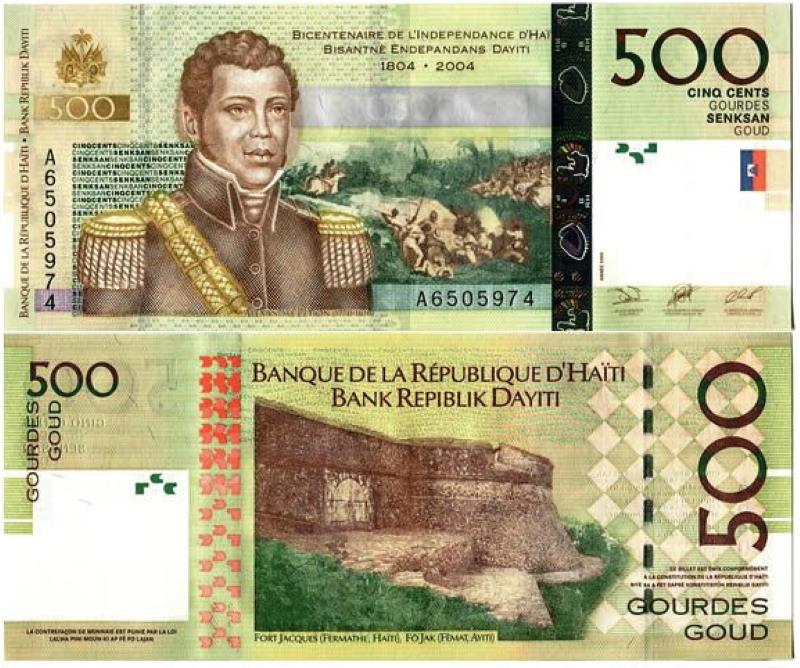
Beyond banknotes, money supply, and exchange rates, a nation’s true wealth lies in what it produces.
Beyond banknotes, money aggregates, and exchange rates, a nation’s real wealth lies in what it produces. ‘Money is just a veil.’ This saying, linked to the classical tradition of economic thought, reminds us of an idea as simple as it is fundamental: money is not wealth itself. It allows us to measure, exchange, and transfer wealth, but it doesn’t create it on its own. Behind the circulating banknotes, bank deposits, credits, and currency reserves, there are always more concrete economic realities: goods, services, labor, capital, knowledge, infrastructure, and institutions.
Obviously, this economic philosophy is not universally accepted. Supporters of monetarism, led by Milton Friedman, the 1976 Nobel Prize winner in Economics, keep a close eye on the money supply, convinced that excessive money growth can, in the long run, fuel inflationary pressures. On the other hand, following in the footsteps of Jean-Baptiste Say, the leading French classical economist, some economists still view money as just a “veil” that hides the fundamental mechanisms of the real economy.
However, contemporary macroeconomic thought goes beyond this opposition: while money can be considered neutral in the long term, it can have significant effects on production, employment, and prices in the short term. Hence the importance of monetary economics.This distinction is especially important for understanding Haiti’s economic difficulties. Public debate often focuses on the amount of money in circulation, the exchange rate of the gourde against the dollar, the foreign reserves of the Bank of the Republic of Haiti, or even the monetary financing of the budget deficit. These variables are important. But they are only the monetary side of a problem whose roots are mainly real. In this sense, mechanically devaluing the gourde will not be enough to improve the conditions of Haitian households.
Printing money does not mean creating wealth Let’s imagine an economy made up of a hundred units of goods and services. If the amount of money doubles while production capacity remains unchanged, the economy doesn’t suddenly have twice as much wealth. There will just be more money chasing roughly the same amount of goods and services. All else being equal, the result will be a rise in the overall price level. That’s one of the key ideas behind the quantity theory of money. In its simplest form, the equation MV = PY shows a proportional relationship between the money supply (M), its velocity (V), the price level (P), and real output (Y). It doesn’t mean that any increase in the money supply automatically causes a proportionate increase in prices. Velocity can change, just like real output can. But it does highlight a simple truth: in the long run, money can’tAn economy doesn’t get richer just because it has more bills. It gets richer when it can produce more, better, and at lower costs. This distinction also helps to better understand the debate about the exchange rate in Haiti. When the gourde depreciates against the dollar, it’s tempting to conclude that this benefits recipients just because of the exchange rate movement. The reality is more complex.
The exchange rate is, first and foremost, a price: the price of one currency expressed in another. It reflects, among other factors, monetary conditions, currency flows, imports and exports, economic agents’ expectations, diaspora transfers, confidence in institutions, and economic prospects. The key question should therefore be less about how much the dollar is worth today, and more about why the Haitian economy needs so many dollars to finance its con.
The Haitian economy consumes more than it produces
This is where the monetary veil becomes particularly revealing. Haiti imports a considerable share of the goods it consumes. When national production is insufficient, the country has to get from abroad what it doesn’t produce enough of at home. Dollars then become essential to pay for imports. Transfers from the diaspora play a major role in feeding this demand for foreign currency. Exports, services, foreign investments, and other capital inflows are also sources of foreign currency. But these sources fade as insecurity and political instability grow.But an economy can’t sustainably solve its production problem by relying only on transfers received from outside without anything in return. Transfers can support households, fund consumption, education, housing, or certain investments. They can also help stabilize the currency market. But they don’t replace a sufficiently broad national productive base. The real challenge is therefore to turn the available financial resources into productive capacity: agriculture, industry, tourism, infrastructure, energy, technology, modern services, and human capital.The same logic applies to the banking system. When a bank grants a loan, it helps create bank money. This money creation can be extremely useful when it finances a productive investment. An entrepreneur who gets a loan to buy equipment, expand a factory, or grow a business can increase the economy’s production capacity. In this case, money creation goes hand in hand with the creation of real wealth.
But if the loan mainly finances unproductive activities, imports, or consumption that doesn’t generate additional productive capacity, its impact on national wealth will be much more limited. So, the question isn’t just about how much credit is given, but what that credit is used for. A modern economy needs money and credit. But it especially needs finance to be put at the service of the real economy.If money is just a veil, what does it hide?
It hides the real productive system of a society. Behind every bill, there should be something much more tangible: work, production, and created wealth. Behind every price, a mix of resources, skills, and technologies. Behind every investment, a choice to give up present consumption to boost future production capacity. So, a country’s wealth lies in its cultivated lands, its businesses, its infrastructure, its schools, its universities, its power grids, its ports, its roads, its professional skills, its innovations, and, above all, in the quality of its institutions.A nation can have a lot of money and still be poor. Conversely, an economy can have a relatively stable currency because it has a solid productive base, credible institutions, and a strong ability to generate income. Monetary stability is obviously still necessary. Fighting inflation is essential. Managing foreign exchange reserves, having credible monetary policy, and a strong financial system are important conditions for macroeconomic stability. But they’re not enough.We can temporarily stabilize the exchange rate without solving the production deficit. We can slow down inflation without significantly increasing productivity. We can increase foreign exchange reserves without fundamentally transforming the country’s productive structure. The central question then becomes that of productive transformation. How can we produce more rice, corn, fruits, and vegetables? How can we develop livestock and fishing? How can we produce more electricity? How can we create competitive businesses? How can we reduce logistics costs? How can we develop infrastructure? How can we improve education and vocational training? How can we create an institutional environment where private investment becomes less risky? How can we facilitate the production of services? These are the questions, more than just the exchange rate level, that determine an economy’s ability to sustainably create wealth and im
The phrase “money is just a veil” obviously doesn’t mean that money is unimportant. Money is an essential part of the economy. High inflation destroys purchasing power, disrupts investment decisions, and increases uncertainty. An unstable currency complicates trade and can weaken the financial system. But money is still a means, not an end.
The real goal of economic policy shouldn’t just be about having more money, more dollars, or more gourdes. It should be about building an economy that can produce more real wealth and distribute it more inclusively. To sustainably escape poverty, Haiti will therefore need to look beyond the monetary veil.