
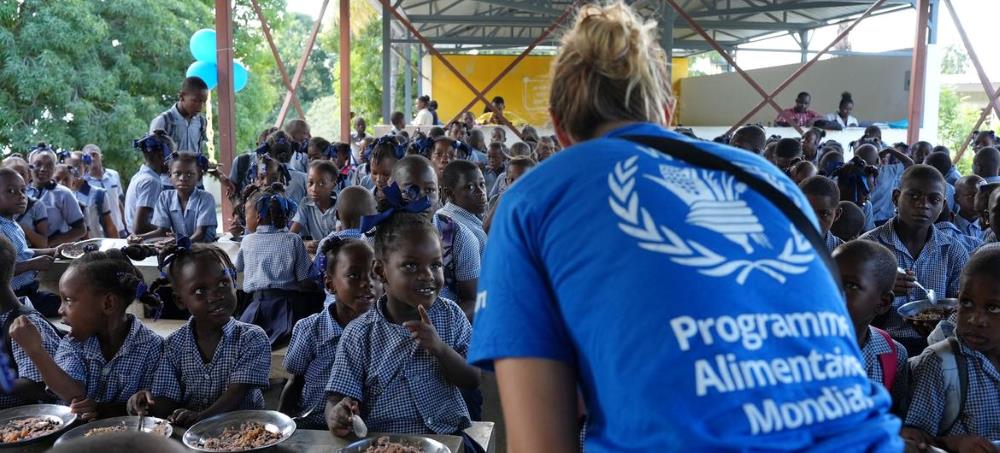
The 2026 edition of the report on The State of Food Security and Nutrition in the World also covers the cost of healthy eating
In 2025, world hunger fell for the third year in a row, showing that progress is possible. However, improvements remain fragile, unevenly distributed, and not enough to achieve the Sustainable Development Goals (SDGs) by 2030, according to the 2026 State of Food Security and Nutrition in the World report, released Tuesday by five specialized UN agencies.
The report’s authors estimate that 7.8 percent of the global population suffered from hunger in 2025, compared to 8.1 percent in 2024 and 8.6 percent in 2022, confirming a slow but steady improvement. In other words, 645 million people went hungry in 2025, a decrease of nearly 14 million and 43 million compared to 2024 and 2022, respectively.
Despite progress made globally, recovery still varies from one region to another. Asia, as well as Latin America and the Caribbean, have seen steady improvements in recent years. In contrast, Africa now has about 309 million people suffering from hunger, compared with 292 million in Asia. Although the previously rising trend in Africa has begun to stabilize, with the share of the population facing hunger dropping from 20.3 percent in 2024 to 20.0 percent in 2025, the continent currently has the highest number of people suffering from hunger in absolute terms, amid rapid population growth.More general measures regarding access to food follow the same trend. According to estimates, 25.8 percent of the world’s population (about 2.1 billion people) were experiencing moderate or severe food insecurity in 2025, meaning they were sometimes forced to cut back on the quality or quantity of the food they ate. This figure is down from 27.1 percent in 2024 and 28.7 percent in 2020 – which is nearly 86 million fewer people than in 2024 and 135 million fewer than in 2020, even though it’s still higher than pre-pandemic levels.Regional disparities remain pronounced. More than half of the African population (56.6 percent) was in a situation of moderate or severe food insecurity in 2025, compared to 20.3 percent in Asia, 22.9 percent in Latin America and the Caribbean, and 8.7 percent in North America and Europe. Moreover, food insecurity is still more common in rural areas than in peri-urban and urban areas, and women are still disproportionately affected, even though the gender gap slightly decreased in 2025.Projections Regarding Hunger in the Context of the Conflict in the Middle East
The annual report also includes updated projections for the next five years in light of the conflict in the Middle East. Depending on how long the crisis affects food price inflation—which results from rising energy and fertilizer costs—around 510 to 520 million people could still be at risk of hunger by 2030 (compared to a lower pre-conflict projection of 503 million), even though the number of undernourished people worldwide is expected to decrease by 20 percent. However, other potential disruptive factors, including the effects of extreme weather events like El Niño in 2026 and 2027, are not taken into account in these projections and could make the situation even worse.
The co-authors of the report – Food and Agriculture Organization of the United Nations (FAO), International Fund for Agricultural Development (IFAD), World Health Organization (WHO), World Food Programme (WFP), and United Nations Children’s Fund (UNICEF) – have warned that the 2026 Middle East conflict, extreme weather events, and cuts in public development aid threaten to undermine progress in eradicating global hunger.
Slow progress regarding global nutrition targets
The report highlights that global progress in maternal and child nutrition remains insufficient to meet international commitments, including the nutrition goals set for 2030.Indicators like stunted growth in children, wasting, overweight, low birth weight, and exclusive breastfeeding are improving only slightly, and way too slowly to meet the targets. At the same time, anemia in women aged 15 to 49 is getting worse, while adult obesity keeps rising – from 12.1 percent in 2012 to 16.2 percent in 2024 – which goes against the goal of curbing its increase by 2025. Only 30.8 percent of children aged 6 to 23 months worldwide reach the minimum dietary diversity threshold, and 150 million children under 5 still suffer from stunted growth.Once again, progress varies a lot from one region to another. The prevalence of stunted growth in children is going down in Africa, and Asia is on track to hit the 2030 target, while exclusive breastfeeding rates are improving across all regions where data is available. However, almost all regions are seeing anemia in women get worse, and childhood obesity is rising quickly in Oceania.The cost of healthy eating
This year’s report focuses specifically on the cost of healthy eating—that is, the average minimum amount you need to spend to get locally available foods that cover energy needs and most nutrients. According to the FAO and WHO, a healthy diet should be adequate, balanced, varied, and moderate.
The report points out that costs remain one of the main obstacles to achieving SDG 2 (Zero Hunger), even though lowering these costs alone isn’t enough to improve diet quality and nutrition outcomes.In 2025, the average cost of healthy food worldwide increased, reaching $4.28 in purchasing power parity (PPP) per person per day, compared to $3.44 PPP in 2021 and $2.94 PPP in 2017, with the highest amounts recorded in Latin America and the Caribbean ($4.91 PPP). At the same time, the number of people unable to afford healthy food decreased, from 2.97 billion (37.4 percent of the global population) in 2021 to 2.69 billion (32.7 percent) in 2025.
However, this trend hides significant regional disparities. In Africa, affordability dropped sharply, with 66.6 percent of the population unable to afford healthy food in 2025 – more than double the proportions seen in Asia and Latin America and the Caribbean.
The cost of a healthy diet varies greatly from one region to another due to structural differences in food systems. Animal-based foods, fruits, and vegetables make up the main part of this cost, while staple starchy foods contribute relatively little. Animal-based foods are the main driver of the cost of a healthy diet in Africa, whereas in Latin America and the Caribbean, vegetables take that spot.
Food value chains are the main factor influencing prices. Activities after leaving the farm account for 70 to 75 percent of the price paid by consumers; up to 40 percent of total costs occur at the stages of processing, logistics services, and wholesale markets. Therefore, it’s crucial to improve efficiency in these segments, especially to lower the cost of perishable, nutrient-rich foods.Reducing the cost of healthy food requires context-specific measures that increase the supply of nutritious foods while lowering structural costs across agri-food value chains. These measures include investments in infrastructure, research and development, irrigation, and cold chains, as well as reforms in subsidies, trade facilitation, and regulatory frameworks.
Targeted interventions that boost productivity, reduce losses, and promote sustainable practices can at the same time improve nutrition outcomes, strengthen resilience, and help achieve climate goals.“The task ahead of us by 2030 is immense. However, a world where healthy food is no longer out of reach for nearly one in three people is a world worth building,” explain the authors of the report.
Statements
Mr. Qu Dongyu, FAO Director-General: “This report shows that progress is possible, but we need to speed things up. To eradicate hunger and make healthy food affordable, political commitment, sustained investments, and enabling measures are needed. Recent crises – from natural disasters like the COVID-19 pandemic to human-made disasters such as conflict hotspots, the war in Ukraine, the Gaza crisis, and recent disruptions in the Strait of Hormuz – have highlighted both the resilience of food systems and the need to further strengthen them to better serve the most vulnerable populations, farmers, and consumers.”Mr. Alvaro Lario, President of IFAD: ‘The report tells us that the cost of healthy food keeps rising and that nearly 2.7 billion people still might not be able to afford healthy food. Resilient value chains need to be an integral part of the solution. Our current task is to turn the facts provided in the report into investments, thanks to partnerships. Together, we can build the value chains, market systems, and rural economies that will make healthy food accessible to everyone.’Ms. Catherine Russell, UNICEF Executive Director: “Every child deserves the chance to grow up and reach their full potential, starting with access to nutritious and affordable food. This report reminds us of a harsh reality: millions of children and families cannot rely on food systems. We need to link food, health, education, and social protection to protect the most vulnerable children and women from global shocks.”Mr. Carl Skau, Acting Executive Director of WFP: “Behind all the numbers shown in this report, there are families who have to carefully budget for food. Because of conflicts and climate shocks, costs are increasingly exceeding what they can afford. We need to keep working with partner organizations, governments, and communities to set up food systems that can withstand shocks, so families can afford nutritious food, even in times of crisis. We now need sustained investments matching the scale of this challenge.”Mr. Tedros Adhanom Ghebreyesus, Director-General of WHO: “We welcome the significant progress we’ve made in reducing hunger, but healthy food remains out of reach for one in three people worldwide. Obesity is on the rise, while maternal and child nutrition is stagnant. But we know what works: policies that make healthy foods an obvious choice, by encouraging breastfeeding, promoting front-of-pack labeling, taxing unhealthy products, and protecting children from harmful marketing tactics. Healthy food is not a luxury; it is the very foundation of health and should be accessible to everyone.”