Estimated at 50 million dollars, the Haitian insurance market is still poorly penetrated. The AIC is calling for more awareness and insurance that’s easier for people to access.
The insurance sector in Haiti is still largely underdeveloped, even though the country is exposed to many risks, including natural disasters, health problems, accidents, and economic difficulties. In an interview with Magik 9 on August 19, 2026, Frédéric Vaval and Émile Pantaléon, leaders of the AIC, gave an overview of the market and discussed the main challenges facing the sector.
According to figures shared by Émile Pantaléon, the Haitian insurance market is estimated to be around 50 million dollars. Between 500,000 and 600,000 people (including dependents) are covered by various insurance schemes, out of a population of nearly 12 million people. These numbers show just how much untapped potential there still is in the sector.Insurance penetration, however, remains low. Previous data shows that only a small portion of the population has health, life, or general insurance, with coverage being especially limited outside urban areas.
For comparison, during the interview, AIC officials mentioned penetration rates reaching 15 to 20% in some markets in the region. According to the AIC executive director, this is one of the lowest rates in the region. The gap with Haiti highlights how much work still needs to be done to develop an insurance culture in the country.A market still hard to measure
One of the issues raised during the interview concerns the lack of available data on the Haitian market. The officials at the AIC describe the sector as relatively opaque, mainly due to the absence of consolidated public information that would allow a precise understanding of the number of insured people, the premiums collected, the compensations paid, or the overall financial situation of all companies.
This situation is not new. Previous analyses of the sector had already noted the difficulty of accurately assessing its size because of weak mechanisms for publishing and monitoring financial data. In this context, the AIC says it has chosen to regularly publish its annual reports, even when it is not required to do so, in order to increase transparency and allow the public to better gauge the financial strength of the company.For the executive director of the AIC, this transparency is all the more important because insurance is based on a deferred promise. When someone takes out a policy, they expect the insurer to be able to honor their commitment years later. “Financial strength, good governance, and careful management therefore become essential elements for building trust,” he emphasizes.
“Moreover, insurance should not be seen as an investment in the traditional sense, but as a transfer of risk,” says Mr. Vaval. The policyholder agrees to pay a premium in order to transfer to the insurer part of the financial consequences of a potential risk.
Making insurance accessible to the population, AIC’s challenge
For AIC, one of the main challenges is precisely to take insurance out of a market reserved for only a limited part of the population. For several years, the company has said it is looking to develop products suited to the capacities and needs of different segments of the population.
According to Mr. Pantaleon, this approach has notably resulted, starting in 2005, in a collaboration with Fonkoze, a microfinance institution with a network across the country. The goal was to leverage this presence on the ground to offer insurance products to people who traditionally didn’t have access to them.Additionally, the executive director of personal insurance operations at AIC also claims to have developed products in response to specific risks faced by Haitians: natural disasters, illness, death, accidents, and difficulties related to economic activities.
Health insurance is therefore an important part of the business. According to figures mentioned during the interview, around 150,000 people are covered by health insurance in the private sector. Including programs related to the public sector and pensions, the total number of people covered by different mechanisms could reach several hundred thousand.But beyond the numbers, AIC officials stress the need for real insurance education. Part of the population doesn’t fully understand the risks they face or the financial consequences that illness, death, or a disaster can bring.
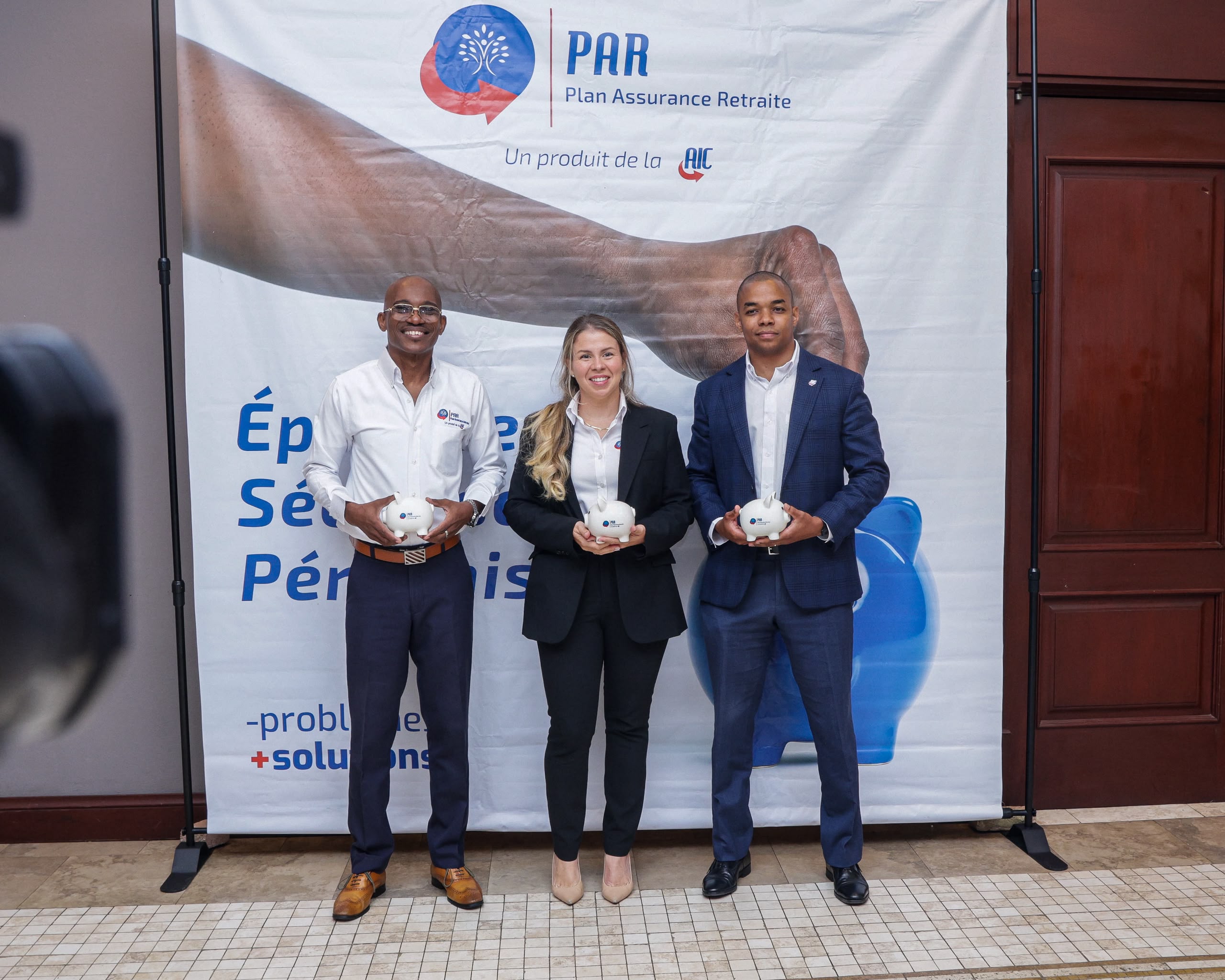
Raising awareness is therefore a major focus for the sector’s development. AIC says it has organized conferences, meetings, and awareness activities in different regions of the country to explain how insurance works and the importance of planning. The country’s economic situation, however, poses a challenge to regular contributions. Some policyholders struggle to keep up with their payments in a context marked by falling purchasing power and rising living costs.The company is also focusing on diversifying its offerings. Life insurance, education-related products, agricultural insurance, savings solutions, and retirement products are among the services developed by the company. Retirement is a particular focus of this strategy. According to AIC officials, existing mechanisms don’t always allow workers to maintain the same standard of living after they retire that they had while working. Inflation also gradually reduces the purchasing power of pensions.The AIC presents its retirement solutions as a complement to mandatory schemes, not as a replacement. These products allow workers to gradually build up a fund over several years to have extra resources when they retire. In collective plans, companies can also contribute to building this savings for their employees. The products can also include protections against death and disability.
This approach aims to encourage workers to plan for their financial future rather than waiting until retirement age to think about their future income. According to the AIC, developing insurance means combining several factors: suitable products, affordable prices, better financial education, more transparency, and a stronger presence on the ground.In a country that’s heavily exposed to natural disasters and faces significant economic vulnerabilities, the low level of insurance coverage is both a challenge and an opportunity. The goal for players in the sector now is to turn this room for growth into broader financial protection for the population.