
|
Getting your Trinity Audio player ready...
|
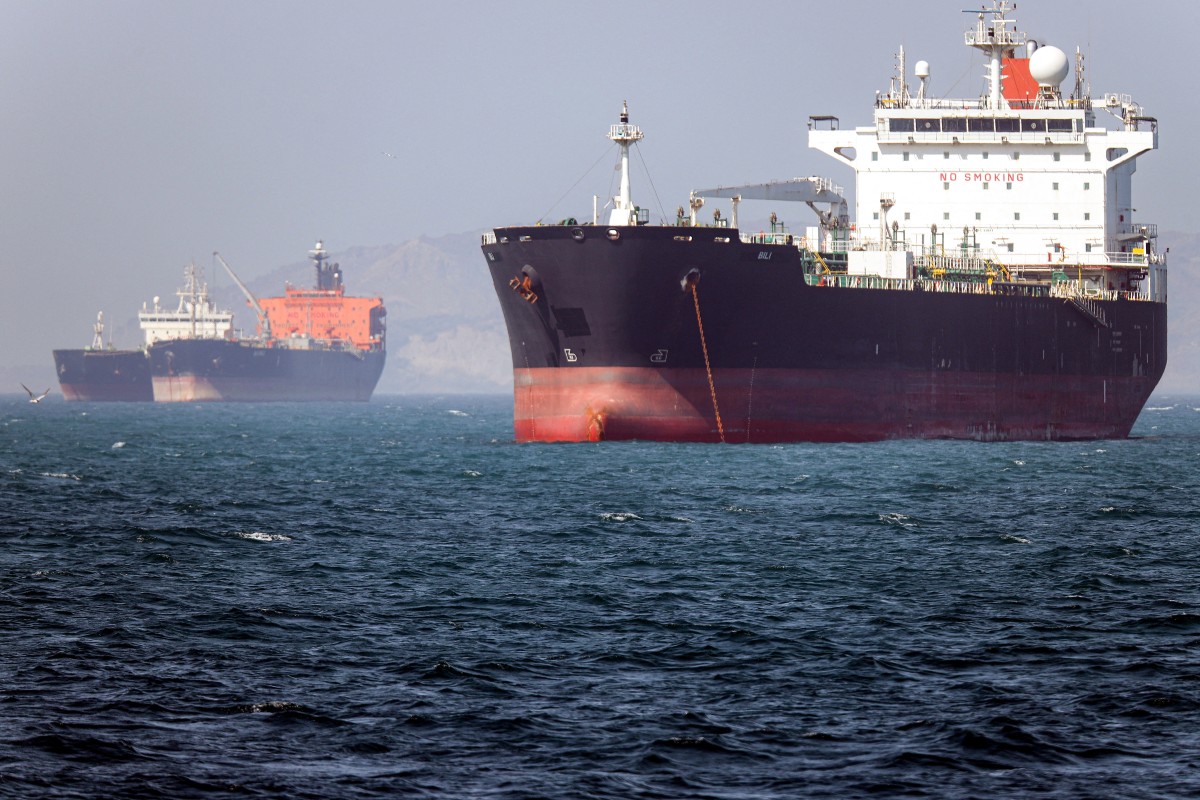
The Sunday announcement of a peace agreement between Iran and the United States has sparked hope for a de-escalation in the Middle East. But for the United Nations, the urgent priority now is to reopen the Strait of Hormuz to prevent the war from turning into a global food crisis.
Meeting on Monday in Geneva, the Human Rights Council discussed at length the economic and humanitarian consequences of the conflict triggered at the end of February by Israeli-American strikes on Iranian military and nuclear facilities. Tehran responded with a series of attacks targeting American interests and allies in the Persian Gulf, leading to a regional flare-up. The resulting disruption of maritime traffic in the Strait of Hormuz has seriously messed up global supply chains.Unsplash/Planet Volumes A computer-generated image of the Strait of Hormuz, between Iran to the north and Oman to the south.
In the Swiss city, UN Deputy High Commissioner for Human Rights, Awa Dabo, highlighted how this situation is affecting air transport, slowing down the delivery of humanitarian aid, and threatening fertilizer supplies, which are crucial for agricultural production in many parts of the world.
“Economists warn that if the strait isn’t reopened, some of the world’s most vulnerable economies could fall into chaos, worsening poverty and hunger for millions of people,” she warned.Faced with these risks, Ms. Dabo called for making sure that the specialized United Nations agencies have the means necessary to manage the consequences of the crisis, starting with the World Food Programme (WFP) and the Food and Agriculture Organization (FAO).
The Strait of Hormuz is one of the main gateways for international trade. Normally, about a quarter of the world’s seaborne oil and significant volumes of liquefied natural gas and fertilizers pass through it. Its partial paralysis quickly sparked concerns far beyond the Middle East.A still fragile ceasefire
This warning comes as the United Nations welcomed the announcement of an agreement between Washington and Tehran, which is expected to be signed in a ceremony on Friday in Geneva.
On Sunday, UN Secretary-General António Guterres hailed a “crucial step” toward a peaceful resolution of the conflict. According to his spokesperson, the agreement provides for an immediate and permanent ceasefire, the reopening of the Strait of Hormuz, and a framework to continue peace negotiations, particularly regarding the details of Iran’s nuclear program.Tweet URL
Also present at Monday’s meeting in Geneva, the UN human rights chief, Volker Türk, called on the parties to turn this diplomatic breakthrough into a lasting settlement.
“At this fragile moment, all parties must show the utmost restraint and work to consolidate the ceasefire so that it can be transformed into a comprehensive peace agreement,” he said.
Meanwhile, the head of the International Maritime Organization (IMO), Arsenio Dominguez, said that the part of the agreement concerning the Strait of Hormuz should help restore the safety of seafarers and ships in this crucial maritime corridor, as well as uphold the fundamental principle of freedom of navigation.
“The agreement also allows the IMO to advance its plan to evacuate the thousands of seafarers stuck in the area,” he specified.Human tolls still disputed The conflict broke out on February 28 after American and Israeli strikes against Iran. Tehran retaliated by targeting Israel as well as several Gulf states allied with Washington. Lebanon was also drawn into the hostilities after Hezbollah fired at Israel. In Geneva, however, debates showed that deep divisions remain. The United Arab Emirates’ permanent representative to the United Nations, Jamal Al Musharakh, stated that his country had suffered over 3,000 attacks carried out using ballistic missiles, cruise missiles, and drones since the beginning of the war. For his part, Iranian ambassador Ali Bahreini defended his country’s actions by invoking the right to self-defense and denounced the ‘indiscriminate air bombings’ experienced by the Iranian population. ‘Even if Iran ultimately accepted the ceasefire, despite its imperfections and the difficulties that followed,'”It is out of a deep sense of responsibility towards the region’s leaders and collective security,” he said.
According to Volker Türk, the US and Israeli strikes in Iran have killed several thousand civilians, “including hundreds of children,” and destroyed hospitals, schools, and many civilian infrastructures.
The human rights chief also called for the release of the findings of the US investigation into the Minab school attack, which happened on the first day of the conflict and killed more than 156 people.