
|
Getting your Trinity Audio player ready...
|
Behind every occupied seat in a stadium, there are streams of consumption, tourism, and international trade that economists closely watch.
Behind every occupied seat in a stadium are flows of consumption, tourism, and international trade that economists closely monitor. For billions of viewers, the FIFA World Cup is first and foremost a celebration of football.
For economists, statisticians, and international financial institutions, however, it represents much more: a gigantic economic lab where every ticket sold, every hotel room booked, and every meal consumed helps gauge a country’s economic health.As the deadline for the 2026 FIFA World Cup approaches, interest is no longer limited to sporting performances. Attention is also focused on the billions of dollars generated by this competition and the effects it has on growth, tourism, services, and public finances. In this economic take on world football, every spectator becomes a statistical figure.
“When we hear about attendance at the World Cup, we usually think about the number of fans in the stadium. But statisticians see something different. They see household consumption, exports, tourist spending, and international trade in services,” explained Jim Tebrake, an expert at the International Monetary Fund, pointing out that behind every major sporting event lies a huge accounting machine.
The expert made these remarks in an educational video from the International Monetary Fund dedicated to measuring the global economy, and he took the opportunity to remind us that a full stadium isn’t just about emotion or entertainment. It also reflects measurable economic flows, such as household consumption, tourist spending, service exports, and capital movements. In other words, behind every occupied seat, a statistician is trying to figure out the source and type of spending.In this video, IMF economist Renato Perez used a concrete example to illustrate this logic. The case of a resident of Guadalajara who goes to Mexico City to attend a match. In this scenario, buying the ticket, drinks, or meals counts as domestic consumption. The money circulates within the national economy without creating external flows.
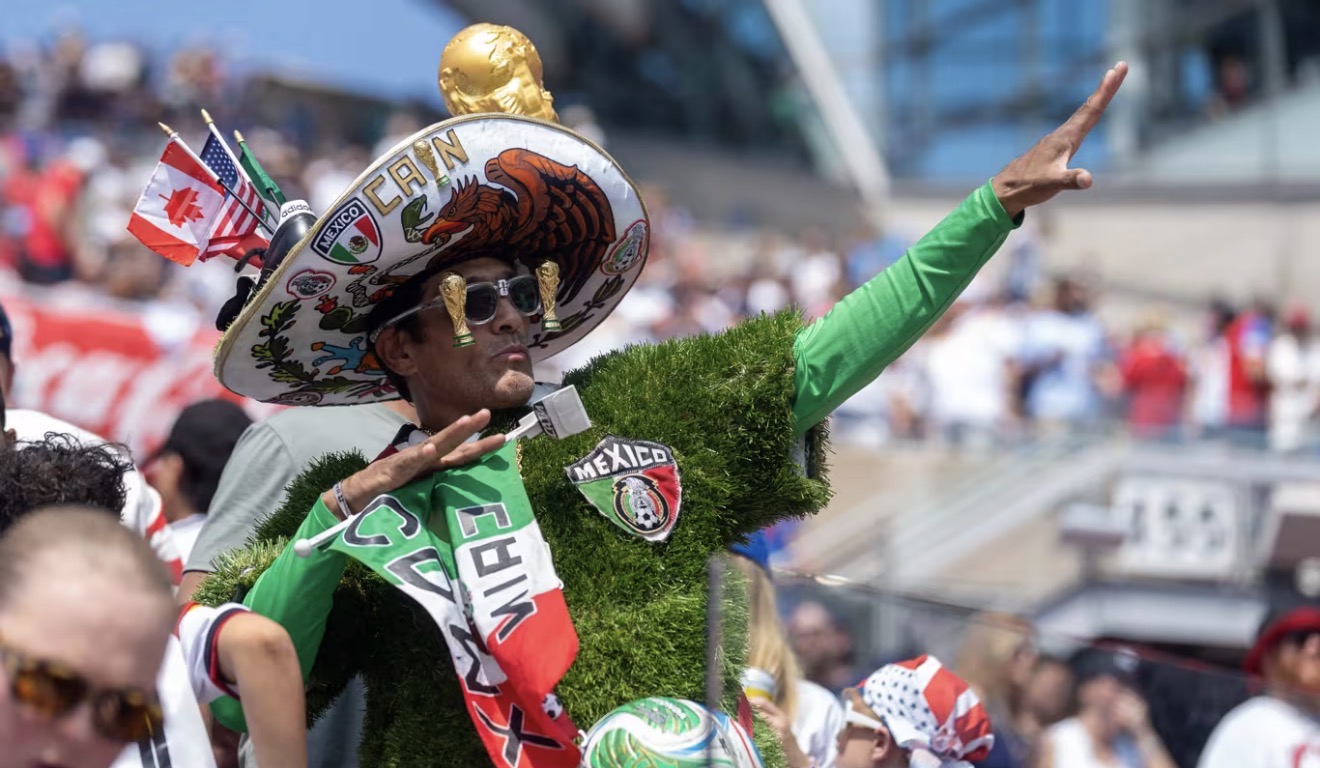
But if the spectator sitting next to them is a fan from Brazil, the perspective changes completely. For Mexico, the spending of this foreign visitor becomes an export of services. It’s no longer just a leisure expense. It’s foreign currency coming in. Accommodation, local transport, dining, souvenir shopping, and even some additional expenses are recorded in the balance of payments under travel-related services.
“Since the Brazilian fan is a non-resident, his spending becomes a foreign transaction, that is, a cross-border transaction,” analyzed Renato Perez, explaining how two fans can attend the same match, at the same time, in the same stadium, without their spending having the same economic meaning.
For the host country, the spending of the foreign visitor becomes an inflow of currency. This is exactly where major sporting events gain significant macroeconomic importance. They attract a flow of visitors capable of injecting substantial foreign currency into the local economy.One of the coolest things about this system is how spending is categorized economically. At first glance, buying a jersey or a souvenir seems like just trading goods. But Renato Perez points out that in the balance of payments, what a foreign traveler spends during their trip usually counts as travel services. So when it comes to the World Cup, it’s not just about the money from ticket sales. The ripple effect goes way beyond the 90 minutes of a match. Over the past decades, the World Cup has become a huge global industry. The 2014 FIFA World Cup needed around 15 billion dollars in investment, mostly in infrastructure, stadiums, transport, and security. The 2022 FIFA World Cuptook this logic to an unprecedented scale. International estimates talk about more than 200 billion dollars invested, making this edition the most expensive in history. The 2026 FIFA World Cup is also expected to generate major economic impacts.
Ultimately, the economic reading of the World Cup might be summed up in this striking phrase by Renato Perez: ‘For statisticians, we don’t see a stadium. We see domestic consumption or exports.’ And Jim Tebrake concludes: ‘Behind every seat in a stadium, there is a statistician trying to figure out how to measure it.’
Behind every cheer from fans, every ticket scanned, and every jersey bought, there is, therefore, a moving economic equation.