
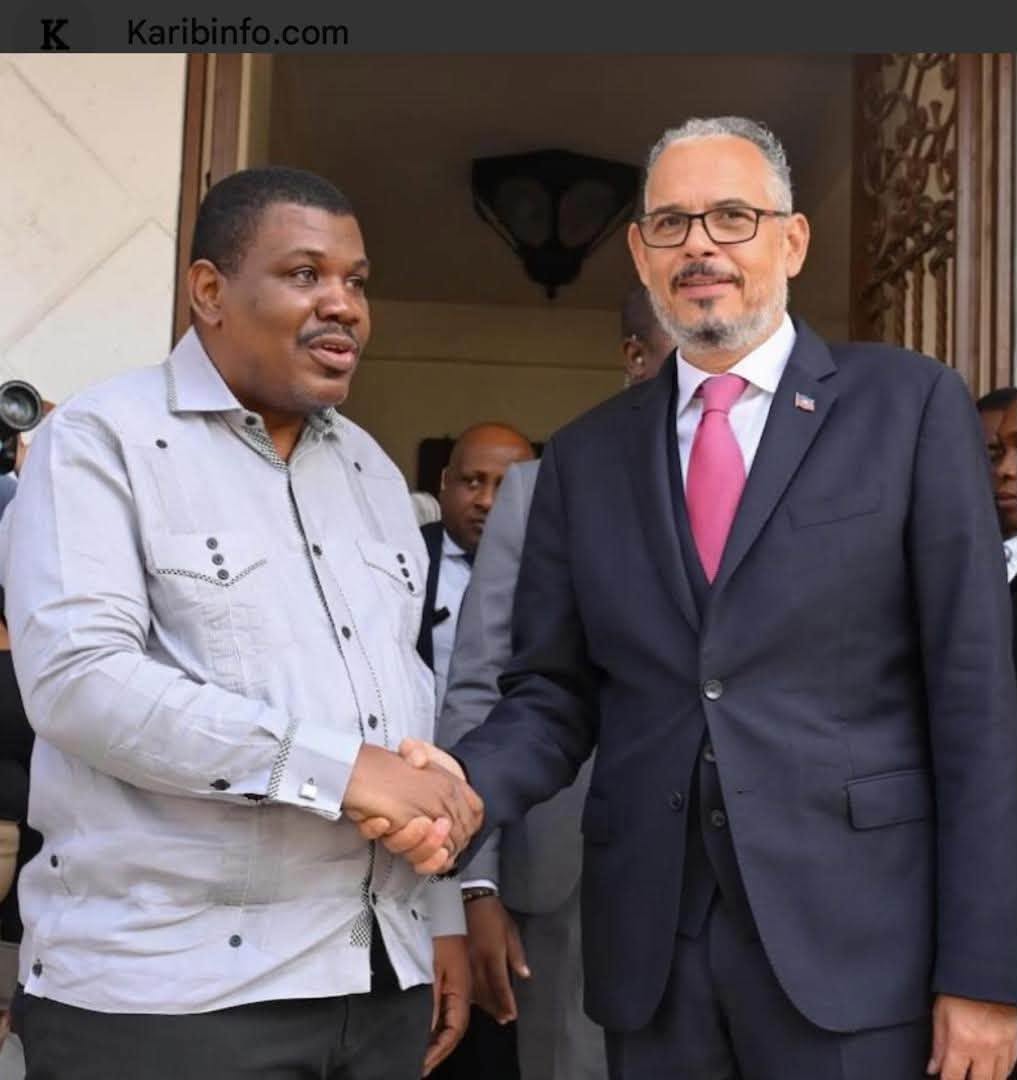
In a series of meetings held last week with the government, most of the approved political organizations called for a change to the electoral decree.
In a series of meetings held last week with the government, most of the registered political organizations called for a change to the electoral decree. The Prime Minister’s Office says that the Prime Minister asked the Electoral Council ‘to provide appropriate responses to the issues raised by the groups and political parties…’Several leaders of political organizations contacted by Le Nouvelliste on Monday evening said they clearly raised the need to modify the electoral decree during meetings with the Prime Minister. In fact, more and more political actors are pushing for changes to the document. The 30,000 members required in Article 130, the numerous documents required in Article 153 to be a candidate, the registration fees required by Article 157… are, among other things, points seen as irritants by political actors.
While the Electoral Council had already met with political actors on these concerns, it was the Prime Minister who, last week, held a series of meetings with the leaders of accredited political organizations.In a statement released Monday evening, the Prime Minister’s Office announced that the government is starting consultations with political actors on the electoral process. From August 23 to 30, 2026, the Prime Minister met with representatives of the following political structures and parties: The Forum of Nine Political Groups, composed of Delivrans, Anfòs pou Sove Lonè, Debout Citoyen, Debout Patriote, GRAND, COPPOS-Haiti and Allies, MYEL, Platfòm Rekonsilye, and Sol Ayiti.
Separately, he also met with the groups Ayiti Transfòme, LAPEH and Allies, KAPAB, GRÂCE for Haiti, DEBLOKE, Solèy, and VIKTWA; as well as accredited political parties, such as the Organization of the People in Struggle (OPL) and Vision-Action-Réalisation (VAR), according to the Prime Minister’s Office.“The aforementioned political groups and parties have expressed their concerns regarding the technical and operational failures observed in the electoral process, as well as the difficulties related to the implementation of certain provisions of the electoral decree, notably: a. The lack of transparency surrounding the voter registration process and the complete absence of awareness efforts; b. The technical failures of the online registration system for the 30,000 members; c. The suspected irregularities or malfunctions of the system, linked to the rejection of valid cards on the grounds that a citizen, member, or party leader was already registered, unknowingly, in another party…”The Prime Minister’s office also notes “d. the mismatch between the provisions of the decree and the implementation of the electoral calendar; e. the difficulties related to applying the provisions of Article 153 of the electoral decree, among other things concerning the deadlines for submitting candidacy files; f. the neutrality and impartiality of the government in conducting the electoral process; g. setting up an appropriate security framework to ensure the smooth running of the elections.”
The Prime Minister’s office indicates that following consultations, the Prime Minister, after sending a letter to the Provisional Electoral Council (CEP), met with the electoral advisers on Monday to discuss these concerns and “asked them to provide appropriate responses to the issues raised by the groups and political parties.”“Consultations with the various groups and political parties are continuing.
The government reiterates that the credibility of the elections relies on transparency, fairness, legality, and public trust. It intends to continue its efforts so that the electoral process meets democratic requirements and the higher interests of the Nation,” the Prime Minister’s office says in the statement.
It should be recalled that the electoral decree published in Le Moniteur on June 2, 2026, was largely prepared by the Prime Minister’s office. The CEP had even denounced the electoral decree as “unconstitutional.” After several rounds of negotiations with the Prime Minister, the CEP managed to get changes in the document related to the July 2 decree published in Le Moniteur.

