
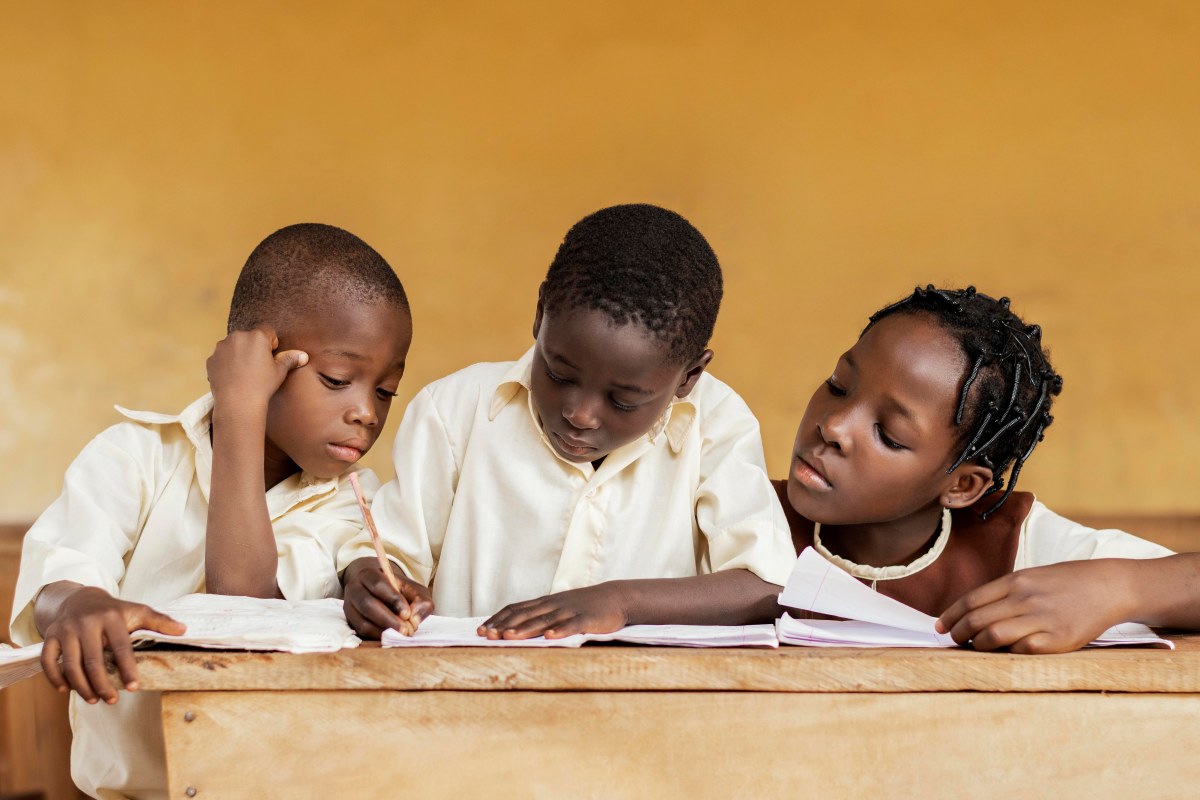
The Haitian education system has always been tested by the political upheavals of the past forty years, sometimes a victim of chronic instability, sometimes caught up by its internal contradictions.
The Haitian education system has always been tested by the political upheavals of the past forty years, sometimes falling victim to chronic instability, sometimes being caught up in its own internal contradictions. On top of that, there’s a long list of ill-suited reforms, or half-baked reforms put together just to align with the visions set by international funding institutions like the World Bank and the Inter-American Development Bank, along with a lack of funding and either absent or unambitious national education policy. This whole mix of setbacks highlights incompetence and shows the need to look at the education system in light of socio-political crises, and to find the solutions best suited to building the Haitian school around the basics that meet the theme of ‘building the country’ and ensuring the renewal of future citizens for the coming generations.
Educating during a crisis requires connecting the crisis with the realities of the stakeholders who are directly affected by it, by revisiting curricula, integrating topics that encourage reflection on the social environment in which school administrators, teachers, parents, students, and unions operate. This approach of pedagogical immediacy responds to a need to address issues like the ‘gangsterization’ of disadvantaged neighborhoods, to rebuild relationships with actors in hard-to-reach areas, and to raise awareness not just about the importance of space but about the moments of waiting that space creates, the safety it provides, and the multifunctionality it serves. Reclaiming school spaces is a crucial step in authentic engagement with communities; this should be supported and led by educators.teachers and leaders capable of inspiring trust and showing a pedagogy of patience and promise, that is to say taking the time to make people think in order to truly grasp things, taking the time to slow down to connect, and then we get back to work and face reality, the concrete. This setup could be tested in the La Saline neighborhood, where there’s a high school whose youth, mostly local, are often armed. The school administrators there could be involved and help organize discussion modules based on their experiences and knowledge of each individual (former students, students, community influencers, and/or local notables); their involvement would give credibility to the process of building opportunities to learn together and help release individual and personal energies.This process introduces a verticality in the style of Marcel Mauss, one of the fathers of anthropology, who explains the handling of the total social fact, keeping in mind that this approach is both holistic and aims to connect the institution responsible for national education to its primary mission, which is to foster a sense of community and living together. It’s worth noting that this experimental process isn’t ‘step-by-step’; it fits into the dynamics of concrete pedagogy, forming and reforming through contact and individual engagement, taking into account each other’s perspectives. The need for the other is essential to legitimize the tool of free speech, which is mutual trust—a social virtue that is always under strain in public communication systems, especially when targeting the majority of the common people.

