
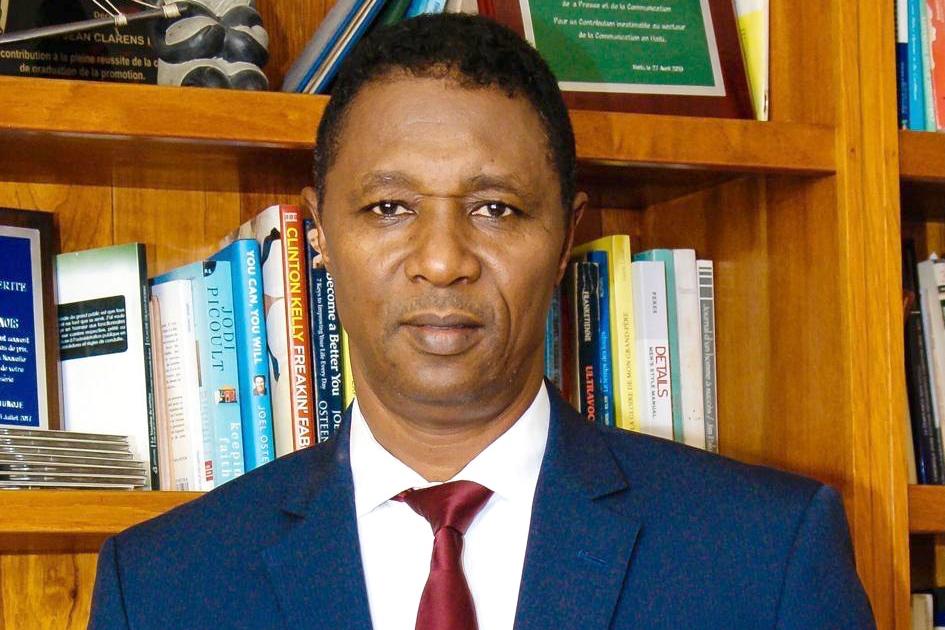
Facing the multidimensional crisis in Haiti, Clarens Renois advocates for the rise of a national and consensual leadership, capable of bringing together the active forces around a common project.
Given the current security and political situation in the country, the worst seems to be looming. Even worse, the way things are developing and the grip of organized crime don’t allow for a return to stability in the coming years. The United Nations report paints a picture of a society trapped, caught between the anvil of political crisis and the hammer of insecurity, with a high risk of collusion between the two. More than ever, the country seems poised to join the ranks of pariah states. It’s a situation that raises fears of even darker days ahead for the country in the years to come.Faced with this situation, the only way out would be the emergence of a national leadership capable of bringing together the country’s active forces around a common project. At least, that’s the point of view of Clarens Renois, leader of the political party National Union for Integrity and Reconciliation (UNIR). Speaking on the Panel Magik show this Friday, October 9, 2026, the former journalist called for a ‘national and consensual leadership,’ one that would be ‘able to say: here are our problems, and let’s move forward together toward a solution.’ This stance is consistent with the image of a man of dialogue that the politician has built for himself in the Haitian political arena.
The leader of UNIR is particularly harsh towards the political elite in power over the past few decades, whom he points to as responsible for what the country is going through right now. The height of the nightmare: the upcoming elections, which Clarens Renois sees as a “political jungle battle” with “aggressive and power-hungry” players, seem likely to bring these same political actors to power. “There’s no authority, no state power with a long-term vision for Haiti. Just people trying to hang on,” Mr. Renois criticizes.And the country’s recent political history tends to highlight these concerns. “In forty years of power in Haiti, from 1986 to 2026, we have only had 15 years of ‘legitimate and democratic’ government,” argues Clarens Renois, before adding, “We’ve still had 25 years of transition. The international community encourages us, and we also agree to go along with this process. And every time we’re given a chance to get out of it, we don’t take it.”But this new “national leadership” advocated by UNIR’s number one seems to be more about aspiration than reality. Clarens Renois himself admits it, saying that he “doesn’t see it yet, but wants to work as an actor” in its emergence. The lack of political education among citizens-voters, the dominance of the political class by figures with questionable credibility and doubtful integrity, the control of armed groups (gangs or anti-gang brigades), and increasingly frequent accusations of collusion between political power and armed gangs all raise fears of a “failed democracy,” as mentioned by Clarens Renois.

