
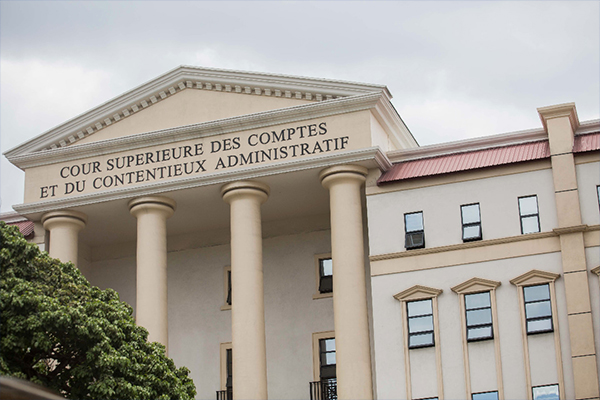
The CSCCA firmly reaffirms that it is in no way authorized to go beyond its constitutional and legal powers or to take the place of Parliament in granting discharge of management to former Prime Ministers and ministers.
The CSCCA firmly reiterates that it is in no way authorized to overstep its constitutional and legal powers or to replace Parliament in granting discharge of management to former Prime Ministers and ministers. Such a responsibility falls exclusively under the legislative power, with the sole exception of cases where these former senior officials have been declared de facto accountable for public funds during the exercise of their duties. In this strict scenario, they become subject to the Court, which alone is then competent to judge their accounts, in accordance with current legal and regulatory provisions,” wrote its president Rogavil Boiguéné in a notice to former Prime Ministers and ministers on November 12, 2026.In its statement, the opinion signed by the president of the CSCCA indicated that “by virtue of the principle of separation of powers and administrative legality, it can in no way claim or appropriate prerogatives or powers that are not expressly granted to it by the Constitution and the laws of the Republic.”
In this regard, the opinion continues, the Court recalls the legal and constitutional provisions governing the discharge procedure:
Article 233 of the amended Haitian Constitution states: “In order to carry out serious and ongoing oversight of public spending, a parliamentary commission of fifteen members, including nine deputies and six senators, is elected by secret ballot at the beginning of each ordinary session, tasked with reporting on the management of ministers so that the two (2) Assemblies can grant them discharge. This Commission may bring in specialists to assist it in its oversight.”Article 89 of the law of May 4, 2016, replacing the decree of February 16, 2005, on the process of drafting and implementing finance laws, states: “Parliament votes on the state’s budget revenues and expenditures through finance laws. Through the Bicaméral Discharge Commission and the standing committees of both branches of Parliament, it ensures ongoing and regular oversight of public spending. On this occasion, it is entitled to request the Court of Accounts to carry out any investigations necessary for its information.”Article 205 of the Senate of the Republic’s rules of procedure states: “Regarding the State Public Administration, the six Senators who are members of the relevant Committee join the nine Deputies appointed by the Chamber of Deputies to form the bicameral Committee provided for in Article 233 of the Constitution; the Parliamentary Committee on General Accounts and Discharge receives the report from the Supreme Court of Accounts and Administrative Litigation, analyzes it, and drafts its own report on the management of the ministers,” according to this opinion.
The country has not had a functioning Parliament since January 2020. The State has been operating under budget decrees since the assassination of President Moïse.

