
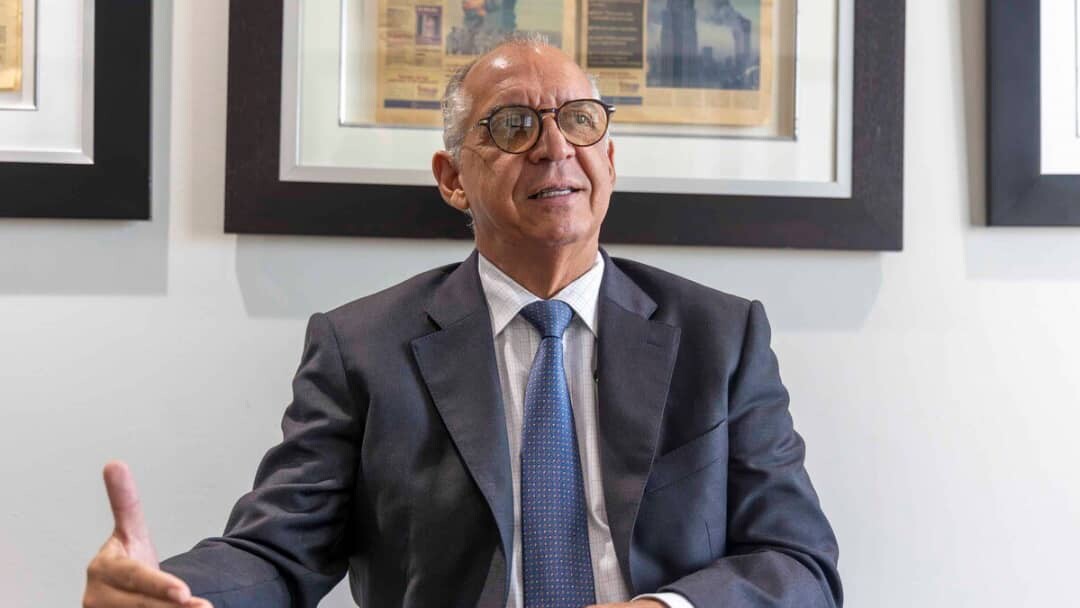
Dominican industrialist Fernando Capellán, founder of the industrial park Compagnie de développement industriel (CODEVI) in Ouanaminthe, believes that the Dominican Republic would do well to invest more in Haiti’s economic development.
Dominican industrialist Fernando Capellán, founder of the industrial park Compagnie de développement industriel (CODEVI) in Ouanaminthe, believes that the Dominican Republic would greatly benefit from investing more in Haiti’s economic development. In an interview with the Dominican daily Diario Libre on Wednesday, November 18, 2026, the businessman promoted the idea of a cross-border economic partnership that could help create jobs in both countries. He also criticizes what he calls the “hypocrisy” of certain Dominican sectors toward Haiti.CODEVI, an experience of cross-border economic cooperation
With 23 years of experience at the helm of CODEVI, Fernando Capellán believes that developing economic activities in Haiti could be a real opportunity for the Dominican economy. The industrial park, which employs over 18,000 Haitian workers, also hosts around 1,500 Dominicans and foreign nationals daily. According to him, this experience has helped improve human development conditions both in Ouanaminthe and Dajabón, on both sides of the border.For the industrialist, Haiti shouldn’t be seen only as a country facing economic and security challenges, but also as a market offering significant business opportunities. He argues that a better-organized Haitian economy could boost Dominican exports, especially in the food, construction materials, and industrial inputs sectors. “Haiti, if managed carefully, is a great opportunity to create jobs, not just in Haiti, but also for Dominicans,” he said.
This vision is especially based on the importance of trade between the two countries. In 2025, the Dominican Republic exported goods to Haiti worth around 1.2 billion US dollars, mainly food products and construction materials, according to data reported by elDinero. Capellán believes it would be possible to further strengthen these trade relations by connecting Dominican suppliers with Haitian production units and by developing industrial activities intended for export.From this perspective, the founder of CODEVI particularly advocates for developing the assembly of clothing, shoes, and toys in Haiti. He encourages Dominican authorities to include this approach in a real long-term economic strategy. He also suggests expanding industrial free zones and creating dry ports near the border to make trade easier and strengthen logistics infrastructure.Economic opportunities facing Haitian challenges
Addressing the issue of Haitian labor in the Dominican Republic, Fernando Capellán advocates for the establishment of a biometric worker registration system and the granting of temporary work permits. This proposal aims to better regulate their presence in Dominican territory, without automatically granting them Dominican nationality. For the businessman, a more organized management of labor mobility could help meet business needs while reducing administrative irregularities.Economic opportunities facing Haitian challenges
Addressing the issue of Haitian labor in the Dominican Republic, Fernando Capellán advocates for the establishment of a biometric worker registration system and the granting of temporary work permits. This proposal aims to better regulate their presence in Dominican territory, without automatically granting them Dominican nationality. For the businessman, a more organized management of labor mobility could help meet business needs while reducing administrative irregularities.If the CODEVI model represents an important experience in cross-border economic cooperation, it is also criticized for relying on low-cost labor and how the wealth generated is distributed. For Haiti, the goal shouldn’t just be to attract investments and create more jobs, but also to ensure better working conditions, more local added value, and sustainable economic benefits. Security, institutional stability, and setting up investment-friendly rules remain, in this respect, essential conditions for making this kind of vision a reality.

