
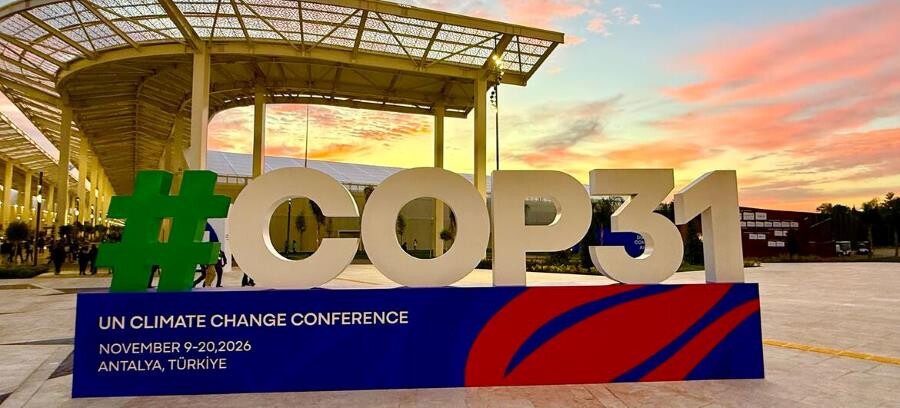
At COP31, negotiations are still stumbling over climate financing, fossil fuels, and adaptation.
At COP31, negotiations are still hitting snags over climate financing, fossil fuels, and adaptation. As ministers get ready to take over, new initiatives on artificial intelligence and green industrialization show the growing role of technology in the fight against climate change.As the United Nations Climate Change Conference (COP31) enters its second and final week, the corridors of the Antalya conference center in Turkey are buzzing again. Ministers are arriving ahead of the high-level segment that will open on Tuesday, after seven days of technical negotiations, announcements, and speeches.
The issues awaiting them are particularly sensitive. Who should finance climate action? How can the most vulnerable countries be helped to adapt? How can workers be protected during the energy transition? And above all, what role will the final agreement give to the phase-out of fossil fuels?
Late Monday, Australia, co-host of COP31 and responsible for chairing the negotiations, presented a first draft of a global decision. But this text is only a discussion base: countries remain divided over its content, as well as over the very necessity of adopting a
The ministers are supposed to meet in a “Divan” — a term of Ottoman origin referring to an imperial assembly — to try to reach political compromises on the most contentious issues.
A somewhat mixed first week
For Soenke Kreft, a climate policy expert at the United Nations University, the negotiations are like a football match going into the second half.
“It’s quite likely there will be extra time as well,” he told UN News.
While some technical files have made progress, most of the political decisions still need to be made. “The first week was somewhat slow,” he admitted, adding that it was “essential for the momentum to pick up during the second week.”
The disagreement over the schedule for the next assessment report of the Intergovernmental Panel on Climate Change (IPCC) highlights these tensions. Countries remain divided on when this major scientific assessment should be published. The most vulnerable nations want its findings available as early as 2028, so that they can inform the second Global Stocktake, which will assess the progress made in implementing the 2015 Paris Agreement.The current deadlock is delaying decisions on the scientific timetable and is raising fears that governments will approach the next assessment without having the latest comprehensive evaluation of climate knowledge.
“We have to stand up for science. We have to stand up for scientists,” said Laurence Tubiana, CEO of the European Climate Foundation and one of the architects of the Paris Agreement, on Monday during a highly attended plenary session focused on scientific issues.
Former Irish President Mary Robinson expressed the same concern: “The world cannot afford to weaken or lose the IPCC.” She urged countries to get past their differences to ensure the next report is published on time.Scientists have also warned about the risk of temporarily exceeding the 1.5°C warming threshold and stressed the need to base COP31 decisions on the latest scientific data.
Activists warn of the risk of distraction
On the negotiation front, climate activists are cautioning that the proposed overarching decision could divert attention from the concrete measures expected from governments.
“In the end, these framework decisions risk becoming just a distraction,” warned a representative from the Climate Action Network, urging journalists to look beyond political statements.The network notably criticized proposals to create a ‘just transition’ mechanism that would give workers and local communities a voice, without necessarily providing them with the essential resources.
One representative compared this situation to being invited ‘to sit at a table with no food, no cutlery, no plate, and very bad wine.’
‘Coal miners in Australia, lithium, cobalt, and platinum workers in Africa, as well as steelworkers in Germany, India, and the UK can no longer settle for mere dialogue,’ he added.
Climate financing is also raising questions. Activists are particularly concerned about the replenishment of the main climate funds. The Solomon Islands, a small island state that is especially vulnerable, was the first country to announce a contribution to the Green Climate Fund at this COP31, while

