
The global fishing and aquaculture sector is increasingly exposed to food fraud. In a report published in 2026, the FAO provides a detailed overview of food fraud in the
The global fishing and aquaculture sector is increasingly exposed to food fraud. In a report published in 2026, the FAO provides a detailed overview of food fraud in the aquatic products sector and outlines the types, causes, and consequences of this phenomenon.
Fishing and aquaculture are major global economic activities. In 2022, 185 million tons of fish, mollusks, crustaceans, and other aquatic products were produced, with a value of 195 billion USD. Unfortunately, any commercial activity inevitably comes with fraud.With more than 12,000 species being traded and considering the complexity of dealing with the multiple regulatory authorities along international supply chains, this situation isn’t really surprising. Fraud is especially common in restaurants and catering services, where it’s hard to visually identify the species, as well as in processed products, where the species’ identity can be hidden.
Species substitution and mislabeling are the most common forms of fraud: studies show that worldwide, at least 20 percent of fishery and aquaculture products are mislabeled.
Usually driven by economic reasons, fraud still poses significant risks to public health, consumer trust, and marine conservation.
To raise consumer awareness about these practices and promote greater transparency in the sector, the United Nations Food and Agriculture Organization (FAO) published a report in 2026 called Food Fraud in the Fisheries and Aquaculture Sector, which highlights the current situation and the measures being taken to address it.Here are some of the “questionable” practices described in the report that consumers are encouraged to watch out for:
1- Sneaky additions – Adulteration is the process of adding non-authentic or fraudulent substances to the final product, like dyes, water, or other fillers. For example, adding additives to tuna to make it look fresher or change the color of its flesh is considered adulteration. These kinds of fraudulent additions can increase the risk of illness.
2- Dangerous counterfeits – When every aspect of an original product is fraudulently reproduced and the product is packaged to look like the original, it’s called food fraud by counterfeiting.
3- Imitations – Simulation, on the other hand, refers to a product that looks like another without being an exact copy. In other words, it’s a fake version of the original.Usually driven by economic reasons, fraud poses significant risks to public health, consumer trust, and marine conservation.
4- Market intruders – Diversion happens when legitimate products are sold or distributed outside the markets they were intended for. This is the case, for example, when fish or other aquatic products are imported from a country that isn’t allowed to export to that market.
5- Misleading claims – Mislabeling involves putting false or potentially misleading information on packaging, such as inaccurate claims about the product’s sustainability or organic certification.
6- Overproduction – When products are legitimate but produced beyond established limits, it’s called overproduction. Overfishing of certain species and selling surplus production outside regulated channels are examples of this.
7- Substitution – Species substitution involves replacing a high-value species with a cheaper one to make extra profit. This happens, for example, when farmed salmon is sold as wild salmon, or when red snapper (Lutjanus campechanus) is replaced with tilapia.
8- Misinformation – Counterfeiting and mislabeling occur when a legitimate product and its packaging are used fraudulently. This can include, for example, altering the expiration date information. Fraudulent labeling can also mean giving misleading information about the product’s origin or how it was produced, like presenting farmed fish as wild fish. Mislabeled products can pose health risks, including exposure to toxins, allergens, pathogens, or contaminants.especially when they come from unauthorized sources or bypass health safety checks.
- Stolen products – Theft occurs when a product is stolen and then presented as if it had been legally purchased. Stolen products are distributed outside of regulated or controlled supply chains.
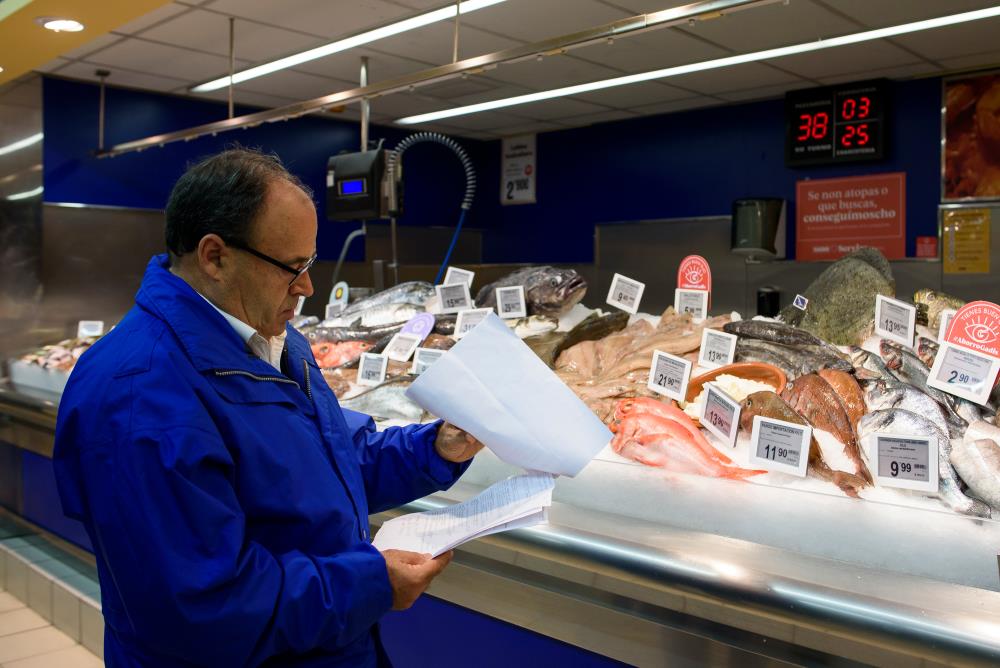
The FAO combats fraud by working with governments and international organizations to harmonize labeling requirements, make it mandatory to include scientific names, and establish better traceability systems. ©FAO/Ricardo Castelo
These nine types of fraud all have serious health, economic, and environmental consequences.
In the face of this complex and widespread problem, the FAO fights fraud in this sector by collaborating with governments and international organizations to harmonize labeling requirements, make scientific name labeling mandatory, and implement better traceability systems.International standards, including the Codex Alimentarius, FAO guidelines, and national laws, play a key role in regulating this sector and ensuring compliance of fishery products.
Technology also plays a major role in guaranteeing the authenticity and food safety of products. Advanced DNA-based methods and technologies, such as DNA barcoding, polymerase chain reaction, and next-generation sequencing, are helpful for accurately identifying species, especially when it comes to processed aquatic products or those made up of multiple species. In addition, innovative techniques, like portable X-ray fluorescence devices and machine learning models, are emerging as tools to quickly verify the origin of products.Fighting food fraud in the seafood sector requires coordinated action based on strict enforcement of regulations, advanced analytical tools, stakeholder collaboration, and public awareness. The FAO report provides practical recommendations to strengthen global efforts to ensure the authenticity, safety, and integrity of aquatic products and help consumers know what they are eating.