
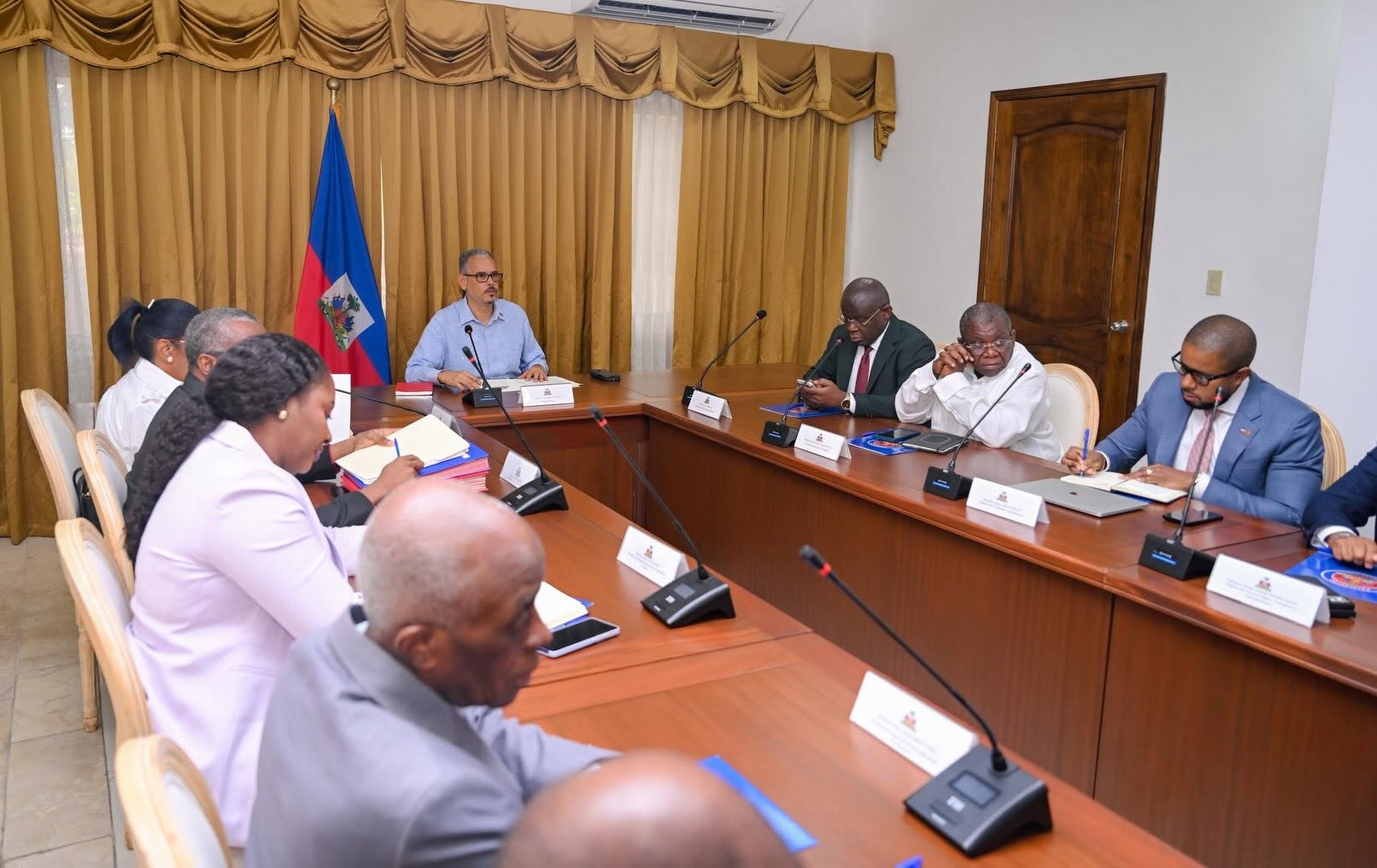
After several weeks of negotiations between the Electoral Council, the government, and political parties close to those in power, the electoral decree was adopted on Thursday during the Council of Ministers, a government member told Le Nouvelliste.
After several weeks of negotiations between the Electoral Council, the government, and political parties close to the power, the electoral decree was adopted Thursday in the Council of Ministers, a government member told Le Nouvelliste.
“The changes made to the electoral decree following discussions with the Electoral Council and political parties were adopted during the Council of Ministers,” a government member told the newspaper. He noted that the document has been sent to the National Press for publication in Le Moniteur.
A member of the Electoral Council reached Thursday by Le Nouvelliste confirmed that discussions between the government and the CEP about the decree had ended since last week.”The government, the political parties involved in the discussions, and the Electoral Commission have agreed on a document that should be adopted on Thursday at the Council of Ministers,” he told the newspaper. However, our source at the Electoral Council hinted that the electoral body is waiting for confirmation that the text agreed upon by the parties is indeed the one that will be published in Le Moniteur.
In the new version of the electoral decree, the electoral advisers made progress on certain provisions but also made some concessions to the government.
At first, the CEP was very critical about the idea of appointing a general director to head the electoral institution, but after negotiations with the government, the general director appointed and installed by the Prime Minister’s office is still in position. However, “there have been changes in the duties of the general director which were points of contention,” our source at the CEP says.
The electoral advisors were also able to get, among other things, a change to Article 133 of the electoral decree imposed by the Prime Minister’s office. To understand these changes, it’s important to note first that according to Article 130 of the executive’s electoral decree, “To be authorized to submit candidates for elections, any political party, group, or coalition of political parties approved by the CEP must submit a list of thirty thousand (30,000) members, adherents, or supporters who enjoy their civil and political rights.”
Article 133 stated, ‘The CEP communicates to the MJSP the list of members, supporters, or sympathizers provided by political parties, groups, or party alliances to verify, through the ONI, its authenticity and to avoid any duplicates or registration of invalid NINU in accordance with the provisions of the articles…’
Following the negotiations, according to our source at the CEP, it is the electoral institution itself that will handle verifying the authenticity of the list of 30,000 members, supporters, or sympathizers that political organizations will need to provide in order to be authorized to submit candidates for the upcoming elections.
At the same time, discussions about the budget with technicians from the Ministry of Economy and Finance ‘are very advanced. By next week, we’ll have an electoral budget…’, said this election adviser reached by phone.Everything went off the rails between the CEP and the government on June 2 following a meeting where Prime Minister Alix Didier Fils-Aimé forced the Electoral Council to accept an electoral decree. “This move confirms the unconstitutional nature of the Prime Minister’s decision, which violates the principle of independence of any Electoral Council,” the CEP had written to denounce this government action.
Immediately after, the government published the electoral decree in Le Moniteur and appointed Uder Antoine as the general director of the CEP, just hours after he had been dismissed by the electoral councilors as the executive director of the electoral institution.
It’s this tense situation that the CEP and the government are trying to manage through these negotiations and the changes in the electoral decree published on June 2 in Le Moniteur.