
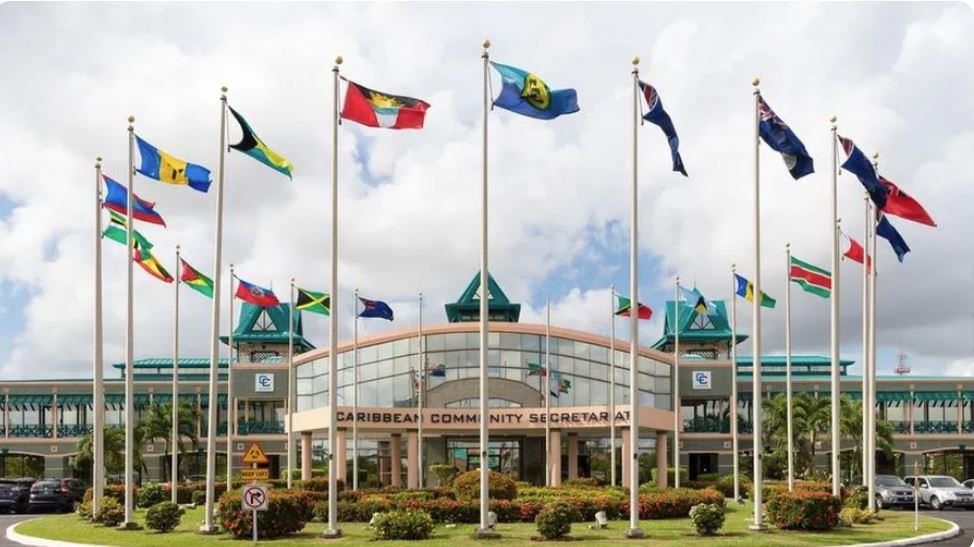
By Jean Daniel Elie The 51st Conference of CARICOM Heads of Government will take place in Gros Islet, St.
The 51st Conference of CARICOM Heads of Government will take place in Gros Islet, St. Lucia, from July 5 to 8, 2026. It will be chaired by the Prime Minister of St. Lucia, the Honorable Philip Pierre, who will hold this position from July 1 to December 31, 2026, under the rotation system established for the functioning of this supreme body. Haiti is a member of CARICOM and a de jure member of the Caribbean Single Market and Economy (CSME), but so far it has not been able to effectively participate in trade, struggling to fulfill the various contractual obligations agreed to under the Revised Treaty of Chaguaramas.
This article aims to emphasize the need for Haiti to take charge of this issue by continuing the necessary regulatory actions regarding the implementation of the components of the Revised Treaty of Chaguaramas (RTC), particularly those related to the Single Market. It will first recall the commitments Haiti has made to this regional bloc, then focus on the actions already undertaken as well as those that still need to be completed; finally, it will highlight the importance of CARICOM for Haiti.
Reminder of the commitments Haiti has made to CARICOM under the Revised Treaty of Chaguaramas.
The start of trade between Haiti and the other CARICOM Member States should be made easier by putting in place, at both the institutional and legal levels, the parts related to the common external tariff (CET), rules of origin, customs value, and standards.At the level of the common external tariff (CET), Haiti’s obligation is to harmonize the customs duty rates in this system with those of the national customs tariff. This tariff must then be ratified by Parliament. Since CARICOM is a customs union (CU) that meets the criteria of Article XXIV and the 1994 GATT Article XXIV Understanding, it does not apply customs duties to goods originating from member states, except in cases of non-compliance with the rules of origin and standards.
In a move toward regional integration, the absence of customs duties is replaced by the use of rules of origin to authenticate goods coming from member states. Haiti is therefore required to implement the RO based on the rules and criteria set out in Article 84 of the TCR.
In the field of Customs Value, a decision by the Heads of Government adopted in 1992 requires member states to apply WTO rules on customs value, referring to the 1994 GATT Agreement on the Interpretation of Article VII on Customs Value. Haiti must urgently implement this important provision.
As for technical standards and regulations, Haiti, as a CARICOM member, is required to apply the standards set by the region to goods moving within the regional space. It is also obliged to sign and ratify the Agreement establishing the Regional Organization for Standards and Quality (CROSQ).Other implementation actions will also need to focus on components like the movement of people (that is, citizens of member states), capital, and services, the harmonization of laws, the Caribbean Court of Justice (CCJ)[1], etc.
The above considerations lead us to wonder what has already been done to allow Haiti to put into practice the components listed above.
What has been done to fulfill these commitments?
In the case of the CET, the 2009-2010 finance law raised the existing customs duties to match the CET rates for about a thousand tariff lines. However, additional efforts need to be made to achieve full implementation of CET customs duty rates for the remaining tariff lines. Since the national customs tariff rates are lower than those of the CET and the MFN rates negotiated under the WTO, Haiti is required to go through a renegotiation process to regularize this situation. This process, which has already started, is currently on hold, due in part to the security situation and the country’s institutional paralysis.However, it should be noted that, in the meantime, the TEC has been amended and the changes made to it have been endorsed by the Conference of Heads of Government. This is a new element that will need to be taken into account at the institutional level in the further handling of this file.
As for the Rules of Origin (RO), this may be the only component for which implementation actions have proven successful. Indeed, with the support of the CARICOM Secretariat, several missions provided training for staff from the Ministry of Commerce and Industry and the General Customs Administration to prepare them to manage this important instrument. They also helped establish the Certificate of Origin at the MCI, a document responsible for authenticating goods to be traded on the regional market.However, just like with the CET, the RO has also been modified by CARICOM. This seems normal, given the close ties between them. In other words, any change in the CET tariff structure automatically affects the RO.
The preferential access provided by the Single Market allows Haiti to implement the CARICOM rules of origin regime as laid out in Article 84 of the Revised Treaty. As soon as the harmonization of the national customs tariff with the CET is complete, Haiti will be ready to fully engage in duty-free trade with the other member states.
Standards remain an equally important area that Haiti must comply with in order to participate in the Caribbean Single Market. They represent an essential condition for goods coming from or going to member states to be accepted without any additional procedures. Haiti has signed the Intergovernmental Agreement establishing the Regional Organization for Standards and Quality (CROSQ). However, this agreement still needs to be ratified by Parliament.
Regarding customs valuation, Parliament has already approved the amendments to the Customs Code that incorporate the provisions of the WTO Customs Valuation Agreement applicable to this area. This is a matter that has been fully resolved, allowing Haiti to meet its obligations to CARICOM in this regard. This new customs legislation is now in effect, having already been published in the Official Journal ‘Le Moniteur’.The above-mentioned parameters represent those for which a lot of effort was made between 1999 and 2010 to advance Haiti’s effective participation in the Caribbean Community. But, it must be admitted that the political instability that has been affecting the country for more than five years has greatly hindered the completion of the process. That’s why it can be said that, compared to the progress already made, additional efforts will need to be undertaken to reactivate it at some point, while keeping in mind what still needs to be done.
What’s left to do?
After reviewing the actions Haiti has already taken to make effective participation in CARICOM a reality, it’s now time to focus on what still needs to be done.
At the TEC level, it’s worth bringing up the renegotiation of the consolidated rates at the WTO again in order to achieve Haiti’s full implementation of this instrument. But we’ll need to check with the CARICOM Secretariat about the reforms that have been made there. The same goes for the RO(3).Regarding standards, it will be necessary to have Parliament ratify the Agreement establishing CROSQ, since the signing formality has already been completed.
However, apart from the components mentioned above, there are others that also need to be focused on. These include competition (designation of the authority responsible for competition; development of a competition policy and law, etc.), the movement of services (immediate or phased removal of restrictions on services, establishment of elimination programs, etc.), capital (integration of the capital market; agreement on double taxation), and the movement of people (free movement of talent).
facilitation of travel; mechanism for diploma equivalence and accreditation; agreement on the transfer of social security benefits, etc.; establishment rights (elimination of restrictions on the right of establishment), harmonization of laws (in customs, establishment, services and capital, competition, consumer protection, anti-dumping and countervailing duties, banking, intellectual property, standards and technical regulations, food and drug labeling, sanitary and phytosanitary measures, commercial arbitration, etc.).Although Haiti is a de jure member of the Caribbean Court of Justice (CCJ), having signed and ratified the Revised Treaty, it still needs to sign and ratify the Agreement that established this court, which is meant to handle disputes arising from the interpretation and application of the Revised Treaty.
The range of areas mentioned above shows just how much needs to be done, both institutionally and legally, to fully implement them, including meeting the obligations it has agreed to under CARICOM.The Importance of CARICOM for Haiti
The current setup of CARICOM, which has included the CSME since 2006, places the region within the global economy, especially international trade governed since 1995 by the rules of the World Trade Organization (WTO). In fact, this new situation is what justified the thorough revision of the 1973 Founding Treaty.
The changes made in the 1973 version of the Chaguaramas Treaty have indeed pushed the region to align the new multilateral legal rules applicable to various areas of trade policy with those in force within this grouping.As a CARICOM member, Haiti can position itself better in multilateral trade discussions and negotiations.
Along the same lines, CARICOM is a regional trade agreement (RTA) that operates as a customs union, one of the forms of regional integration recognized and regulated by the WTO through Article XXIV.5(b) and the Understanding on the Interpretation of Article XXIV of the GATT 1994. One of the benefits that Haiti can gain from participating in CARICOM remains the economies of scale generally generated by economic integration, with opportunities for a significant increase in the production of goods and services capable of meeting a larger market. On this note, it is worth mentioning that the population of CARICOM member states totals just over 16 million consumers.As a result, it is possible for the sector involved in producing these goods and services to produce more in order to properly take advantage of the regional market. For this to happen, the Haitian private sector, grouped within various business associations, needs to have a good understanding of what Haiti’s participation in CARICOM as a regional bloc entails and the business opportunities it offers. Unfortunately, the perception is that this private sector, with a few exceptions, hasn’t really shown any interest so far in looking favorably at this integration group. This is regrettable, especially when considering what’s happening on the international stage, where countries are increasingly leaning towards making trade agreements, often in the form of free trade areas (FTA).
either a customs union (CU), recognized and governed by Article XXIV. Although these two types of economic integration have already been the subject of specific agreements concluded around the world since the 1970s(6).
To better take advantage of the trade opportunities offered by the Caribbean Single Market, there needs to be a clear understanding of the importance of the regional market, not only by public authorities but also by business circles made up of national sectors willing to make investments aimed at producing goods and services for this market. However, they need to be well aware of the necessary drivers to use, such as technology, innovation, research and development, etc. Hence, there is also a need to consider intellectual property, particularly industrial property, on which these drivers depend today(7).In conclusion, greater involvement of Haiti in CARICOM seems irreversible at this stage of discussions, considering the power dynamics between more developed, developing, and less advanced countries. Being part of a regional bloc is now a must and is highly recommended as it allows better positioning in international debates and negotiations, especially on trade-related topics. Hence the need for Haiti to get closer to its regional trade partners to defend its interests. Moreover, it can always draw on its status as one of CARICOM’s less developed countries (LDCs).
However, regularly being present at meetings held within CARICOM bodies, and not just those of the Conference of Heads of Government, is essential to stay informed on the issues being discussed. This leads to questions, for example, about the participation of the relevant institutions in the working and negotiation sessions carried out at the lower levels within CARICOM bodies, such as the Council for Trade and Economic Development (COTED) meetings, which led to the reforms in the TLE and RO.
References and Notes
[1] On this issue, the action concerns the signing and ratification of the Agreement establishing the CCJ, with Haiti not yet being a full Member of this important Community body.
[2] CARICOM is still a customs union governed by the provisions of Article XXIV and the Memorandum of Understanding on the interpretation of Article XXIV of the 1994 GATT.
[3] It is worth questioning Haiti’s acceptance through the participation of public authorities in the sessions of the Conference of Heads of Government and the approval of the final Communiqué on amendments to the TEC and RO. If that is the case, Haiti is immediately involved in the process of implementing the new rules governing it without having taken part in discussions held in the ministerial committees (COTED, for example) and the related technical bodies to express its concerns.[4] The CCJ was established on February 14, 2002, by the Agreement establishing the Caribbean Court of Justice. It was inaugurated in April 2005 and is based in Port of Spain, Trinidad and Tobago. This body acts not only at the first-instance level but also on appeal. In its appellate jurisdiction, it handles both civil and criminal matters originating from the Common Law courts of the Member States of the Community that are members of the CCJ. However, at the first-instance level, the CCJ functions as an international court applying international law rules related to the interpretation and application of the Revised Treaty.
[5] The CARICOM Member States are members of the WTO, except for the Bahamas.
[6] According to the WTO, as of June 10, 2026, 383 RTA/FTAs were in force. In addition, at least 79 RTAs/FTAs currently in force have not yet been notified to the multilateral organization, the World Trade Organization, WT/REG/W198.
[7] These are the channels considered by the Agreement on Trade-Related Aspects of Intellectual Property Rights (the TRIPS Agreement) of the WTO, an agreement whose provisions have not all yet been implemented by Haiti, which, like all other LDCs, benefits from a moratorium that expires in 2033[8] This status was carefully negotiated by Haiti and endorsed by CARICOM during the negotiations between the two parties. It allows Haiti to enjoy all the flexibility and leeway needed to implement the components of the Revised Treaty of Chaguaramas. In turn, it also gives Haiti the opportunity not to commit to reciprocity in agreements concluded by CARICOM with other countries or groups of countries that it might be expected to join. For example, the CARICOM-Colombia Agreement, which is a partial-scope agreement that Haiti has expressed a wish to join. Finally, it should be noted that the SIDS status is different from that of LDCs. While the former is limited exclusively to the regional framework of CARICOM, the LDC status is situated in the international context and was established in 1971 within the United Nations to designate this category of countries..