
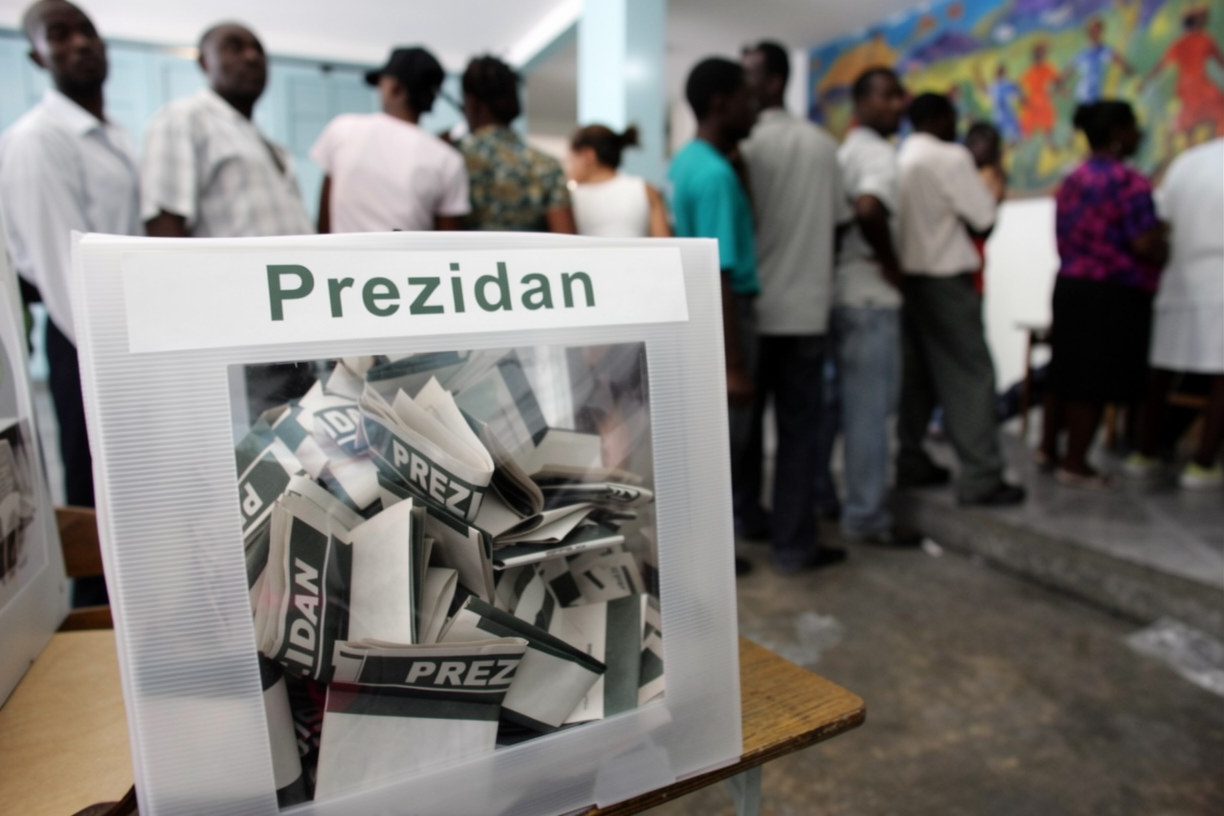
The approval of 316 political parties by the Provisional Electoral Council (CEP) is an unprecedented event in Haiti’s recent electoral history.
The approval of 316 political parties by the Provisional Electoral Council (CEP) is an unprecedented event in Haiti’s recent electoral history. Nearly ten years after the last national elections, this mobilization reflects a perfectly understandable democratic excitement. Returning to the polls answers a deep expectation of both the population and all political actors. However, beyond this legitimate aspiration, one question needs to be asked: is the Haitian electoral system administratively ready to organize such a complex vote?
This reflection is not about the political parties, the candidates, or the expected results. It’s about a much less visible, but equally essential aspect: the practical organization of the elections.The CEP relies on the General Electoral Register, created from data from the National Identification Office (ONI), which includes all citizens of voting age. From this list, voters are divided by municipal section, commune, and department to determine the number of polling stations, with a ratio of about 400 voters per station. The CEP then creates, for each polling station, a Partial Electoral List, which is posted at the entrance of each station. Generally, only citizens whose names appear on this signing list are allowed to vote.This methodology had made it possible to size an electoral system intended for a potential electorate of about 5.9 million citizens, including nearly 13,700 polling stations grouped into around 1,500 voting centers, usually set up in schools or other public buildings. Such infrastructure needs to be designed to allow each voter to exercise their right to vote, regardless of the turnout actually observed.
Ten years later, the first question that comes to mind is: does this electoral map still match the reality of the country?Since then, Haiti has changed a lot. The last general population and housing census dates back to 2003, and no new national census has been carried out since. The major demographic changes over the past two decades — including the 2010 earthquake, migration movements, massive population displacements caused by insecurity, and the abandonment of many neighborhoods — make the actual geographic distribution of the population much more uncertain today. Several schools and public buildings that were used as polling centers are now destroyed, inaccessible, or located in high-risk areas. The electoral geography of the past is no longer that of 2026.
On top of this first difficulty comes a second: the fragmentation of the political landscape.The electoral decree also includes mechanisms designed to encourage alliances and mergers of political parties. This provision reflects an important awareness: the more parties there are, the more complex the organization of the vote becomes.
The experience of the last presidential election is revealing in this regard. Fifty-four candidates were running. Yet, the top three received nearly 72% of the votes cast. This doesn’t call political pluralism into question, which remains one of the foundations of any democracy. However, it does prompt reflection on finding the right balance between the diversity of political options and the ability of institutions to manage the electoral process effectively.Adding to this is another challenge, much less visible but just as important: that of the representatives. Each party presenting candidates at the different levels of the election is expected to appoint representatives to observe the voting and counting operations at the polling stations. With 316 approved political parties, the potential number of representatives could reach hundreds of thousands if each one tried to be represented at all polling stations. Accrediting them, identifying them, monitoring them, and overseeing them would then be a huge administrative challenge.The new electoral decree states that representatives, equipped with an accreditation card issued by the CEP, will carry out their duties according to rules set by the CEP. Implementing this system will require strict mechanisms for identifying, monitoring, and tracking accreditations. Past election experience shows that this traceability is a key part of maintaining electoral integrity. In a situation where the number of representatives could reach hundreds of thousands, the CEP’s ability to effectively track these accreditations will be one of the major administrative challenges of the election.The complexity also affects the voters themselves. Citizens won’t just be choosing a president. They’ll also have to pick representatives at several other levels. The more parties and candidates there are, the harder ballots can be to read and understand. Voting could take longer, the chances of confusion might go up, and civic education campaigns will become even more essential.With nearly 1.5 million people displaced within the country, the issue of displaced voters is probably the biggest challenge. Hundreds of thousands of Haitians no longer live in the municipality where they were registered to vote. How can their right to vote be guaranteed when their place of residence no longer matches their voter registration? How can polling stations be organized to reflect this new demographic reality while still protecting the integrity of the voter lists? These questions go far beyond technicalities. They directly affect the exercise of a fundamental right.
Organizing an election isn’t just about picking a date and opening polling stations. It requires careful preparation, exceptional logistics, and administrative capability that can meet the challenges at hand.
The democratic excitement is justified. It reflects the hope of finally seeing the country reconnect with elected institutions. But when it’s no longer tempered by a spirit of dialogue and a sense of compromise, it risks turning into a kind of irrational political exuberance, the consequences of which would affect not only the electoral administration but also the voters themselves.Beyond political debates, organizing an election is above all an exercise in trust. It requires an administration capable of simultaneously ensuring the integrity of voter lists, the physical safety of voters, election staff, and voting operations, the transparency of the election, as well as each citizen’s access to exercising their right to vote.
Pluralism is a strength. But it still needs to remain compatible with the demands of a credible, transparent, accessible, and well-managed election. This is undoubtedly one of the main challenges for the 2026 elections.
Michel Eric Gaillard
egaillard@post.harvard.edu
Former member of the Independent Commission for Electoral Evaluation and Verification (CIEVE)