
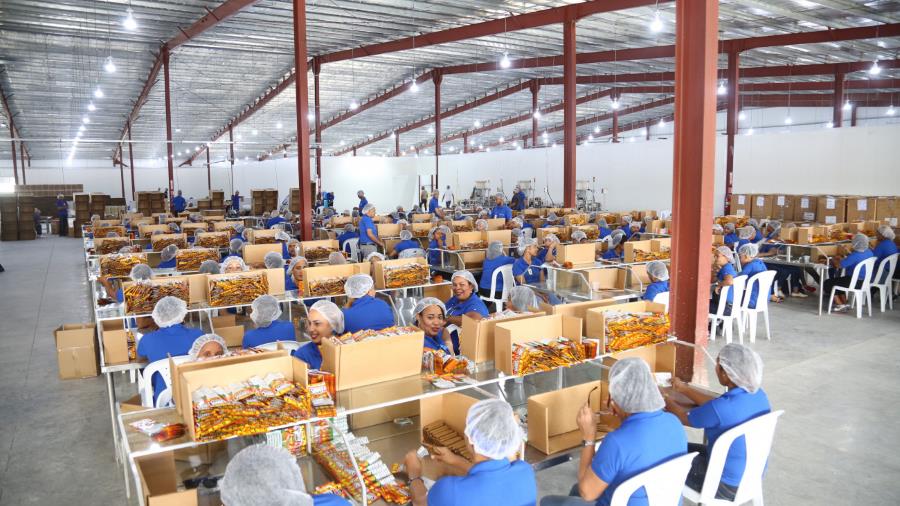
The Dominican Association of Free Zones (Adozona) expressed concern over the United States’ decision to impose a 12.5% tariff on imports from the Dominican Republic and 59 other countries.
The Dominican Association of Free Zones (Adozona) has expressed concern about the United States’ decision to impose a 12.5% tariff on imports from the Dominican Republic and 59 other countries. The association warned that this move could create uncertainty in international trade and hurt the competitiveness of export-focused economies.Indeed, a study conducted by a consulting firm, ‘Naut & Associates Consulting Group,’ warns that this new tariff could directly affect some of the Dominican Republic’s key export products destined for the U.S. market. According to the study, the apparel sector in free-trade zones appears to be the most exposed to the effects of these new U.S. tariffs.
In fact, the study continues, while Dominican products will be subject to a 12.5% tariff, regional competitors like Guatemala, El Salvador, and Honduras will continue to export at a 10% rate. This could harm Dominican companies compared to regional competition.Facing this very alarming situation, the Dominican Free Zones Association (Adozona) said it is assessing the scope of these tariffs, the possible exemptions, and their impact on Dominican exports, especially on the free zone sector, which it described as a key U.S. partner in production, investment, and job creation.
ADOZONA highlighted the essential role that Dominican free zones play in regional supply chains, particularly in sectors such as medical devices, advanced manufacturing, electronics, textiles, and services, thus helping to strengthen U.S. production capacities.The association said it would continue to work with the Dominican authorities to maintain a constructive dialogue with the United States, aiming to preserve stable and mutually beneficial trade relations. It also reaffirmed its commitment to complying with national laws, international trade agreements, and high standards for labor and sustainability, while supporting efforts to protect the country’s competitiveness and investor confidence.