
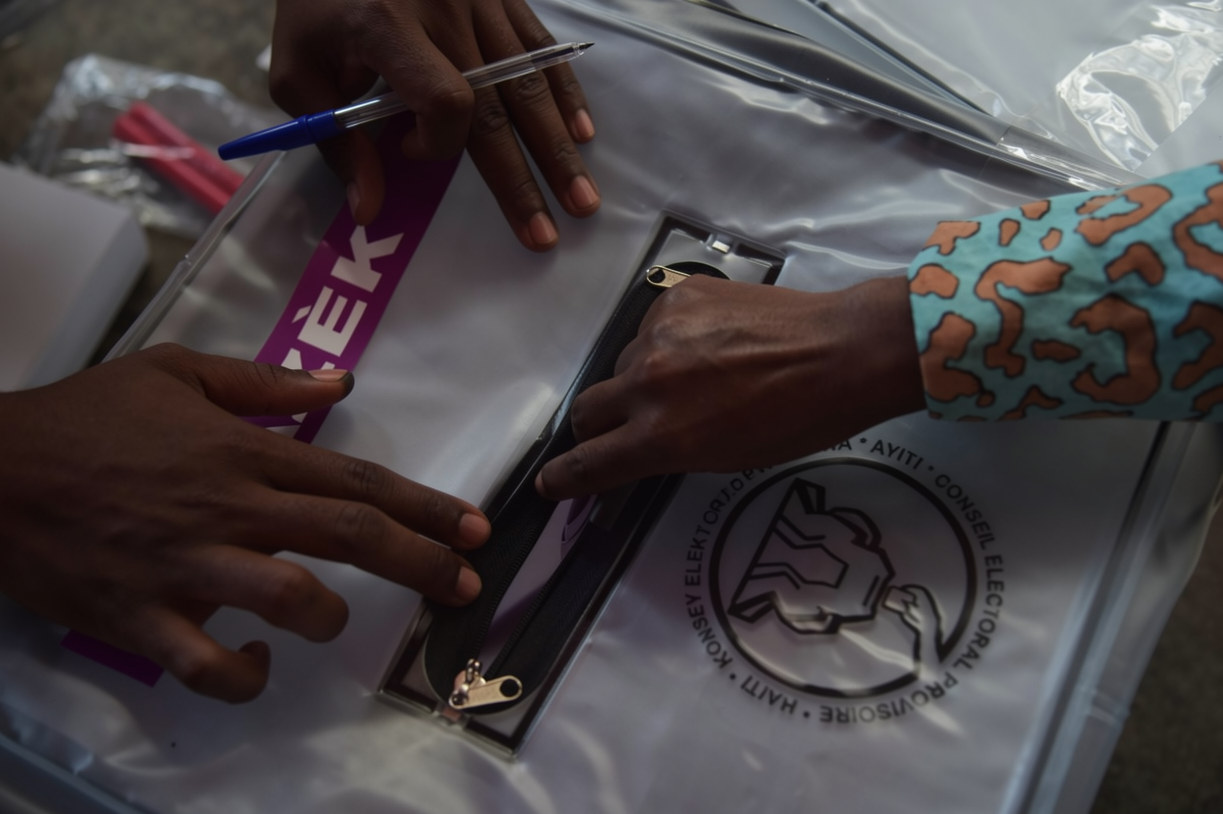
The first round of the general elections is supposed to take place on December 13, 2026.
The first round of the general elections is set to take place on December 13, 2026. The unrealistic nature of the schedule drawn up by the CEP is already giving people something to talk about. The electoral institution seems to be swimming against the tide of reality, security and logistical challenges, as well as the long history of elections since 1986, some say.
There’s also talk about the high number of registered parties, the groupings of political parties made on not always clear grounds, in a context where there aren’t always ideological lines or viable political projects that inspire long-term political loyalty.
In the meantime, Prime Minister Alix Didier Fils-Aimé, a key player, has registered on the voter list. He leads by example.His government and the CEP, in apparent harmony, are focusing on voter registration. The CEP, to whom PM Fils-Aimé promises full and complete support from the state apparatus to organize the contests, is investing itself and carrying out the possible operations in its electoral calendar. Time will tell the truth. However, the wishes, hopes, and implementation of the electoral process will face several tests before the December 13 vote.
Tests
The first will most likely concern the number of registered voters, the security of the collected data, and the public and transparent dissemination.
This data will allow for mapping out the electoral landscape. The divisions and features will provide insight into gang influence. Residents of certain neighborhoods will pay attention to instructions and, most likely, to the gangs’ anger regarding the mere act of registering on the electoral list.Five months before the first round on December 13, it was the UN Secretary-General who indicated that 75% of the metropolitan area of Port-au-Prince is under the influence of gangs despite the fragile and fragmented progress of the security forces.
So far, due to the lack of a real strategy to limit the influence of gangs that have significant financial resources, the government and the CEP plan to set up polling centers outside the abandoned areas.
The second test will be sticking to the election schedule. The CEP and the government would be in big trouble if the first round of the general elections planned for December 13 had to be postponed. Political dialogue, the inclusive conversation between the election stakeholders, will then be unavoidable.The final test, the most important one, lies in getting voters out. In October, we’ll have an idea of how many registered voters there are out of just over 5 million potential voters. We’ll know where they are and whether there will be elected officials for every district.
In the end, because it’s unavoidable, the voter turnout threshold needed to legitimize and give these elections some popular backing will come up in the national conversation.
Time, once again, will expose the challenges, the gloss, the shortcomings, and the incompetence. And, ideally, it will also highlight the intelligence and managerial skills of the CEP and the government in overcoming those challenges.
The credibility of the elections, a major issue.
The credibility of elections remains a major issue. The declining trend in participation in electoral contests over the past fifteen years tells a story of crisis, a loss of trust in democracy by a significant portion of Haitians. It would be wrong to ignore the roots of this crisis, and the rejection of a good part of the political class.
There is a dispute that the government, the CEP, many political actors, and the international community forget. The people are called to the polls in what seems like a kind of denial of their tragedy. There have been no apologies, no justice and peace commissions prior to the electoral battle.
It’s as if there had never been a Himalaya of corpses in the West, Artibonite, and the Center, as if the still-smoking rubble of communities ravaged by gangs — instruments of many political operators still on the public stage — didn’t even exist.The bloodshed from the past seven years is still present. People pretend to move on as if, by and large, the political scene isn’t made up of the very architects of the current disaster. The facts are there, the experience etched into our flesh and in the tears shed around so many unburied bodies.
Trying to hold elections without a peace process, without justice or truth, without an act of contrition, gives impunity at the expense of the voter, the victim, who is called on to vote to grant immunity. The insult to the memory of the victims energizes the gravediggers.
These gravediggers are counting on amnesia, money, manipulation, cheating, de facto deprivation, and the strength of the law over many voters, forced to register before the election. And in the face of all this, the moral and intellectual abandon of a population that’s been hard hit, just to grab the electoral win. Yet, while fighting for credible elections, we need to be fully aware of the tests we’re going through… and the indignities that need to be called out.