
|
Getting your Trinity Audio player ready...
|
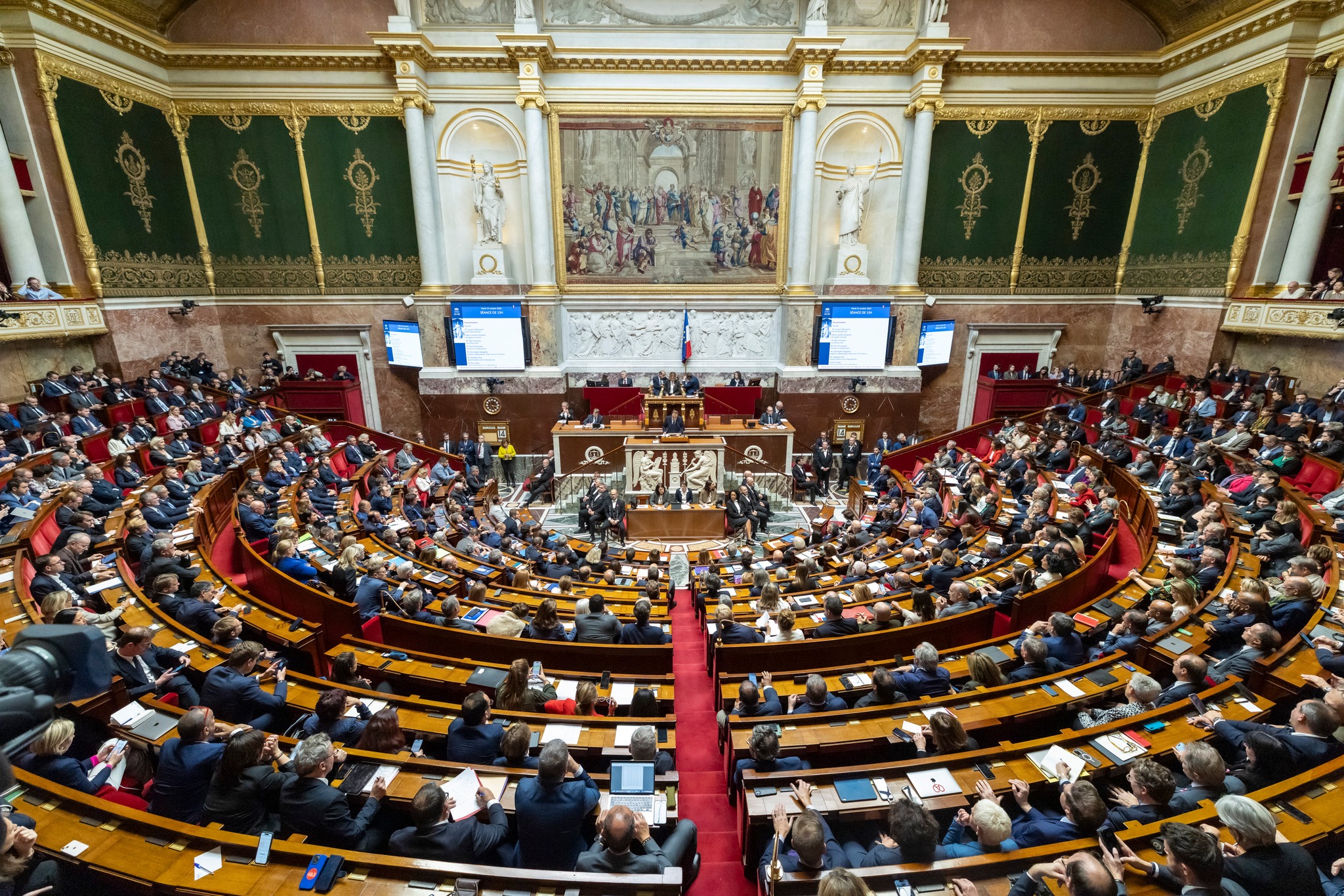
A ‘symbolic’ vote before opening the sensitive issue of reparations? The National Assembly unanimously approved on Thursday the repeal of the ‘Black Code’ and all the texts that regulated slavery in the French colonies, which were never formally repealed after 1848.
A “symbolic” vote before opening the sensitive issue of reparations? The National Assembly unanimously approved on Thursday the repeal of the “Code Noir” and all the texts that regulated slavery in the French colonies, never formally repealed after 1848.
The 254 deputies present, from all political groups, supported the bill, presented on a day reserved for the centrist Liot group (Liberty, Independents, Overseas, Territories). It aims at repealing these royal edicts dating from the 17th and 18th centuries.These texts notably made enslaved people ‘movable beings’ who could be acquired by a master just like property, or established penalties in case of escapes – ears cut off, branding with a fleur-de-lis, up to the death penalty.Wounds of history
Twenty-five years after the Taubira law recognizing the slave trade and slavery as crimes against humanity, rapporteur Max Mathiasin (Guadeloupe) called for ‘taking a powerful act of memory, justice and recognition,’ even if he could not ‘heal the wounds of history alone.’
Moved to tears after the vote, he welcomed ‘an additional step, a tribute to the men and women, the children enslaved,’ embraced by fellow deputies who came to meet him at the bottom of the chamber.”The Black Code ‘has not been in effect for a long time, but its impact and weight are still there,’ also supported the Minister of Overseas Territories Naïma Moutchou, calling to ‘remove from our law an unworthy text.’
The debates largely revolved around French slavery and colonial history, and the visible effects today through the persistent inequalities between the overseas territories and mainland France, as well as the discrimination experienced by Black people.
‘What does it mean to repeal the Black Code in 2026 (…) if the overseas territories continue to be viewed from Paris as distant peripheries?’ Emeline K/Bidi (Réunion, communist group) exclaimed from the podium.The environmentalist Steevy Gustave also moved the chamber, recalling with a trembling voice the memories shared by his ‘great-grandmother Maman Bébelle.’ ‘She was the granddaughter of Ambroise Zerambe, born in Africa, then reduced to slavery under the registration number 336. Today, her great-grandson stands before you, deputy of the French Republic.’
And several parliamentarians have highlighted or mentioned the fact that the debate takes place not far from a statue of Jean-Baptiste Colbert, the main architect of the Black Code of 1685, erected in front of the Assembly.Reparations
Another article of the text provides that the government submit a report on colonial law and its long-term effects, particularly in terms of racism or the place given to the history of slavery in school curricula.
“Slavery was a tragedy and a crime against humanity” and “all treaties have been tragedies,” judged Julien Odoul (RN), considering that the article “aims to trap entire generations in a logic of guilt (…) of resentment (…) of revenge.” Gabrielle Cathala, from La France Insoumise, in turn accused him of “disturbing historical revisionism.”
The bill will now have to go to the Senate, with no date set at this stage. It received the support of Emmanuel Macron last Thursday, with the president considering that keeping these texts in the law, even without legal effects, constitutes “a betrayal of what the Republic is.”The question of reparations also sparked debate, with several deputies pointing out that former slave owners had received compensation, unlike their descendants. During the reception at the Élysée for the 25th anniversary of the law recognizing the slave trade and slavery as crimes against humanity, the head of state stated that “this immense question” should not be avoided. However, he also said that one should not “make false promises” and did not announce any concrete measures. Jean-Philippe Nilor (Martinique, LFI) urged Emmanuel Macron “to definitively break with the historical stance of all successive governments opposed to any form of reparation,” and not solely “financial.” The text, however, does not address this issue, as its rapporteur Max Mathiasin wishes to preserve its “coherence” and to address the question of reparations within a broader framework.The deputies also adopted an amendment stipulating that France recognizes that “all the texts that institutionalized the reduction of human beings to the status of movable property, organized their deportation, their exploitation, as well as the violence inflicted upon them, are inseparable from the crime against humanity.”
Camille MALPLAT