
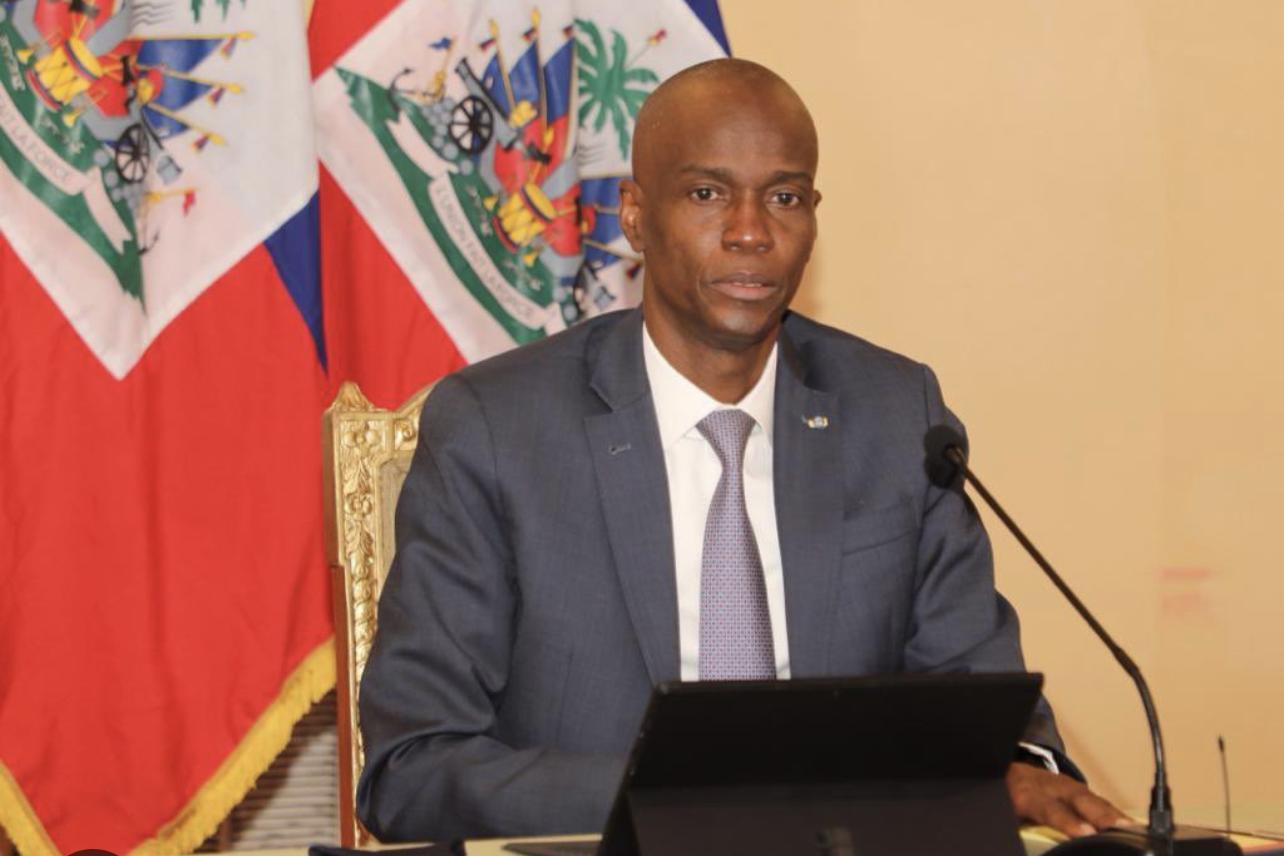
The transfer of those accused in President Moïse’s assassination to the USA caused outrage. The embarrassment is understandable. But it’s hard to claim that the denial of justice isn’t systematic in Haiti.
Between incompetence, lack of resources for its officers, predatory and immoral practices, justice quietly experiences, without much internal resistance, its gentle capture by a conglomerate of interests whose credo is stripping the poor litigant, granting impunity to wealthy and powerful political and economic operators and their allies.
The nation isn’t cultivated. The rule of law has severely backtracked. Force and arbitrariness dominate. The failures of justice have been endorsed, accepted, and sustained.
This justice has its codes. The ‘initiated’ know how to operate in the shadows of a judicial system generally resistant to transparency, reforms, and modernization of its means and practices. Judge certification is probably a small step. But the known gaps and failures maintained at every level contribute to sustaining a disaster, a systematic denial of justice.The non-existent police report, the evidence not collected, poorly collected, or poorly handled by a judicial police officer at the police station before being sent to the magistrate or the prosecutor… often constitute one of the reasons cases are closed without further action.
No one really cares about the competence and integrity of JPOs in the investigation departments of municipal police stations and departmental directorates.
In cases of homicides—violent or suspicious—there is often no proper handling or treatment of the crime scene, no collection of evidence (fingerprints, gunpowder residue, casings, bullets, or samples of blood or other bodily fluids for toxicological analysis…).The limitations in terms of resources and staff of the forensic police, a key part of the Criminal Affairs Bureau (BAC), are well known.
The flaws, mistakes, and omissions of so many justices of the peace in drafting reports, which are central to the preliminary investigation, are known.
The gaps and failures at the registry level, essential for receiving, preserving, and communicating all the physical and material elements important to the trial, are well documented.
These known, accepted, and ongoing failures are partly responsible for prison overcrowding. It’s a fact. Crowded prisons are like pantries for operators of the system.
The rate of prolonged pretrial detention, decade after decade, has always hovered between 70 and 80% of people incarcerated in our prisons.The number of cases judged in criminal courts is always ridiculously low compared to the number of incarcerated people. Judicial statistics are not made public.
Without these data, but thanks to the monitoring work of human rights activists and journalists’ curiosity, it quickly becomes clear that there aren’t many trials.
Trials of corrupt officials, drug traffickers, and looters are very rare.
This justice system – now under the spotlight after the transfer to the USA of those charged in the cruel and heinous assassination of President Moise – is the same one that failed to deliver justice to the victims of gang massacres and to high-ranking members of the police and judiciary.Long before the assassination of Me Monferrier Dorval, there were emblematic cases of silence or denial of justice. Me Joceline Pierre, a judge and the only female director general of the national police, was killed at her home in Vivy Mitchell in December 2014. Her body was found with bruises. The way the justice system she served treated her was unbearable.The article in the January 8, 2015 edition of Le Nouvelliste reported embarrassing facts. “Thursday, January 8, 2015. 2:37 a.m. On the autopsy table of the Forensic Institute of Port-au-Prince, there is the corpse of a woman in an advanced state of putrefaction. Almost at the end of a flow of pus and blood, a label with the number 303. No name. No other indications before the director of the institute, forensic doctor Demorcy Jean R.C. Armel, confirmed, between consternation and revolt, the identity of the person: Joceline Pierre, former investigating judge, former dean of the civil court of Port-au-Prince, former director general of the Haitian National Police. Found dead at her home in rue des Palmiers, in Vivy Mitchell, with bruises on her body on December 21, 2014, the prosecutor’s office, at the insistence of the family, finally requested an autopsy on January 6, 2015.The former magistrate and high-ranking official of the Republic was placed in a poorly refrigerated container where the justice system piles up victims of violent or suspicious deaths, who often end up like Joceline Pierre. “This case, the forensic expert emphasizes, is a typical example. It’s a high-ranking official of justice who is treated like this by the justice system,” one can read in this article.
The list of other PNH senior officers who were assassinated is no shorter. Oriel Jean, former divisional commissioner and former head of security for former president Jean-Bertrand Aristide, was assassinated in March 2015; Michaël Lucius, former central director of the judicial police (DCPJ), was assassinated on December 2, 2019; Jean Denis Fortin, former central director of the judicial police (DCPJ), was assassinated in Les Cayes in September 2011; Divisional Commissioner Harington Rigaud, from the 5th class of the Haitian National Police and director of the National Police Academy,There have been turning points for justice as well. One of them was the shooting assassination on June 19, 2020, of the deputy government commissioner at the Port-au-Prince Court of First Instance, Fritz Gérald Cérizier, while he was in his car at Poste-Marchand, almost across from the National Archives office. The killer shot him point-blank in the head. The shell casings recovered didn’t come from a 9mm pistol but from high-caliber guns.
The list is long. In the rare cases where suspects were caught, they are now free after the destruction of Port-au-Prince’s civil prisons in 2024.Because of this, there are thousands and thousands of people who have not received justice and whose families have not been compensated. Outside of human rights organizations, the justice system does not keep records of the people massacred in the West, Artibonite, and the Center. There are no archives, no memories, no systematic documentation of the homicides committed during the massacres, of women, girls, and men who were raped, or inventories of property that was burned or stolen.
We have no judges or lawyers championing this cause. People just survive, or get killed, with no one caring. It’s this kind of justice, unworthy of the name, that goes on strike for wage increases, opens judicial years with empty speeches, while everything is done to systematize corruption and impunity…

