
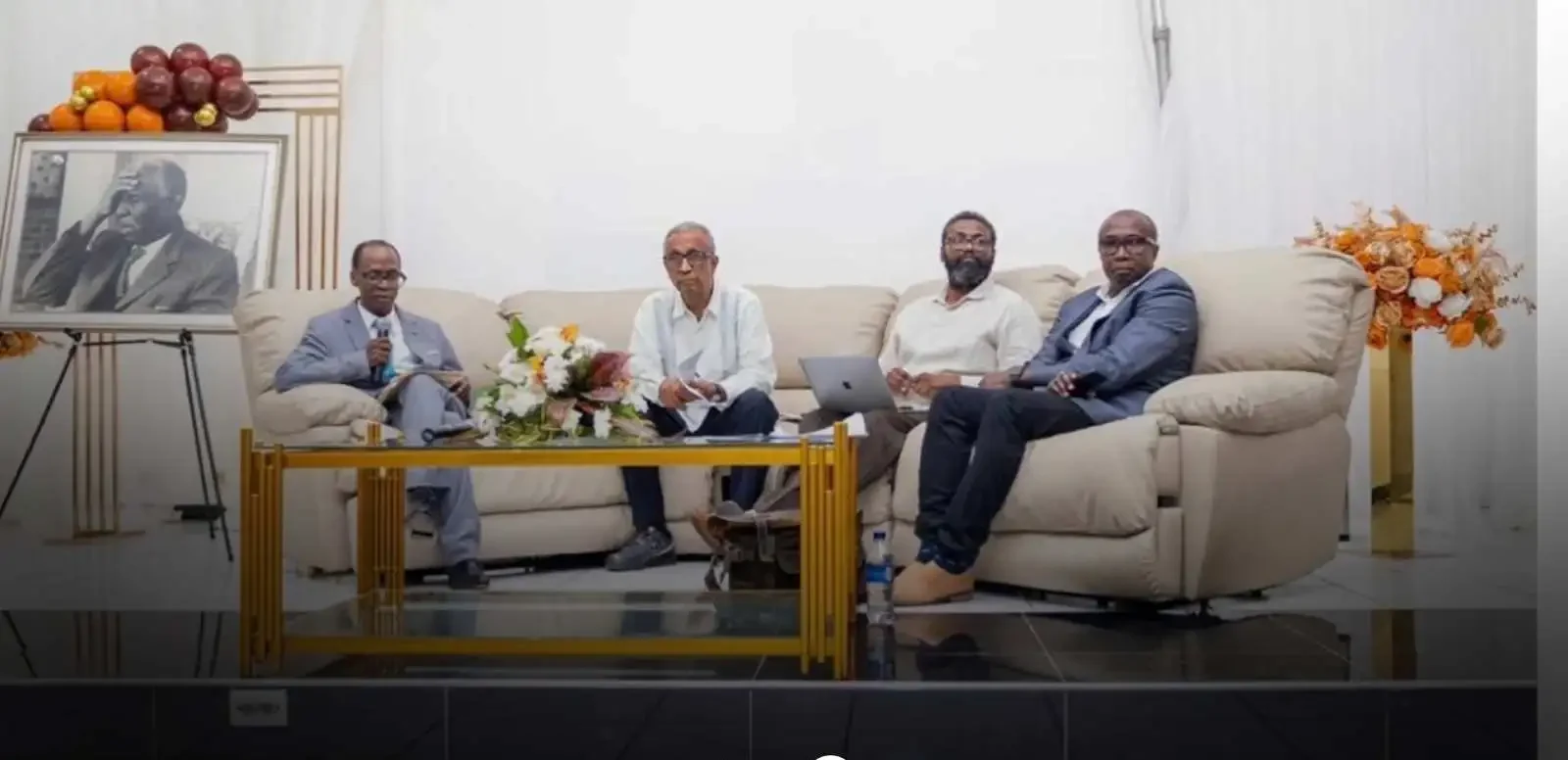
A memorial day held on October 30 in Pétion-Ville revisited the thoughts of Jean Price-Mars on the occasion of the 150th anniversary of his birth. His reflections on national identity, education, and the responsibility of the elites were central to the discussions.
Actors from the educational, university, and cultural sectors paid tribute on Friday, October 30, 2026, to Dr. Jean Price-Mars (1876-1969), on the occasion of the 150th anniversary of his birth.
Organized at the Montana Hotel in Pétion-Ville by the Ministry of National Education and Vocational Training (MENFP), the Haitian National Commission for Cooperation with UNESCO (CNHCU), and the National Agency for Higher Education and Scientific Research (ANESRS), this commemorative day was held under the theme ‘Diplomacy, Identity, and National Dignity.’The meeting brought together several academics and researchers, including Hérold Toussaint, a sociologist and president of ANESRS; Laënnec Hurbon, a sociologist and president of the National Committee of the Slave Route; Jhon Picard Byron, an ethnologist and political scientist at the State University of Haiti (UEH); Auguy Makey, holder of the African Philosophy Chair in Libreville, Gabon; and Alain Nzigou-Moussavou, a philosopher and conflict resolution specialist.
The discussions also benefited from contributions by Celucien L. Joseph, holder of the endowed Chair of American Studies at Louisiana State University Shreveport, USA.Through several scientific panels, the speakers revisited the legacy of this intellectual, particularly his reflections on national identity, African heritage, vodou, racial issues, and the responsibility of the elites.
Among the works discussed were “Thus Spoke the Uncle” (1928) and “The Vocation of the Elite” (1919). The latter, which brings together several lectures, challenges the Haitian ruling classes on their role in society. Price-Mars notably examines the gap between a privileged minority, holding political, economic, and intellectual power, and the popular masses, particularly peasants.
From this perspective, the elite cannot be defined solely by their privileges. They must take on moral, intellectual, and civic responsibility toward the community. Education, the spread of knowledge, the fight against racial prejudices, and the recognition of popular cultures play an important role inIn his talk titled “Jean Price-Mars and the Vocation of the Elite,” Ricarson Dorcé, a teacher at UEH, offered a contextualized reading of this work. He presented its historical foundations, social orientations, and relevance in the face of contemporary crises, particularly revisiting issues of sovereignty, education, and racial and social domination.
These reflections resonate with Haiti’s current difficulties: weakened institutions, social divisions, insecurity, and limited prospects for young people. They invite us to question the responsibility of intellectual, political, and economic elites in national reconstruction.
The commemoration was also marked by speeches from Neptune Prince, permanent secretary of CNHCU, Charles Poisset Romain, rector of Jean Price-Mars University, and Dieuseul Prédélus, rector of UEH.The Minister of Culture and Communication, Emmanuel Ménard, announced the creation of the Jean Price-Mars National Prize, with the first edition scheduled for 2027. His counterpart in the Ministry of National Education, Vijonet Démérot, announced the distribution of an educational kit in schools as well as a popular bilingual reissue, in French and Creole, of Ainsi parla l’oncle.
The intellectual’s grandson, Louis Henry Mars, for his part, reminded everyone that his grandfather saw culture as a tool to bring together different parts of society, especially between the elites and the general public, as well as between cities and rural areas.
Beyond the tribute, this day also put a spotlight on a question at the heart of Price-Mars’ work: how to put knowledge, public responsibilities, and elite resources at the service of the common good?

