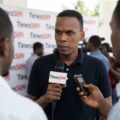

The latest bulletin from IHSI concerning the evolution of the ICAE in the second quarter of 2026, recently published, gave economist and economic analyst Kesner Pharel the opportunity to highlight, on Saturday, July 11, 2026, during his weekly show ‘Investir’, the negative trend in economic activity in Haiti linked to the issue of insecurity during the current fiscal year. According to data published by the Haitian Institute of Statistics and Informatics (IHSI), the Economic Activity Conjunctural Indicator (ICAE) for the second quarter of 2026 saw a contraction of 0.6% on an annual basis.
The latest bulletin from IHSI regarding the evolution of the ICAE in the 2nd quarter of 2026, recently published, gave economist and economic analyst Kesner Pharel the opportunity, on Saturday, July 11, 2026, during his weekly show “Investir’”, to highlight the negative trend in economic activity in Haiti linked to the security situation during the current fiscal year.
According to data published by the Haitian Institute of Statistics and Informatics (IHSI), the Economic Activity Cyclical Indicator (ICAE) for the 2nd quarter of 2026 contracted by 0.6% year-on-year. This means that economic activity was less prosperous during the January-February-March 2026 quarter compared to January-February-March 2025.After thoroughly analyzing the data from the latest IHSI Bulletin, highlighting the worrisome performance of Haiti’s primary and secondary economic sectors in the second quarter of the fiscal year, Kesner Pharel invited all Haitians to pay more attention to security by encouraging them to consult the roadmap of the Gang Suppression Force (FRG) mission.
“GDP contraction, slowdown in economic activity, unemployment are the terms that define Haiti’s economic reality over the past few years. All these economic shocks affect the government’s ability to collect taxes, facilitate public investments, and provide social services to the population.”“These poor performances of the Haitian economy show how the quality of life has been deteriorating over the years. A country that has spent the last 7 years shrinking without producing wealth, while its population keeps growing, is a country that creates inflation, unemployment, poverty, extreme poverty, and misery,” said the host of Investir, explaining this continuous drop in economic activity in Haiti.“This slowdown in economic activity in the second quarter of the 2025-2026 fiscal year is explained by the poor performance in two sectors of the economy, namely the primary and secondary sectors.” Indeed, the primary sector, penalized by climatic factors (rainy seasons) and structural issues (lack of mechanization), saw a drop of 3.5%. The secondary sector, affected by a slowdown in construction and closures in subcontracting, experienced a contraction of 1.8%.
“The weak growth in the tertiary sector (0.1%) was not enough to offset the poor performance of the first two sectors. This positive growth in the tertiary sector is owed to non-market services (4.4%), financial intermediation (3.2%), and Transport and Communications (2%).In short, Kesner Pharel says that the Haitian economy in the second quarter of 2026 experienced some stabilization, but it was a downward stabilization. In other words, instead of completely plunging, it is still hanging underwater, but still in a state of stabilization. The two real productive engines of the economy, namely agriculture and industry, are mired in negative growth dynamics.
What are the prospects for the end of the current fiscal year?
We’ve already entered almost two weeks of the last quarter, with about two weeks left for July and eight weeks for the final two months. What can be done over the next ten weeks to stabilize and reposition the economy upward, the economist asks?“The government has just released a revised budget for 2025-2026. Is the increase in public investments mentioned in this revised budget, which talks about increasing, actually feasible? Especially when we know that the major weakness that has persisted since the onset of the multi-faceted crisis the country is going through is the big challenge of budget execution,” insists Mr. Pharel, who firmly believes that Haiti needs investment spending.
“Wanting investment spending and translating that desire into the reality on the ground in Haiti are two different things,” says the economist from Group Croissance, who acknowledges that it is still beyond the Haitian authorities’ capacity to drive national economic recovery through public investments.By doing this, he says, there is a strong risk that we will get the same results by following the same procedures, that is, increasing public investments without being able to execute them and make them profitable, either due to absorption capacity or because of the recurring problem of insecurity.
“If public investments are not significantly accelerated, and better targeted, during the last ten weeks of the current fiscal year, the 2025-2026 revised budget is going to repeat the same deadlock situations we faced in previous years. We will have to deal with the insurmountable hurdles of formal accounting discipline, but with very limited economic efficiency,” predicts the CEO of Croissance, who believes that it is not enough for a government to boast about avoiding budget deficits if it has neglected to make the necessary expenditures for public investmentHence the importance of solving the security problem in the process of reviving the economy, says the host of Profin TV’s show Investir. He took advantage of his airtime to invite the Haitian population and all the country’s key players to take ownership of the Roadmap of the Gang Suppression Force (FRG), which is slowly being set up in the country.
The FRG’s mission runs from June 1, 2026, to September 30, 2028. The roadmap presented by the FRG representative, Jack Christofides, is the first operational strategy and includes a set of performance indicators for this mission..Whether it’s political authorities, security section officials, economic leaders, or those in social sectors, everyone needs to take ownership of this document in order to analyze it properly. This is due to the cross-cutting nature of security issues. The current situation in the country is the result of negligence by those concerned, who hadn’t previously thought of any preventive measures against this scourge.
Resolution 2793 (2025) lays out a roadmap until September 30, 2028, which doesn’t aim to solve all the country’s problems, but to create a minimum level of security for political and economic stabilization. That’s why this document is so important, because security is essential for political stabilization and, especially, economic growth.Which basically means that the return to economic growth largely depends on the players in the economic sector, political stabilization, and the security climate that will result from it.
Cyprien L. Gary