
About forty countries, including major trade partners of Washington like Vietnam and Mexico, are reportedly being used as stops to reroute products, mostly from China, to the United States to get around tariffs, according to a White House report released Thursday.
About forty countries, including major US trading partners like Vietnam and Mexico, are being used as stops for rerouting products, mainly Chinese, to the United States to get around tariffs, according to a White House report released Thursday.
This practice, which Washington regularly criticizes, involves, for example, performing the final assembly of Chinese products in another country so they are no longer considered “made in China.”
This allows companies to ship their finished products to the US from countries where tariffs are lower, according to the US government.The report highlights that around forty countries ‘pose a high risk of product re-shipment,’ seeing it as a ‘network that operates both in production lines and logistics.’
According to the report, an increasing share of products are being re-shipped before arriving in the United States, without providing any quantitative data.
For Washington, this practice is illegal, especially when transiting through a third country is limited, according to the White House, to simple repackaging or rebranding of the product.
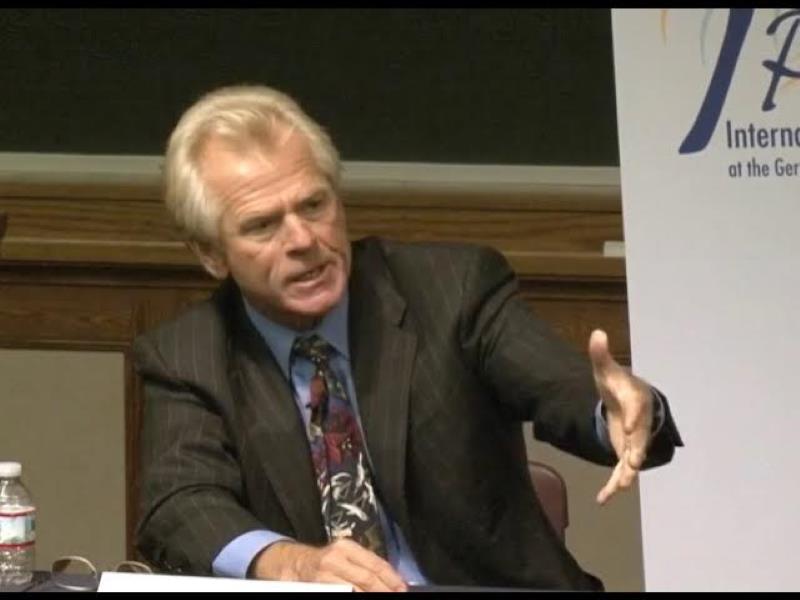
While the report does not target China specifically, it notes that the world’s second-largest economy is the country using this practice the most extensively.”China has been running a real scam for years through re-exporting, hiding the origin of products by routing them through about forty countries, stealing tens of billions of dollars from our budget,” accused Donald Trump’s trade adviser, Peter Navarro, during a press conference call.
“A Chinese engine put into a Vietnamese recliner is still a Chinese engine, and it’s an American job lost. President Trump promised to put an end to this seizure through higher tariffs and better-protected borders,” he added.
Washington has been threatening its partners for over a year with higher tariffs if they don’t take steps to limit the re-export of Chinese products through their territory.Last January, Mr. Trump once again threatened Canada, while Ottawa is trying to expand its economic exchanges with China, especially to cope with trade tensions with its top partner, the United States, since Mr. Trump returned to the White House.
Even though Washington is worried about seeing Chinese companies set up factories in other countries, it’s a common practice for many companies around the world, which have multiple stages of manufacturing their products in different locations, not necessarily to bypass restrictions.

