
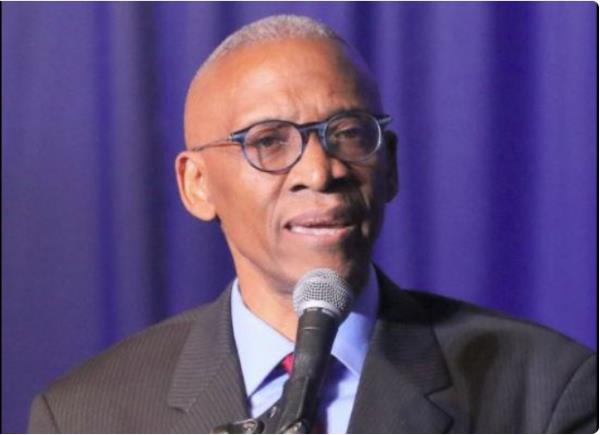
A guest on the morning show of Panel Magik on Radio Magik9, economist Kesner Pharel broke down the latest World Bank report on Haiti. Harsh assessment.
The World Bank’s latest report on Haiti, focusing on the country’s growth trajectory amid increasing risks, was the main topic of Kesner Pharel’s talk on Friday morning on Radio Magik9. The economist praised the report, calling it accessible and recommending it to non-specialists, especially entrepreneurs, to understand what the country has been through since 2018.Agriculture plays a central role in his analysis. Losses in the sector amount to 8% of the 2025 gross domestic product, or about 2.6 billion US dollars, on a GDP estimated by the World Bank at 32 billion. A sector that employs the majority of workers but only captures 1% of credit, he points out. Entire industries have been crushed: essential oils, including vetiver, exported for 46 million dollars about ten years ago; fish products, 27 million; mangoes, 12 million dollars a year before the crisis, providing income for hundreds of thousands of farmers. When agricultural supply falls while the population continues to grow, the economist continues, the gap between supply and demand fuels inflation, food insecurity, and poverty.The survey conducted with formal businesses, included in the report, documents the cost of violence. Forty-four percent of businesses still operating in 2025 faced losses due to violence (thefts, break-ins, vandalism, arson), with damages averaging 40% of their assets. Their operations declined by 26%, monthly sales by 27%, and their investments and staff by about 25% compared to 2021. Ninety-four percent had to invest in security equipment, 52% increased their spending on security personnel, and 59% reported difficulties accessing financing, a figure that rises to 68% in manufacturing.
On the social side, real GDP per capita dropped by about 17% between 2010 and 2025. Poverty is high and rising: 49% of the population would be living below the international poverty line of $3 a day in 2025, compared to 44.6% in 2023. Youth unemployment is around 32%, and 18.2% of young people are neither working nor in training. For a population estimated at 11.9 million, half of whom are under 25, that amounts to nearly a million young people who are unqualified for the job market, calculates Kesner Pharel.Public finances aren’t keeping up. Revenues fell to 4.8% of GDP in 2025, their lowest level since 2002, despite 13% nominal growth. Tax pressure remains below 5%, while a World Bank and IMF study sets 15% as the threshold needed to fund a basic level of public services. Total public debt, down to 13.3% of GDP in 2025, seems low, but the country’s carrying capacity is even lower, and it still faces a high risk of over-indebtedness. External aid has dropped from nearly 15% of the budget to less than 2%. Between 2010 and 2022, energy subsidies accounted for 2.2% of GDP, compared with an average of 1.7% for education, health, and social protection combined.The report outlines several paths: a sluggish one, from 0 to 2% growth, which means persistent poverty; a second, from 2 to 3%, linked to the economic corridors of the North and South, with improved security and a gradual return of investment; a third, from 5 to 7%, which assumes restored security, development of human capital and infrastructure, industrialization, modern agriculture, and an increase in tax collection from 5 to 15%. Kesner Pharel adds a fourth, which he says he doesn’t rule out: a continued decline if insecurity persists.

