
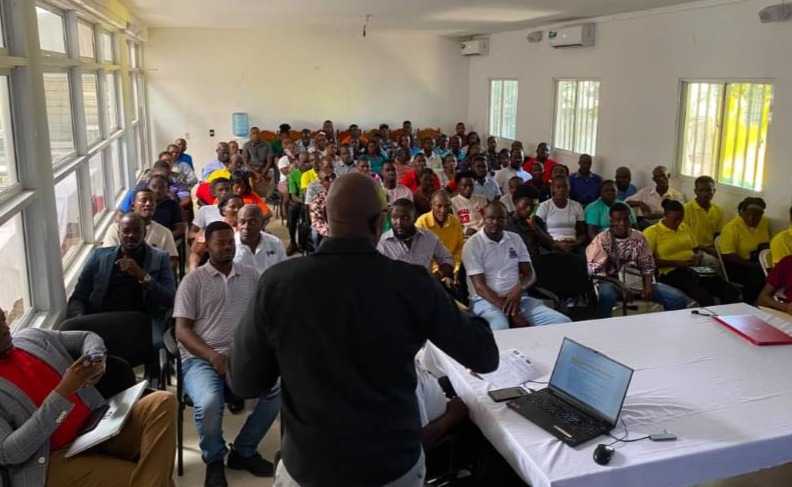
The Northeast Departmental Directorate of the Ministry of Agriculture, Natural Resources and Rural Development (DDANE-MARNDR) hosted, this Friday, October 2, 2026, at its offices in Fort-Liberté, the launch of the Marion River watershed management and development project.
The Northeast Departmental Directorate of the Ministry of Agriculture, Natural Resources, and Rural Development (DDANE-MARNDR) hosted, this Friday, October 2, 2026, at its offices in Fort-Liberté, the launch of the Marion River Watershed Development and Management Project. This initiative is part of the Multi-Sectoral Food and Nutrition Security Program, Phase II (PMSAN II), funded by the European Union (EU), with co-financing from the French Development Agency (AFD) and implemented with the support of Expertise France.Towards a Coordinated Watershed Management
The project aims in particular to set up a framework that allows for better planning of watershed development, ensures coordinated management of water resources, and guides agricultural investments related to the utilization of the Marion dam. It should thus help to better coordinate activities in this area, taking into account the needs of local communities and the agricultural potential of the region.Participants at the study launch
PMSAN II enters its operational phase
The launch of this project also marks the start of PMSAN II’s operational phase in the Northeast. The program gradually plans several interventions in the region, especially in agriculture, livestock, health, nutrition, and social protection.Among the planned actions is the construction of the Minières irrigated perimeter. This project is part of a broader approach aimed at boosting agricultural investments and improving water resource management, particularly through infrastructure that can support production activities.
The DDANE intends to continue, together with Expertise France and all PMSAN II partners, coordinating the various actions planned in the Northeast. The project focused on the Marion River watershed is thus one of the first steps of this new phase of intervention, aiming to better align water management, agricultural development, and the needs of the local communities.

