
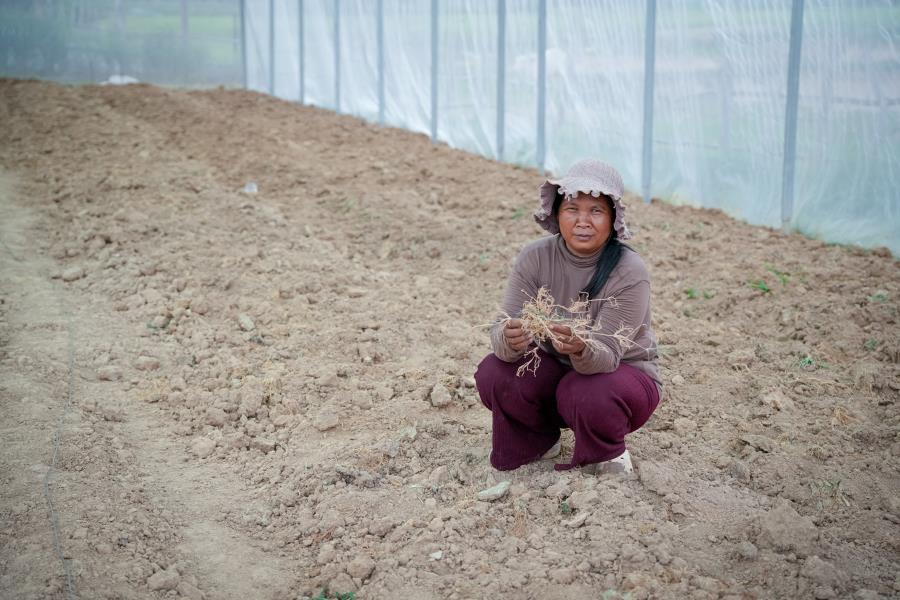
By seven in the morning, the heat is already settling over the fields in Siem Reap province, Cambodia.
At seven in the morning, the heat is already settling over the fields in Siem Reap province, Cambodia. There isn’t a breath of air, the ground is dry, and the rice is dying. No smell of wet earth, no sign of rain.
“I’ve never experienced a drought this long in my whole life,” says Sokhoeun Chhut, a 45-year-old farmer living in the province. “This year, the harvest is clearly lost. Everything is burned. It’s scorching hot.”These are the effects of El Niño, a natural climate phenomenon that disrupts weather conditions worldwide. Across South and Southeast Asia, El Niño changes the usual summer monsoon cycle, delaying the rainy season and worsening drought conditions. Globally, it can increase the risk of extreme heat and wildfires in some areas, while in others, it brings heavier rainfall, floods, and marine heatwaves.
According to the World Meteorological Organization (WMO), this El Niño episode is expected to peak at the end of 2026 and the beginning of 2027, with its effects on rainfall, food production, and global temperature continuing beyond that period.Cambodia has already experienced this situation. During the 1997-1998 El Niño episode, the Cambodian government made an appeal for about 250,000 tons of rice to help the populations affected by the drought.
In Preah Vihear province, Sokhom Kha was already a farmer when this El Niño episode hit. She has been cultivating the land since 1987, long before weather and climate information became easily accessible to rural communities.
“Some days, we ate rice mixed with red corn just to survive. We would go look for bamboo shoots in the forest and fish in the rice fields to feed the whole family,” she recalls.El Niño changes weather conditions everywhere. In South and Southeast Asia, it delays the rainy season and worsens droughts for farmers like Sokhoeun Chhut (photo above).
The El Niño episode in 2015-2016 reached even more extreme levels. It brought exceptionally hot and dry conditions, affecting about 2.5 million people in 18 provinces, reducing rice production, and impacting the fishing sector. Today, Cambodia is once again facing the risks posed by the effects of El Niño.In June 2026, the United Nations Food and Agriculture Organization (FAO) relied on 41 years of satellite observation as part of its Agricultural Stress Index System to consider Cambodia at high risk of severe drought during the El Niño episode. According to the Organization’s estimates, 127,300 hectares of farmland and pasture in the country were at risk of being affected.
This type of data can help identify the places where monitoring and advisory services are most needed. It provides project officials and governments with basic information to assess the impact a severe El Niño event could have on farmers and to determine where early action would be most effective.In Cambodia, an initiative is helping communities cope with this uncertainty. The PEARL project, implemented by the FAO in collaboration with the Cambodian government and funded by the Green Climate Fund (GCF), combines climate information, early warning, and practical measures to help farmers manage the effects of drought.
Through farmer field schools and demonstration sites, the project teaches communities how to apply practical solutions to deal with drier conditions. This includes using cover crops to retain soil moisture, building embankments in fields to hold water, and adjusting planting schedules to lessen the impact of drought.

