
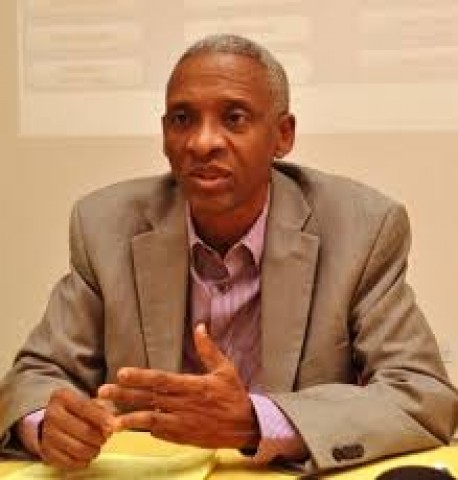
Public health funding in Haiti, budget priorities, and the impact of the economic crisis on access to care were at the heart of economist Kesner Pharel’s talk on Thursday, November 5, 2026, at the Haitian Health Journalists Network (RHJS), as part of the ‘RHJS Thursdays’ series.
Public funding for healthcare in Haiti, budget priorities, and the impact of the economic crisis on access to care were at the heart of economist Kesner Pharel’s talk on Thursday, November 5, 2026, at the Haitian Health Journalists Network (RHJS) as part of the ‘RHJS Thursdays’ series.
Speaking on the topic ‘Public Health Financing in Haiti: An Analysis of the Budgetary Resources Allocated to the Sector in the 2026-2027 Fiscal Year Budget,’ economist Kesner Pharel particularly highlighted the low level of resources dedicated to the health sector, given the population’s needs and the country’s economic difficulties.The general budget of the Republic for the 2026-2027 fiscal year amounts to 401.2 billion gourdes, which is an 11.3% increase compared to the previous revised budget, set at 360.3 billion gourdes. Adopted by the Council of Ministers on September 30, 2026, this budget allocates 19.41 billion gourdes to the Ministry of Public Health and Population (MSPP).
For Kesner Pharel, this allocation remains particularly concerning given the priorities set by the government. He points out that the health sector receives fewer resources than the security sector. By comparison, 61 billion gourdes are planned for justice and public security, including 51.9 billion for strengthening the Haitian National Police (PNH). The electoral process, meanwhile, gets a budget of 8.6 billion gourdes.The economist also points out the weight of current spending in the national budget. These total 232.6 billion gourdes, including 121.6 billion dedicated to salaries and personnel expenses, 77.85 billion to goods and services, and 27 billion to transfers and subsidies. Capital expenditures are estimated at 168.5 billion gourdes.
Close link between the economic situation and the population’s health
Beyond the allocation of public resources, Kesner Pharel emphasized the close link between the economic situation and the population’s health. According to him, Haiti has gone through eight consecutive years without wealth creation, a situation that contributes to job losses, reduced purchasing power, and increased poverty.He points out that the poverty rate, which was below 60% in 2018, is now approaching 70% in 2026. Extreme poverty, which was under 25% in 2018, could exceed 40%. This decline in living conditions directly affects access to healthcare.
“When you get sick and need to see a doctor, you have to pay. When you go to the pharmacy, you also have to pay. And when you don’t have money, you’re forced to make tough choices. You end up having to choose between eating and dealing with a health problem,” he explained.He also mentioned the effects of inflation, economic contraction, and the rise in the exchange rate on pharmaceutical prices. He pointed out that the low local production capacity doesn’t allow for meeting demand. On top of these difficulties are the health risks linked to malnutrition, non-communicable diseases, particularly diabetes and hypertension, as well as deteriorating mental health.
Talking about the geographic distribution of the population, the economist referred to data from the Haitian Institute of Statistics and Informatics (IHSI). Since there hasn’t been a census since 2003, the Haitian population is estimated at 12 million people and could reach 12.6 million by 2030. The West, Artibonite, North, and South are among the four most populated departments.He invited health-focused journalists to get a good grasp of demographic and health data, especially the distribution of healthcare facilities and their presence in the municipalities and communal sections across the country’s 10 geographic departments.
According to him, knowing the health map is essential for assessing needs in the 146 municipalities, which are themselves divided into 571 communal sections. He encourages them to identify vulnerable areas to better understand prevention challenges, particularly regarding environmental and epidemic risks in the territory.
Kesner Pharel also highlighted the difficulties in mobilizing financial resources, in a context marked by the withdrawal of USAID and the gradual disengagement of the European Union. He believes that access to healthcare also depends on the state’s ability to secure sufficient funding.Finally, he highlighted the consequences of election postponements on budget planning. The allocations initially planned for the operation of institutions, particularly Parliament and the Presidency, need to be adjusted according to the new election schedule. He is therefore calling for a quick adoption of a revised budget.
At the end of his presentation, several journalists asked the economist about budget priorities, the allocation distribution, and the funding prospects for the national health system.

