
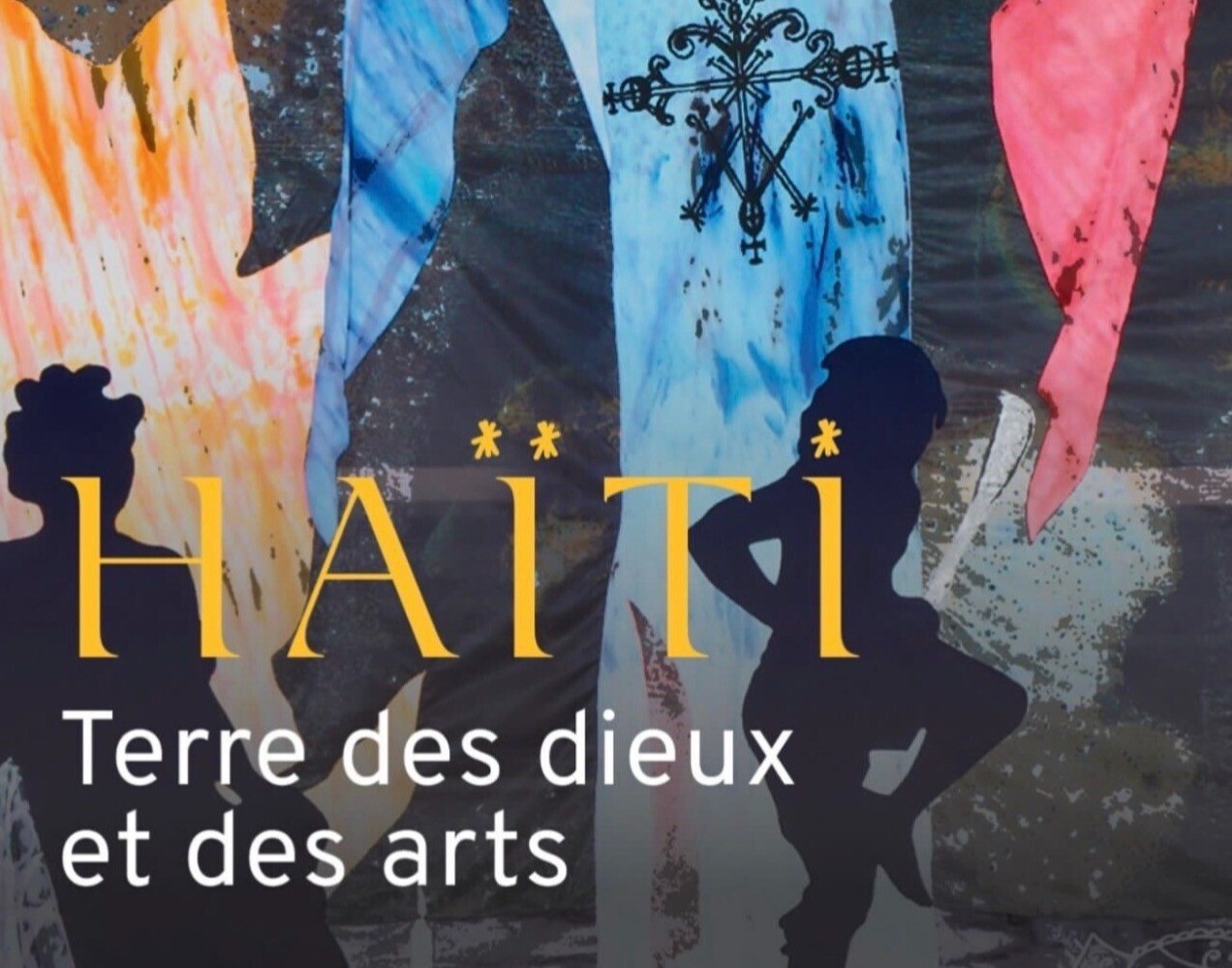
From December 9 to 17, 2026, the UNESCO House in Paris will host a major exhibition dedicated to Haitian artistic and cultural expressions.
From December 9 to 17, 2026, the UNESCO House in Paris will host a major exhibition dedicated to Haitian artistic and cultural expressions. Through the works of several artists, this event will allow visitors to trace back to the roots of an imagination shaped by history, spirituality, and transmission, while discovering the new forms brought to it by contemporary creation.
There are countries whose history is also told through gestures, colors, materials, and symbols. Haiti is one of them. In its paintings, sculptures, beliefs, and traditions, a memory emerges that spans generations and continues to inspire the imagination of its artists.
It is this living memory that the exhibition ‘Haiti, Land of Gods and Arts’ invites you to discover in Paris, from December 9 to 17, 2026, at the Miró Hall of the UNESCO House.Placed under the high patronage of the Ministry of Foreign Affairs and Religious Affairs of the Republic of Haiti, with the kindness of Her Excellency Madame Raina Forbin, Minister of Foreign Affairs and Religious Affairs, and at the initiative of Her Excellency Madame Lilas Desquiron, Permanent Delegate Ambassador of the Republic of Haiti to UNESCO, this exhibition is not just about showcasing artworks. It offers a chance to experience what makes Haitian culture unique: a heritage where history and spirituality meet creativity, where traditions continue to live in artistic practices, and where each generation finds new ways to tell the story of the country.Placed under the high patronage of the Ministry of Foreign Affairs and Religious Affairs of the Republic of Haiti, with the kindness of Her Excellency Madame Raina Forbin, Minister of Foreign Affairs and Religious Affairs, and at the initiative of Her Excellency Madame Lilas Desquiron, Permanent Delegate Ambassador of the Republic of Haiti to UNESCO, this exhibition is not just about showcasing artworks. It offers a chance to experience what makes Haitian culture unique: a heritage where history and spirituality meet creativity, where traditions continue to live in artistic practices, and where each generation finds new ways to tell the story of the country.Made according to a know-how that requires precision, knowledge of symbols, and mastery of the gesture, vèvè are much more than just graphic compositions. Every line, every curve, and every figure take part in a language whose reach is spiritual, cultural, and aesthetic at the same time. Their drawing carries memory and bears witness to a transmission that for a long time took place through practice, observation, and experience. In this art of movement, a whole part of the Haitian imagination continues to express itself. Passing down this gesture is also at the heart of the application that Haiti submitted to UNESCO on March 26, 2026, aiming to have the know-how of vèvè drawing included on the Representative List of the Intangible Cultural Heritage of Humanity.
This memory doesn’t stay stuck in the past. It transforms, moves around, and finds new expressions in the work of contemporary artists.
Pascale Monnin thus explores the realms of memory, intimate myths, and the transformations of life. Through an approach that combines painting, sculpture, and engraving, she creates a world where the delicacy of forms meets the power of symbols. In Pascale Faublas’ work, materials themselves become bearers of stories. Metal, found objects, and transformed items engage in a dialogue with memory, spirituality, and the traces left by time.
Alongside these two artists, Prajje Oscar, Amina Siméon, Roxane Ledan, and Vanessa Apollon take part in this meeting of sensibilities and perspectives that reflect the diversity of Haitian creation.
Bringing these artists together is also a way to remind us that Haitian art is not limited to a single style or era. It is shaped by multiple legacies, influences, stories, and experiences that continue to craft a unique cultural identity.At a time when Haiti is too often reduced to a single story about the hardships it faces, this exhibition offers a space to hear another story. That of a people who create, pass down, invent, and preserve. That of a culture which, despite breaks and upheavals, continues to bring its imaginations to life and share them with the world.
Because talking about Haiti also means talking about what it passes on and what it continues to contribute to universal culture.
The exhibition “Haiti, Land of Gods and Arts” is meant as an invitation to discover the country through the depth of its heritage and the vibrancy of its artistic expressions.

