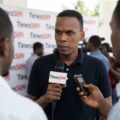
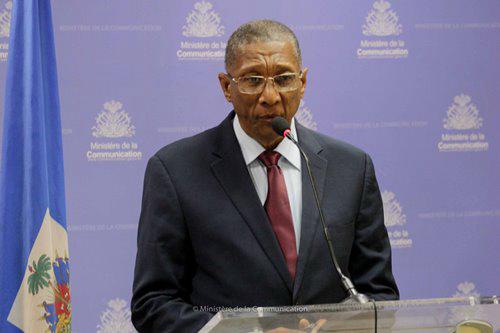
Guest on Panel Magik on June 30, 2026, the Director General of the Bureau of Mines and Energy, Claude Prépetit, talked about the double high-magnitude earthquake that occurred on June 24 off the coast of Venezuela.
Guest on Panel Magik on June 30, 2026, the Director General of the Bureau of Mines and Energy, Claude Prépetit, spoke about the double high-magnitude earthquake that occurred on June 24 off the coast of Venezuela. A disaster whose toll keeps rising and what it reminds Haiti of in terms of seismic risk.
The toll is heavy and continues to evolve. According to available data, the double earthquake on June 24 caused hundreds of deaths and more than 50,000 missing in Venezuela, a figure that alone shows the scale of the disaster and the violence of the phenomenon. The double earthquake on June 24 raised concerns and questions in Haiti about possible links with the country’s fault lines.
Claude Prépetit gives a clear answer on this point. The phenomenon recorded in Venezuela is what geologists call a seismic doublet; a relatively rare situation in which two major earthquakes occur just tens of seconds apart. “The first earthquake was magnitude 7.2 and, 39 seconds later, a second one of magnitude 7.7 happened. This is not an aftershock, but a seismic doublet,” he explained. “Venezuela is more than a thousand kilometers from Haiti, and each region has its own tectonic context,” he added, ruling out any direct connection between the two events.However, the geologist is careful not to downplay the message this event sends to Haiti. The Haitian faults, on the other hand, remain active. “Haiti’s faults are still active. They are constantly accumulating energy,” he said. The earthquakes of 2010 and 2021 only released part of the accumulated stress. “This doesn’t mean that all the danger is gone,” he warned.
Asked about the risk of tsunamis, Claude Prépetit reminded that a strong underwater earthquake can generate dangerous waves when the epicenter is near the coast. In that case, the advice is clear: “You need to head to higher ground immediately without waiting for an official alert.”Beyond the Venezuelan situation, the CEO of the BME believes this news should serve as a reminder for Haiti. Reducing risks is primarily about better preparing communities and following building codes. “You can’t prevent an earthquake, but you can significantly reduce its impact,” he stressed. He advocates for prevention organized around three stages: before, during, and after the earthquake.
On this point, Claude Prépetit is particularly straightforward. “It’s not the earthquakes that directly kill people, but the collapse of poorly built buildings.” A painful reality that Haiti’s experience has tragically confirmed. He urges construction professionals to strictly apply the seismic standards set out in the National Building Code and encourages families to create an emergency plan and know the life-saving actions to take during a quake.”The best protection against seismic risk remains prevention,” concluded the Director General of the Bureau of Mines and Energy. An obvious truth, but the Venezuelan tragedy, with its hundreds of deaths and tens of thousands of missing people, painfully brings it back to the forefront.