
There’s an unspoken hierarchy in how the country deals with its memory.
There’s an unspoken hierarchy in how the country deals with its memory. Monuments get visited, museums are opened, commemorations bring out official speeches. Archives, on the other hand, just sit there. They ask for nothing, draw no crowds, and it’s exactly this quietness that makes them vulnerable to being forgotten, even though they’re the foundation without which any other form of national memory loses its proof.
Haiti, born from a rupture as radical as the war of independence, should logically have immediately produced the tools to preserve its own memory. But that didn’t happen. In the meantime, the colonial powers, who had very early recognized the strategic value of these documents, took part of them back to their home countries, while successive Haitian regimes, busy defending a barely won sovereignty, let another part be lost in lootings and fires that almost always accompanied the fall of a government. What Pétion and Christophe managed to save, especially the Act of Independence, is almost a documentary miracle.It took until 1860, fifty-seven years after 1804, for a government to finally pass laws on the preservation of state archives. Despite everything, this original fragility was never truly resolved; it just shifted. While the earthquake on January 12, 2010, didn’t destroy the National Archives building, it was a good opportunity to see if the collections it housed had already been weakened by decades of underfunding and rough preservation. The institution’s director general admitted this himself in the months following the disaster.
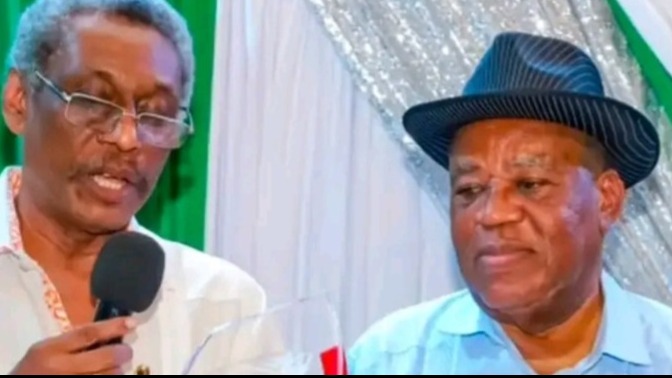
Today, many public infrastructures have been destroyed by armed groups. Others are forced to vacate their premises. Like many other public or private institutions, the National Archives of Haiti have been relocated to Delmas. This situation shows that natural disasters are not the only things that weaken the national memory; political crises or the quiet accumulation of structural neglect are even more destructive than they should be.A country going through the collapse of several public institutions and insecurity that makes entire neighborhoods in the capital inaccessible can’t afford to treat document preservation as a low priority. Haitian history has shown, with every major institutional breakdown, that archives are among the first silent victims of chaos, precisely because they don’t get any priority protection compared to more visible emergencies. Rebuilding a state means rebuilding its documentary memory at the same time.The National Archives of Haiti have the mission of preserving the country’s historical and civil records. Access to the documents kept by the National Archives of Haiti helps make the government’s actions transparent to citizens, and the trust this creates contributes to strengthening the rule of law. An archival document, meanwhile, keeps an exact record of what was decided, signed, or recorded, at a specific time and by a specific hand. It is this accuracy, seemingly dry, that makes the National Archives of Haiti a heritage of a different nature from all others.During the celebration of the 166th anniversary of the National Archives of Haiti, its director general, Jean Wilfrid Bertrand, announced his upcoming departure from the leadership of the institution. On the occasion of this event, which brought together a range of notable figures, including the Minister of Culture and Communication, Dr. Emmanuel Ménard, his chief of staff Wilson Paulémon, Béleck Georges, and the artistic group he leads, COSAFH, Mr. Bertrand expressed that he is happy and satisfied with the work he has accomplished over more than forty years at the ANH.
“I leave with the conviction of a job well done. I believe I have served my country. I leave with the feeling of continuing to serve my country,” Jean Wilfrid Bertrand shared, his voice and eyes filled with tears, noting that there are still ongoing projects.The director also asked Minister Emmanuel Ménard to continue supporting the National Archives of Haiti. “We made commitments for the Archives building; the other one is the automation and digitization of the historical archives system, as well as taking care of the ministries’ archives as part of the administrative document management program,” he said, inviting the young staff of the institution to follow the path he has laid out in order to complete the work he started.
Christnoude Beauplan and Elien Pierre

