
In a press release sent to the concerned authorities, cattle and goat farmers, and the people of Grand’Anse, the ALLO Agro/Promodev platform warns everyone about a worrying situation affecting farmers, their livestock, the region’s health and economy, with fears of the return of a highly dreaded zoonosis.
In a press release sent to the relevant authorities, cattle and goat farmers, and the population of Grand’Anse, the ALLO Agro/Promodev platform is warning those concerned about a worrying situation affecting farmers, their herds, health, and the region’s economy, with fears of the reappearance of a highly dreaded zoonosis. The platform is counting on urgent and appropriate action from the competent authorities to inspect or even curb the spread of this threat to the agricultural sector.
The livestock situation in the Grand’Anse department requires urgent intervention from public authorities. Two serious threats are currently hitting rural communities: the clandestine and unexplained slaughter of cattle in the first communal section of Abricots, as well as the presumed reappearance of anthrax in Baliverne.In the commune of Dame-Marie, a note from Allo Agro/Promodev signed by the Secretary General of Promodev-Haiti, agronomist engineer Thalot Bertrand, reports this.
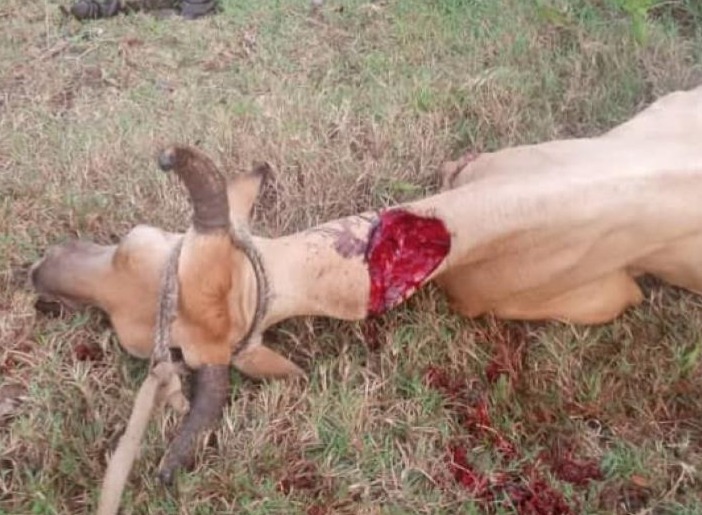
The note says these events put the cattle and goat herds, the livelihoods of farming families, food security, and potentially public health at risk. With growing concern, the Ministry of Agriculture, Natural Resources, and Rural Development (MARNDR) needs to quickly mobilize its veterinary services and work with health, judicial, and local authorities.According to testimonies collected on the ground, people who have not yet been identified killed more than seven cattle belonging to farmers in the localities of Kalòj and Ramond, located in the first communal section of Abricots. The facts are said to have occurred during the night of Thursday 27 to Friday 28 August 2026.
When the farmers woke up, they found their animals dead in the pastures. Some parts of the carcasses were missing, mainly at the back of the neck. According to the interviewees, very little blood was visible around the animals. The perpetrators took away only some pieces of meat.These unusual circumstances are causing a lot of concern among the population. However, they need to be subject to a professional investigation before any conclusions are drawn. Veterinary samples, the examination of carcasses, the collection of evidence, and witness interviews are essential to determine the exact cause of the deaths and to establish whether the events are solely due to criminal acts, a health issue, or a combination of factors.
“A local farmer reported that the phenomenon might have started about six months earlier in this communal section. Previously, some individuals had apparently cut off and taken the heads of certain cattle. Francky Jeune, coordinator of the Board of Directors of the communal section, estimates that more than 25 animals have died under similar circumstances over the past five months,” the note explains.If this assessment is confirmed, we are no longer dealing with a series of isolated incidents. We are facing an organized phenomenon that directly threatens the rural economy.
For a farming family, a cow or a goat isn’t just an animal. It’s living capital, an economic reserve, and sometimes the result of several years of work. Selling an animal can help pay for school fees, finance medical care, buy seeds, repair a house, or deal with a family emergency.Losing several cattle can really push a family into serious poverty. When this happens a lot in a community, it also cuts down on the availability of meat, milk, breeding animals, and organic manure. It weakens agricultural value chains and lowers farmers’ ability to rebuild their herds.
Authorities need to see these acts as a serious attack on rural people’s livelihoods. The suspected perpetrators should be investigated according to the law, without unverified public accusations, vigilante justice, or retaliation against innocent people.
On top of these acts comes a second alert: the suspected reappearance of anthrax in Baliverne, a locality in the commune of Dame-Marie. According to the information shared, this disease has already hit cattle and goats several times in Grand’Anse.
Anthrax, also called bacterial anthrax or simply anthrax, is a serious infection caused by the bacterium Bacillus anthracis. It mainly affects herbivorous animals, especially cattle, goats, and sheep. Its spores can survive for a long time in the soil, which explains why it can reappear in certain areas.This disease can also be transmitted to humans through contact with an infected animal, its carcass, blood, skin, or meat. That’s why any sudden or unusual death should be reported immediately to a veterinary officer. Only samples collected and analyzed following safe protocols can confirm the diagnosis.
It’s especially important to avoid opening, cutting up, moving, or consuming the carcass of a suspicious animal. Opening a potentially infected carcass can spread contamination and allow persistent spores to form. Anyone exposed should contact health services quickly.
People should adopt cautious behavior without panicking, such as:Do not touch a suspicious carcass with bare hands.
Avoid rumors, unproven accusations, and any form of vigilante justice.
Do not cut up or eat meat from an animal found dead or killed under unknown circumstances.
Do not buy meat if you don’t know its origin or how it was slaughtered.
Keep children and pets away from suspicious carcasses and pastures.
Report any unusual animal deaths immediately to veterinary, health, local, and police authorities.
See a healthcare provider quickly if you’ve had contact with a suspicious carcass or notice unusual skin lesions, fever, or other symptoms.In addition, farmers need to step up community monitoring of their animals. Whenever possible, cattle and goats shouldn’t be left unsupervised at night in isolated areas.
It would be helpful to set up local vigilance committees, keep a register of animals, and use identification methods like ear tags when available. Any farmer who falls victim to a criminal act should officially file a complaint and provide investigators with useful information, while avoiding tampering with the scene.
Farmers should also seek support from veterinary services to set up a vaccination schedule suited to areas known to be at risk of anthrax. No sick animals should be sold, transported, or slaughtered for consumption.The Ministry of Agriculture must immediately send a veterinary and epidemiological mission to Abricots and Dame-Marie. This mission should examine dead animals, safely collect samples, confirm or rule out the presence of anthrax, and map the mortality hotspots.
The ministry should also:
supervise the safe handling of carcasses and the decontamination of sites;
set up active monitoring of livestock in the affected areas;
provide protective gear to the response teams;
organize a targeted vaccination campaign in at-risk areas, based on the veterinary assessment;
control the movement and sale of animals coming from suspicious households;
- check the illegal slaughtering and meat marketing circuits;
- inform the population in Haitian Creole and French through community radios;
- set up a documented aid or compensation mechanism for affected farmers;
- regularly publish verified results to prevent rumors.
The national police, the justice system, local authorities, veterinary services, the Ministry of Public Health, and farmers’ organizations must act in a coordinated way. A criminal investigation and a health investigation need to move forward at the same time.
Grand’Anse cannot afford to quietly lose its cattle and goats. Every animal killed illegally or lost to a preventable disease is an economic, food, and social loss.Alerts from Kalòj, Ramond, and Baliverne need to be taken seriously. We have to investigate, protect communities, prevent the spread of diseases, and support farmers before the situation gets worse.
Now is not the time for indifference or panic. It’s a time for vigilance, science, solidarity, and public action. Saving livestock in Grand’Anse means defending farming families, preserving food security, and protecting the health of the entire population, concludes the note from the Allo-Agro/Promodev platform.

