
During fiscal year 2026, the World Bank Group raised more private capital than ever before in its history and issued a record volume of guarantees.
During fiscal year 2026, the World Bank Group mobilized more private capital than ever before in its history and issued a record volume of guarantees. In doing so, it achieved a goal that its shareholders and clients had been asking for years: to get more private capital working alongside its own financing and expertise in developing economies.
The amount of private capital mobilized by the World Bank Group has more than tripled over the past four years, going from $35 billion in fiscal year 2022 to $112 billion in 2026. When combined with the Group’s own financing, the total funding and capital mobilized in developing economies exceeded the $200 billion mark in 2026.This growth has been widespread. The amount of private capital raised for lower-middle-income countries went from $14 billion in 2022 to $37 billion in 2026, nearly tripling. For upper-middle-income countries, it increased from $12 billion to $50 billion, more than quadrupling. In low-income countries — which are particularly tough environments for private capital — the volume stayed around $3 billion. Finally, across Africa, the amount raised went from about $9 billion to $22 billion, an increase of nearly 150%.These results reflect the changes made within the World Bank Group over three years to work more effectively with the private sector: speeding things up and simplifying processes, bringing the public and private parts of the institution closer together, and expanding the range of tools available to investors. We have unified the World Bank Group’s action in each country by creating a single point of contact for our public and private sector activities, and we have started developing integrated strategies tailored to each country’s development needs and priorities.
These results reflect the changes made within the World Bank Group over three years to work more effectively with the private sector: speeding things up and simplifying processes, bringing the public and private parts of the institution closer together, and expanding the range of tools available to investors. We have unified the World Bank Group’s action in each country by setting up a single point of contact for our public and private sector activities, and we have started developing integrated strategies tailored to the development needs and priorities of each country.The ‘Private Sector Investment Lab’ supported this approach by helping to identify the concrete obstacles that hold back investment in developing economies and by creating an action plan to address them. The World Bank Group implemented this program at all levels of the institution: improving the business environment and regulatory framework, developing local currency guarantees and financing, addressing foreign exchange risk issues, strengthening equity instruments, and coming up with new ways for institutional investors to commit on a large scale.The Group has issued over 25 billion dollars in guarantees, surpassing its goal of reaching an annual issuance volume of 20 billion dollars by 2030 by four years. This growth has been driven by the World Bank Group’s Guarantee Platform. Created in 2024, this platform gives clients and investors a single, simplified access point to the guarantee products offered across the entire institution.
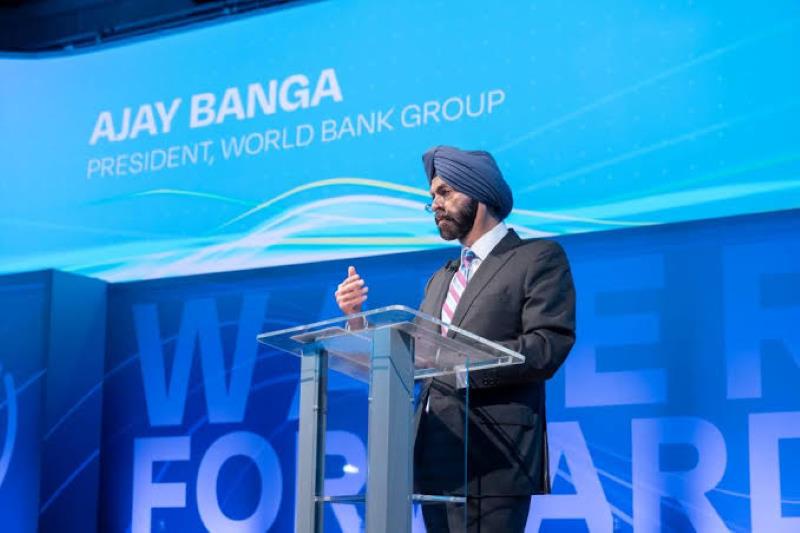
“Three years ago, our shareholders and clients made their expectations clear: to mobilize more private capital and become a better partner for the private sector by leveraging the World Bank Group’s financing and expertise. To achieve this, we changed the way we work: we act faster, simpler, and as a unified World Bank Group,” said Ajay Banga, President of the World Bank Group. “The results are here: $112 billion mobilized this year, more than triple the initial level. But this figure only truly matters if the capital is directed where it can create opportunities and jobs. That’s the real challenge for the future: to keep breaking down barriers, expanding the pool of investors, and attracting more capital to developing economies.”Job creation is the World Bank Group’s top priority. In developing economies, 1.2 billion young people will reach working age over the next 10 to 15 years, while only about 420 million jobs are expected to be created. The private sector, however, generates nine out of ten jobs in these economies.
The World Bank Group’s employment strategy is based on three mutually reinforcing levers: investing in human and physical infrastructure, creating regulatory environments that support economic activity, and helping the private sector scale up. It focuses on five high-employment-potential sectors where these fundamentals can boost investment and large-scale job creation: infrastructure and energy, agro-industry, health, tourism, and high-value-added manufacturing.During the 2026 fiscal year, 55% of the total funding—whether from own resources or mobilized capital—was dedicated to these job-creating sectors, thus helping turn stronger foundations and better policies into private investments, business growth, and jobs. This capital isn’t just focused on the most accessible markets; it also reaches lower-income economies, where regional and local investors are increasingly complementing global capital to fund businesses and create jobs.The World Bank Group is now working to build on these achievements by expanding the circle of investors who can take part in this momentum. Through its investment creation and distribution activities (the “O2D” model), the Group is developing solutions to structure and distribute investments to institutional investors on a larger scale, connecting more global pools of long-term capital to opportunities in developing economies.
The goal is clear: to mobilize more capital from a wider range of sources and direct a larger share of it towards creating jobs and economic opportunities.

